

Article begins
In 2021, the BBC News released a video about a Chinese father making medicines at home to save his son. The father, Xu Wei, was around 30 years old, living in southwestern China. In 2020, his nine-month-old son had been diagnosed with Menkes syndrome, a rare genetic disorder that prevents the body from absorbing copper. Doctors told him there was no cure and his child would not live past three. The only drug known to temporarily ease symptoms, copper histidine, was unavailable in China. Refusing to wait, Xu Wei decided to make it himself.
With only a high school education, Xu Wei taught himself biomedicine from scratch. He quit his e-commerce job and poured nearly 300,000 RMB into the experiment—mostly from family savings, some credit-card spending, and public donations. After months of trying, he synthesized a stable version of copper histidine and injected it into himself before giving it to his son. Later, Xu Wei collaborated with a biotech company to develop a gene therapy. Although the child is not fully cured, he has lived beyond the age of six.
Xu Wei’s story circulated widely across Chinese media. His success is celebrated as a miracle born from a father’s love and the power of science. However, experimental therapies are also fraught with uncertainty. Xu Wei’s son will be the first to try an experimental gene therapy his father developed, not to mention the risk of home-made injections.
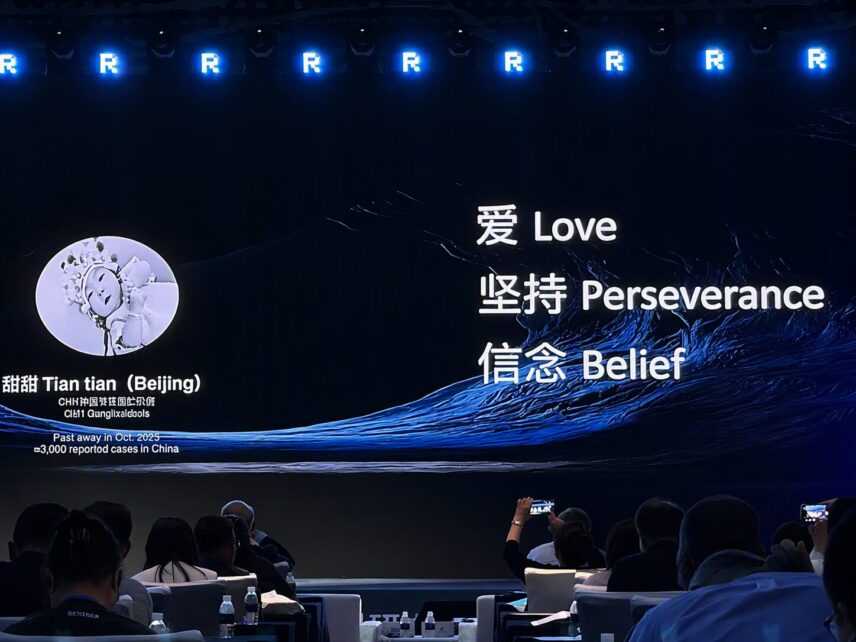
Xu Wei was not alone. Since 2023, I have been conducting fieldwork with Care for Rarity (pseudonym), one of China’s largest rare disease organizations. It aims to help families initiate personalized gene therapies for their children. Because of stories like Xu Wei’s, I became particularly interested in what drives Chinese parents to pursue experimental treatments despite profound uncertainty about their safety and effectiveness. And what does it reveal about contemporary China that parents increasingly find themselves responsible for creating the very conditions under which treatment becomes possible?
Creating Conditions for Care
Although China has impressively expanded healthcare coverage over the past two decades, patients with rare diseases, like Xu Wei’s son, often remain marginalized within systems designed to serve large populations. Of the roughly 7,000 rare diseases identified worldwide, the Chinese government had officially recognized just over 200 by 2023. While a disease affecting fewer than 1 in 2,000 people is generally classified as rare, rare diseases together affect an estimated 300 million people worldwide. In recent years, China launched a new regulatory policy named Investigator-Initiated Trials to significantly accelerate clinical trials for rare diseases. This policy allows researchers to begin human trials solely with approval from the hospital’s ethics board, bypassing the previously lengthy regulatory process. It was under this policy that Xu Wei and many other patient families could sponsor and collaborate with scientists to develop treatments for their children.
Despite recent regulatory reforms, developing treatments for rare diseases remains costly. High development costs, clinical uncertainty, and small patient populations together weaken the economic incentives for pharmaceutical investment. In China, this hesitancy is further shaped by the government’s official rare disease list, which functions as an important signal of regulatory recognition. Companies are generally less willing to develop therapies for diseases that do not appear on the list, anticipating limited institutional support. For the thousands of rare diseases that remain unrecognized, this lack of official visibility becomes a barrier restricting the development of new treatments.
In the absence of greater state and corporate support, patients and their families become an important player in pooling resources for drug development. Cai Lei, former vice CEO of a major Chinese e-commerce company, JD.com, founded a nonprofit dedicated to ALS research with his wife. Cai was diagnosed with ALS. When his condition worsened, his wife became a full-time livestreamer, selling household products to fund drug development. Their channel has become the third-largest livestream seller in China, transforming a family’s crisis into a mass fundraising organization contributing to drug development.
For parents with rare disease children, they are often more willing to invest in the search for treatments. This moral imperative is especially powerful in China, where decades of the one-child policy made children the only hope and the “little emperors” around whom family resources were organized. Parents are expected to try everything possible to create conditions for their children’s growth and success. Against this backdrop, efforts to fund gene therapies are deeply ethical acts through which parents enact care and love, even when the effectiveness of the treatment remains uncertain. As Mengzhu An has shown in her work on families of autistic children in China, parents often continue searching for new interventions even though they understand their efforts may be fruitless. The expansion of therapeutic options can paradoxically intensify parental burdens: the more interventions become available, the greater the pressure to pursue them. To stop trying feels like giving up on one’s own child. To keep trying can also mean great financial investment with no guarantee of improvement.
The Cost of Making Medicine
Not every parent who tried to help their child succeeded like Xu Wei. Some parents with relevant expertise in the pharmaceutical industry also struggle to secure money in support of gene therapy. In July 2025, I attended a patient bootcamp organized by Care for Rarity, designed to help parents navigate the financial and regulatory challenges of developing therapies for their children. I sat next to Wen (pseudonym), whose six-year-old son had Duchenne muscular dystrophy (DMD), a progressive genetic disorder that gradually weakens skeletal and cardiac muscle. Wen and her husband were migrants from northeastern China, building a life in Beijing. Trained in pharmacology, she had worked as a pharmaceutical sales representative. When China relaxed its family planning policies, the couple decided to have a second child. That son was diagnosed with DMD at two.
The current treatment available to Wen’s son is corticosteroid therapy, a long-term hormone-based intervention that can slow disease progression. But this therapy cannot stop progression, and it carries side effects, including weight gain and weakened bones. According to Wen, it costs between 20,000 and 30,000 RMB per month to have this hormone therapy in Beijing. For her, it was not enough. Wen was looking for something more effective. She turned to gene therapy.
The existing gene therapy for DMD, Elevidys, developed by Sarepta Therapeutics, has generated considerable excitement. Yet serious safety concerns remain, including deaths linked to liver toxicity associated with the gene therapy. According to Wen, Elevidys is not available in China. Even if it is available, the treatment carries a price tag of over 20 million RMB, way beyond what Wen could afford. Meanwhile, Chinese biotechnology companies are racing to develop domestic gene therapies for DMD. The rapid development has fueled hope among Chinese DMD families that more accessible and affordable treatments may soon emerge.
To accelerate the development of gene therapy, Wen decided to raise the money herself by founding a livestreaming business. In the years following the COVID-19 pandemic, livestream commerce became one of China’s most popular forms of online entrepreneurship. Livestream hosts could sell products while connecting with audiences in real time. Rare disease patients and their families have increasingly entered this space, using it to both raise awareness and generate income for medical expenses and experimental treatments. Such efforts are not limited to prominent figures like Cai Lei. For many ordinary rare disease families, livestreaming is flexible enough to fit around caregiving and daily work, requiring little more than a phone to begin.
Wen’s professional instincts had led her to purchase commercial insurance before her son’s diagnosis. This foresight eventually brought her a one-million-RMB payout. At first, Wen planned to invest both the company’s profits and the one-million-RMB payout from her son’s commercial insurance into developing gene therapy. Wen’s background in the pharmaceutical industry would provide networks, and the live-stream company would provide money. She decided to sell household products such as insulated bottles, wheelchairs, towels, and snacks. Many of these products were selected because they addressed practical challenges faced by DMD patients and their families. The insulated bottle, for example, can remain continuously cooled using a portable power bank, allowing temperature-sensitive hormone therapy to be stored throughout the day. Parents could take their children out for the day without worrying about the temperature affecting the efficacy of the treatment. Wen also employed DMD patients and family members to test products, provide recommendations, and help run the business.

However, three months in, the margins were painfully thin. The problem, she realized, was structurally identical to the one she was trying to solve. Her customers—the people who most needed temperature-controlled bottles and adaptive wheelchairs—were DMD families. Just as pharmaceutical companies struggle to justify large investments for a small patient population, Wen also could not find enough customers to sustain her business. When someone asked what would happen if she failed to raise enough money to develop a treatment, Wen seemed to have made peace with the possibility. “If the bigger dream doesn’t happen, that’s okay,” she said. “At least this livestreaming business might give many of us a job. Let DMD patients and their caregivers come together. That alone means something.”
Not every drug development effort succeeds. Not every therapy arrives in time. Yet parents like Xu Wei and Wen continue to act as if another future remains possible. In China, where the state and corporate support for rare diseases remains limited, parents increasingly find themselves responsible for creating the very conditions under which treatment for their children can emerge. To stop trying feels morally impossible.
As this essay was being written, a Science investigation brought international attention to a parent-funded gene therapy trial in China. The investigation revealed that a six-year-old girl with a non-life-threatening rare disease had died shortly after receiving the experimental therapy. While this case is still under investigation, it raises an urgent question: Where should the ethical boundaries of highly experimental therapies be drawn? More fundamentally, what does it mean for parents to make a decision when profound asymmetries of scientific expertise leave them structurally disadvantaged in determining what information they receive and how risks are communicated?
Making medicine has a price and this path is clearly not applicable to most families. If personalized medicine is celebrated for tailoring therapies to individual patients, these stories also reveal the personalization of care responsibility. As the work of developing therapies shifts onto families, parents are increasingly asked to absorb the financial costs, as well as the moral weight of keeping a future alive that medicine has not yet made possible, all the while knowing that their hard work may not move the needle at all in the end or even hasten death.
Alex Wolff and Yanping Ni are the section contributing editors for the Society for East Asian Anthropology.