

Article begins
When I, as a new graduate student, first walked into Renato’s office in Fall 1983, I could not help noticing that it was full of cardboard boxes with file folders and books. I did not know it at the time, but the boxes were a manifestation of Renato’s rebirth as he engaged academics after a tragic loss. Renato invited me to read through the materials in the boxes that would form the basis of an article for the Annual Review of Anthropology on the history of Chicana and Chicano anthropology. I did not comprehend that this was possibly the first time that these materials had been gathered into a singular collection. When I asked Renato which articles and books I should read, he looked at me and said in his kind yet piercing way, “All of them.”
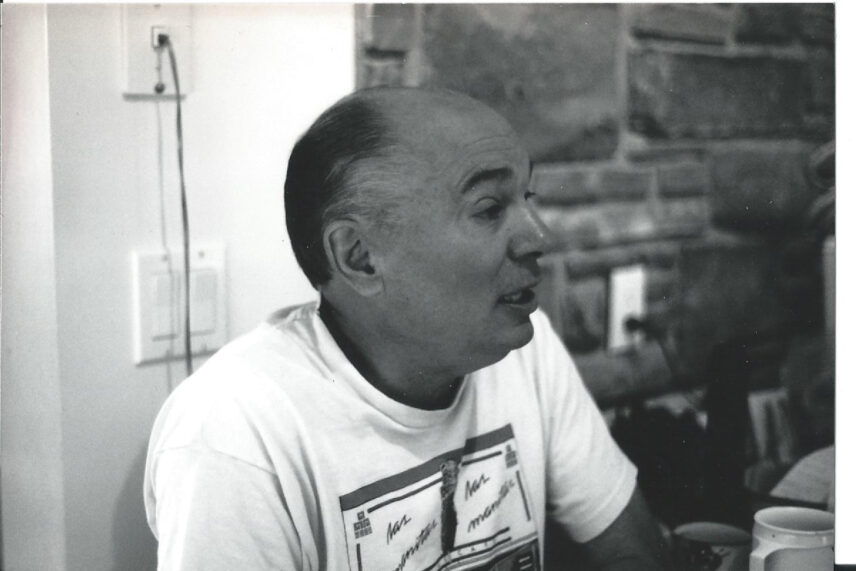
During my first semester of graduate school, I was provided with a powerful language. By reading Chicana and Chicano anthropology for the first time, I began to understand more fully the historical, cultural, and structural forces that shaped my own experiences. Renato met with me once a week to talk about what I had read. I did not grasp that moments such as these, a Chicano professor teaching a Chicano graduate student in the early 1980s, were minor miracles. Renato listened patiently to my rambling and offered productive ways of reading and thinking while fostering my incipient attempts to create my own voice. I am thankful to him for that.
Renato’s scholarship was transforming anthropology, and I had a front row seat. I read his work, attended his talks, immersed myself in the politics of curricular reform, and kept up with the latest gossip. Up to that time, scholars had not viewed cultural mestizaje and borderlands as contested sites of social creativity and power. These concepts had circulated only within the academy in limited contexts, such as descriptions of classic Mexican nationalism or “marginalized” physical and cultural frontiers. There was little dialogue between “mainstream” cultural anthropology and a growing body of work in Chicana and Chicano studies. Cultural anthropologists were enmeshed in debates over symbolic and structural analysis, cultural as practice, ethnography as text, and postmodernism. Renato was at the forefront of these debates, but with an edge. He drew upon the work of “marginalized” scholars and called for attention to truth, humor, beauty, and love. He did so with fine-grained analysis, wisdom, and an intellectual range and depth that was only matched by his warmth and charisma.
Renato did not pick an easy path. His detractors were many. Some dismissed his work on the Ilongot. Renato’s recounting of how Ilongots viewed the soldiers they had observed in combat during WWII as people who had sold their bodies received negative press attention. After all, according to popular media accounts, were Ilongots not savages?
Renato was also widely criticized for his advocacy of diversity and inclusivity in college curriculums. He became a national spokesperson for curricular reform, though his ideas were met with unrelenting resistance. I heard him give talks during which dubious audience members questioned Renato’s loyalty to high-quality literature and science. Some audience members saw Renato as an enemy of objectivity and truth.
After a presentation on culture and politics, in which Renato discussed humor as a form of subaltern resistance, one panelist sarcastically quipped that it was nice of Renato to bring jokes to a serious panel.
Postmodernists recoiled at Renato’s adherence to the quaint idea that truth is important. Some were dismayed that he did not partake in the joys of citing the turgid prose of post-structuralists and the glee of skewering one’s intellectual ancestors.
Some anthropologists argued that Renato’s work was irrelevant for understanding culture and truth. I remember a scholar telling me that Renato’s writings had only a little culture and no truth.
Yet, all knew they had to take Renato seriously and contend with the brilliance of his writings and talks. It was impossible to avoid his innovative ideas, powerful prose, and the force of his personality. In the face of criticism and ad hominem attacks, Renato moved forward with confidence, intelligence, social grace, and a contagious joy. He never cowered in the face of power.
Renato’s contributions to Anthropology are well-known. His major concepts—cultural citizenship, cultural invisibility, emotional force, ritual as busy intersections, partial truths, etc.—are now widely applied within the discipline. Renato’s forceful inclusion of writings by women, people of color, artists, poets, and organic intellectuals into academic debates is celebrated by many scholars. And his spirit of engaging the best in our discipline now resides in many of us. As a mentor, he emphasized that criticism was never enough. We, as scholars, were to build. Renato provided a model for productive scholarship that expanded our ability to analyze social life and truly listen to people whose views, lives, and dreams are often overlooked.
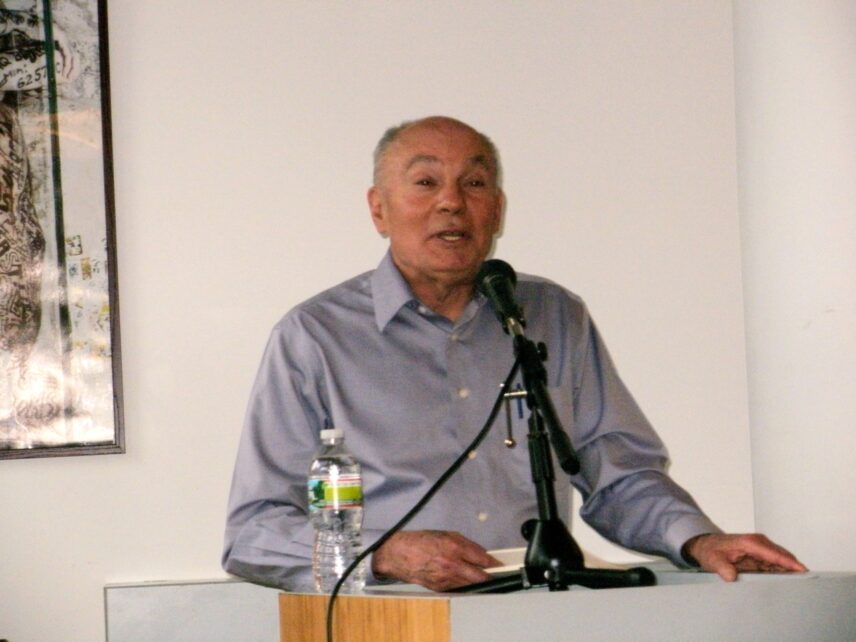
Renato’s remaking of social analysis centers on the notion of cultural citizenship to theorize how areas of cultural invisibility inform relations of power. These areas of invisibility appear (a) within the classic norms of ethnography, where the researcher is seen as occupying a detached and objective social space, and (b) at the top of the social hierarchy, where members of dominant groups view themselves as being cultureless, as inhabiting a social space that is somehow not organized by cultural norms. These areas of cultural invisibility, as Renato recounts in the case of his own fieldwork, allow ethnographers to overlook cultural movement and borderland identities. Renato, through his work with the Ilongot, taught us to understand how people articulate visions of their own history and changes in their culture. People all over the world, even in remote jungle areas, do not live in a timeless present. We, even people who imagine they do not have a culture, are enmeshed in historical and cultural movements that shape perceptions and cross-cultural understandings. Culture is always on the move.
In his writings on the Latinx community, Renato elegantly describes how perceptions of a cultureless center inform dominant understandings of Latinx cultures and identity. On the one hand, and I have experienced this personally, we are seen as between cultures. Are we Latinx or American? Are we not people who occupy a hybrid purgatory in search of an identity? As many have commented to me in casual conversation, “It must be difficult to be between cultures.” On the other hand, I was told by acquaintances that I was lucky to have a culture. I, as a member of a marginalized group, was elevated to the status of having traditions and rituals, but, as it turns out, this positive came at the price of not being part of the “mainstream.” My insistence that all people have culture was often met with quizzical looks. Even today, when I teach Introduction to Anthropology, a handful of students will resist the idea that they have a culture. Some even get mad. Renato saw this rendering of people as invisible and cultureless as preventing us/them from writing truthfully about culture and social life. Our understandings of culture, according to Renato, are inextricably linked to our ability to produce truth.
These understandings of cultural visibility and invisibility are also key components of his analysis of the politics of citizenship. In developing the notion of cultural citizenship, a seeming oxymoron, Rosaldo explored how members of dominant groups, who view themselves as cultureless, often portray members of marginalized and excluded groups as intensely cultured. As should be fully evident today, people who are seen as different in terms of culture, religion, sexuality, and gender are, both legally and in everyday life, treated as not being full citizens. This same logic also applies to the academy. Many of our Eurocentric curriculums introduce students to a “universal” body of knowledge that, because of its quality and power to engage truth, stands above the writings and histories of all other groups. Renato had a different idea. He explored ways to create dialogues between cultures and academic traditions. Renato argued that our educational system should not engage in the violence of rendering people’s cultures, histories, and meaningful experiences as invisible, but rather create new ways of interpreting and understanding the richness of the human experience.
To make this point, Renato asked a question that Latinx scholars immediately understand, “Do we really want the Texas Rangers to replace Gregorio Cortéz?” Here, Renato points to the massacre of people of Mexican descent by law enforcement, the Texas Rangers, in the early 1900s. He also refers to how Gregorio Cortez, now a folk hero, gracefully and powerfully resisted state violence. Cortez, a skilled horseman, shot and killed a sheriff in self-defense and evaded posses of Texas Rangers for ten days before being captured on the US-Mexico border. People of Mexican descent from South Texas to Mexico City organized benefits and created a legal defense fund for Cortez while celebrating his bravery in ballads. In his discussion of Cortez, Renato celebrates the work of Américo Paredes, a trailblazing scholar who received death threats because he set the historical record straight about Texas Ranger violence. Against a mountain of “objective” scholarship that celebrated the Texas Rangers, Paredes powerfully and convincingly relied on a border ballad (corrido) to tell the truth—El Corrido de Gregorio Cortez.
We, as Latinx anthropologists, recognize that Renato’s question is still relevant. There are still critics who would rather have the Texas Rangers over Gregorio Cortez. These critics do not recognize the importance of empathy, cross-cultural understanding, and the detailed analyses of structures of power that are required for us to improve scholarship. These critics, who hide behind “objective” reports, have a difficult time grasping the hope offered in a ballad sung by low-income people suffering from state violence. They might think that singing is not scientific. These “hide-behind-their-reports” cowards might be incapable of understanding that a ballad told historical truths while murderous Texas Rangers, member of the press, and numerous scholars reported lies as objective facts. These self-appointed guardians of objectivity write dull reports with boring titles, such as “Report on the State of Scholarship….” I feel sorry for the authors of such gloomy reports. I wonder if they know the joy of the small miracles that we—Latinx anthropologists—experience every day.
It is fitting that I, as one of Renato Rosaldo’s former students, am now doing research on the US-Mexico border. For Rosaldo, the US-Mexico border region informed a rich understanding of how social actors creatively rework culture. Renato focused on how border residents simultaneously engage Spanish and English, creatively integrate US and Mexican cultures, and challenge a dominant culture that does not register borderland identities. Margaret Dorsey and I write about these cultural dynamics in the current context of border militarization and border wall construction. We argue that militarization is transforming the meanings of cultural citizenship in the US-Mexico border region while killing migrants and imprisoning border residents in their own communities. Our research relies on Renato’s theoretical and methodological insights for developing critical approaches to state violence. We continue to insist that the Texas Rangers should not replace Gregorio Cortez.
Franz Boas once said, “A life lived in service of the truth is a life well lived.” Renato’s life was well lived. Renato’s spirit resonates both in the work of Latinx anthropologists and all social scientists, poets, and writers who care about bringing truth, beauty, and love into this world.
Renato’s writings are our corridos, and he is our Gregorio Cortez.
Sergio Lemus and Jerry Hernandez are section contributing editors for the Association of Latina/o & Latinx Anthropologists.