

Article begins
The Anthropology News Interview
In-depth conversations with the people who make anthropology tick.
Doing anthropology isn’t always fun, but some of the people doing it are absolute delights—and they have a lot to say about their research, the state of the discipline, and, naturally, their favorite foods. Welcome to The Anthropology News Interview, where we sit down with some of the field’s most compelling voices.
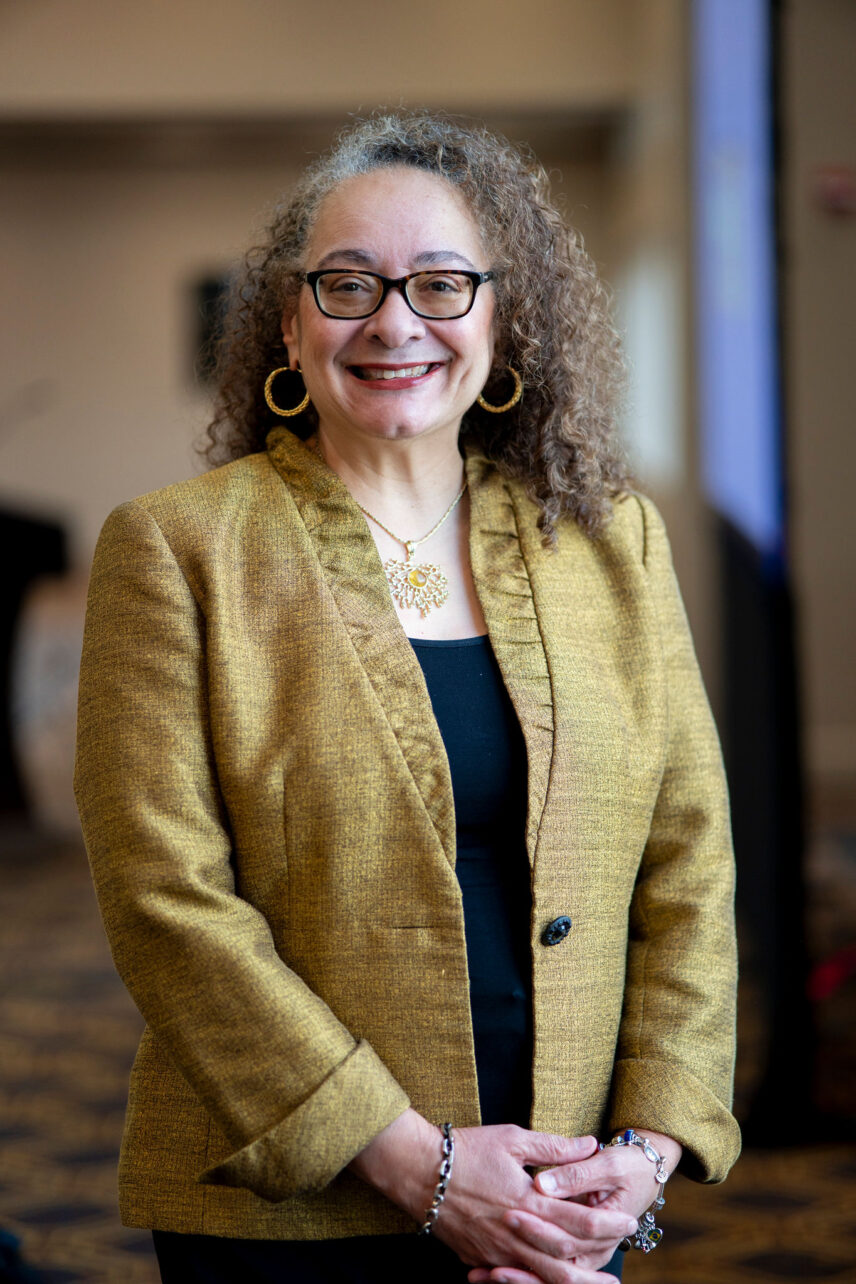
If you want to understand how race actually works across borders, Kimberly Eison Simmons is the scholar you need to read. In her foundational book Reconstructing Racial Identity and the African Past in the Dominican Republic (University Press of Florida), Simmons untangles how state elites systematically buried the nation’s African past—pushing official categories like indio to champion racial mixture while sidelining Blackness. But as Dominicans moved back and forth between the island and the US, those tidy state narratives began to unravel. Confronted by America’s stark racial binary, Dominicans found themselves rethinking identity alongside African Americans and Afro-Latinos, all while navigating historical tensions with neighboring Haiti. As Simmons famously frames it: “Dominican mixedness is constructed vis-à-vis Haitian blackness, but this meaning shifts in the United States because of the situated meaning of blackness.” Simmons offers us a masterclass in using a diasporic lens to dismantle official histories and reclaim africanidad.
Simmons is an Associate Professor of Anthropology and African American Studies at the University of South Carolina (USC). After earning her B.A. in Spanish from Grinnell College and her Ph.D. in Anthropology from Michigan State University—where she served as a Researcher-in-Residence with the African Diaspora Research Project—she built a rich career exploring women’s organizations, Afro-Dominicanness, and Black identity formation across the Americas. Alongside her landmark monograph, she co-edited Afrodescendants, Identity, and the Struggle for Development in the Americas (Michigan State University Press) with Bernd Reiter. Currently, she is putting the finishing touches on her second book, a fascinating dive into Afro-Dominicanness and the politics of natural hair. On top of her research, she is a former program director (Latin American Studies Program), former co-director of the African American Studies Program (now department), former institute director (Institute for African American Research), former Associate Dean in the South Carolina Honors College at USC, past President of the Association of Black Anthropologists, and member of the AAA Executive Board.
I caught up with Simmons over Zoom while she was in her South Carolina office to chat about how she found her way into anthropology, the stories behind her major projects, and what’s driving her work today. She also agreed to tackle the Anthropology News Questionnaire—think Vogue’s 73 Questions, but vastly shorter and with some academic charm.
Our conversation has been edited and condensed for length and clarity.
Have a great story to tell, or know someone who should grace these pages next? Drop us a line and let us know! Above all, remember: anthropology is supposed to be fun.
JM: Hi Kim. Thanks so much for joining me in this conversation. Let’s start with the basics. Who are you? What kind of anthropology do you do?
KES: I am from Western Tennessee originally. I grew up in Gary, Indiana, with a foot in Tennessee, visiting family. So a lot of my roots are Southern, and I spent summers in the South, so here I am now [at the University of South Carolina]. I went to college in the Midwest, Grinnell College, where I eventually met Irma McLaurin, which helped me make my first anthropological ties. At Grinnell College, I majored in Spanish and had a minor in what was then Afro-American Studies. I minored in sociology. I went the sociology route early on because of some of the urban interests that I had that I didn’t see at Grinnell in anthropology at the time.
I also spent a semester in Spain during my senior year, which really set me on the path to anthropology. So all these are the dots that I connected. I was the first in my family to study abroad. I went to Seville. After college, I spent some time in student affairs. I was a hall director at Macalester College in St. Paul. Then I was an admissions counselor at Drake University in Des Moines, Iowa. After that, I went on to grad school. I went to Iowa State initially for the master’s in anthropology, where I was on the development track, which was interesting.
JM: How did your interest in race and diaspora develop?
KES: In my life, I am always asked, what are you? You know, just people on the street, what are you? In the U.S, and then as I traveled abroad, the same thing, what are you? When I was studying abroad, I found myself being categorized according to kind of intermediate categories, you know, these mixed categories. Sometimes people refer to me as La Mulatta. I took all these experiences and reflected on them, and I really thought, okay, how can I think about this in terms of some research questions? All of this got me thinking about cultural identities, thinking about race, ethnicity, global blackness, all these things early on. And so that’s kind of where my topic for my dissertation and then my first book came from. Going back to Grinnell again, because a lot of those seeds were planted then, I had a professor in my sociology classes, Kesho Scott, who is from Detroit, and her classes were about color and colorism. She helped plant some seeds. Also, my husband Dave, we went to graduate school together. And Irma McLaurin was there too, and we were all on similar but different paths. But we were all together, and Irma said, “Why not anthropology?” She said, “You’re talking about culture, you’re talking about identity…” And I said, “Okay.”
JM: Tell me a little bit about your book, your first book.
KES: My first book is about the African diaspora. Let me just step back and say something about the African Diaspora Research Project at Michigan State. It was led by Ruth Simms Hamilton, a sociologist who was one of my mentors. She’s since passed away. She led this group, and we were a real group: there were students, international students, people from all over, the Dominican Republic, Brazil, the US, and so forth, and we were all looking at issues of race, identity, migration, and color and colorism.
I wanted to look at how race was constructed in the Dominican Republic. I wanted to think about racialization. At the time, we were all reading Omi and Winant on racial formations. And I was interested in what happens when people travel. What happens when people move to New York where you have Dominicans who define themselves as Black? I focused on, for example, the national identification card in the DR, the cedula, and how color was used there. I looked at the census. I looked at different legal terms and then on how people were defining themselves in different contexts and the color terms we use. And how race has been constructed in these different contexts. I just tried to connect some of those dots.
JM: Great. What are you working on lately?
KES: My new project looks at the natural hair movement in the Dominican Republic. It has been 10 years in the making. It starts where I ended the first book project, as I am again connecting questions of mobility, racialization and diaspora. I’m looking at Afro-Dominican women’s uses of natural hair to challenge Eurocentric beauty standards and help them to reconstruct their racial identities. I’m spending a lot of time looking at social media and the tutorials there. There are also natural hair salons, hair festivals in the DR and in New York. A few years ago I attended a curl fest in New York where people from all over the world were buying products and talking about self-acceptance and self-esteem, and also about being Afro-descended. The book is about the changing narratives and forms of self-expression in spaces like this.
JM: Awesome. I’m looking forward to reading it. Here’s a new question: If you could do your career up to this point all over again, what, if anything, would you change?
KES: Wow, wow, wow, wow, wow, wow, wow. I’m going up for full [professor] next year, so I’ve had to think about my career. In the last 10 years, there were a couple of projects I tried to do, but they stalled. I would have liked to have published a little bit more during that time. At the same time, I have had a lot of administrative experience and developed a lot of connections in that work, so it’s been a wonderful thing.
JM: You are well known in the field for having done a lot of service, from mentoring individuals all the way to running a department and program and giving service to the AAA. These days, it’s a huge challenge to balance service with publishing and teaching. What advice do you have for others who are struggling to strike the right balance?
KES: Thank you for that, Jeff. I really appreciate that because what’s meaningful to me is those connections and community and giving back. I think we just need more time in the day to really be able to do some of the things we want to do there. What I want to emphasize in that work is the actual collaborations that came out of it. That was invaluable to me. You can gain a lot from doing service, you know.
The Anthropology News Questionnaire with Kimberly Eison Simmons
JM: What book are you currently reading?
KES: High on the Hog. It’s about African-American cuisine. Outside of class, I just started reading Uncommon Favor: Basketball, North Philly, My Mother, and the Lessons I Learned from All Three by Dawn Staley (Head Coach, USC Women’s Basketball) and What Happened to Ruthy Ramirez: A Novel by Claire Jimenez. I’m looking forward to reading the new book, Black Feminist Theories: Transnational Approaches, edited by Carole Boyce Davies, Bibi Bakare-Yusuf, Janell Hobson, Angelique V. Nixon, and Christen A. Smith.
JM: What music are you currently listening to?
KES: Jazz in the background. Bad Bunny in the foreground. I enjoy a wide range of music depending on the occasion, from classical and jazz, merengue and salsa, to pop and R&B (especially Old School R&B). I was in different bands when I was younger, and we played a variety of music. I enjoy Olivia Dean and Alicia Keys’s music.
JM: Tell me something you haven’t done yet in your life that you would like to try.
KES: Travel in Asia, and maybe skydiving, but not too high!
JM: What’s your favorite place to live?
KES: The South. The Dominican Republic.
JM: What is your favorite movie?
KES: Marlon Rigg’s Black Is, Black Ain’t. I show it in different classes. Outside of class and documentaries, I enjoy comedies, dramas, musicals, and holiday films.
JM: What is your favorite time of day?
KES: The evening, or any relaxed downtime with wine, coffee, wind-down time, time for reflection.
JM: What is your favorite food?
KES: Macaroni and cheese and any dish with cheese (enchiladas, lasagna…)
JM: What is your guiltiest pleasure?
KES: I love chocolate, anything chocolate.
JM: What is the best compliment you have ever received?
KES: Someone told me once that they appreciated my support and mentorship. That means a lot to me. Walking on campus, after I smiled and greeted someone (staff from food services), she smiled and said, “Thanks for seeing me.”
JM: What makes you smile?
KES: Making a connection with somebody.
JM: What’s your favorite curse word?
KES: Damn!
JM: What are you most excited or hopeful about these days?
KES: There’s a change on the horizon. I feel like there’s hope in the air. I really feel now like I haven’t felt for a while. I feel like something new is going on, something’s stirring, something’s brewing.
JM: Tell us something about you that people don’t know.
KES: I sang and was in a jazz band. I did community theater. I’m now trying to reconnect with some of that now. I don’t think people know that about me. I’ve come to realize that many anthropologists have creative backgrounds and interests.
JM: What do you most like about anthropology?
KES: I love intro to cultural anthropology class. I love that class. It gives me a chance to really make a connection with young people. Thinking about anthropology more broadly, anthropology lets us connect the dots, make sense of things, and really get in there and figure things out. I reflect on the hope and promise of anthropology, both now and in the future. If we can reach students and plant a seed, it will benefit us for generations to come. Wherever I am, inside and outside the classroom, anthropology teaches me to see our differences, similarities, and our shared humanity side by side. It helps me see the connections and communities woven through everyday life, and I carry that perspective with me.
JM: What do you dislike most about anthropology?
KES: Nothing! But if I had to say something, I’d say, maybe we are not doing as much as we could in terms of our voices, raising them up now, in these times. I keep thinking about this current moment and that is a frustration because we’re all facing the suppression of our work, with banned words and syllabi being scrutinized. I dislike that our work is being called into question. I want us to use our voices and our expertise to engage the public more. We need to be a little bit more brave.
If I’m being honest, I wish we were doing more to lift up our voices right now. This moment weighs on me, given the increased policing, profiling, detentions and deportations. Anthropology departments are being negatively impacted, and our work is being suppressed with banned words/books and syllabi under scrutiny. I’d love for us to draw on our expertise to engage the public more, to find a little more courage individually and collectively, and raise our voices in different spaces during this time.