
Article begins
This piece is the introduction to a collection of Anthropology News articles on Climate Governance. Click here to read other articles in the collection.
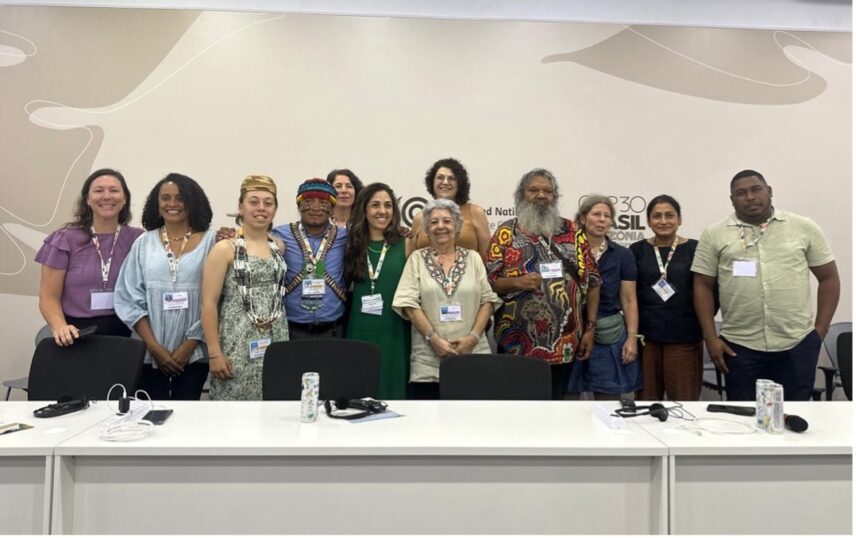
As a graduate student attending a climate meeting for the first time, I did not know what to expect. I hustled down a street in Katowice, Poland, in the early morning of December 3, 2018, for my first day of the 24th Conference of Parties (COP24) hosted by the United Nations Framework Convention on Climate Change (UNFCCC). COP meetings are officially where global climate targets are negotiated and treaties like the Kyoto Protocol and the Paris Climate Agreement are signed by UN member states. They are also where diplomats, politicians, scientific and industry representatives, academics, civil society, youth and religious groups, Indigenous peoples, NGOs and community members, philanthropists, influencers, and others gather to observe, document, engage with, and inform climate actions (Figure 1).
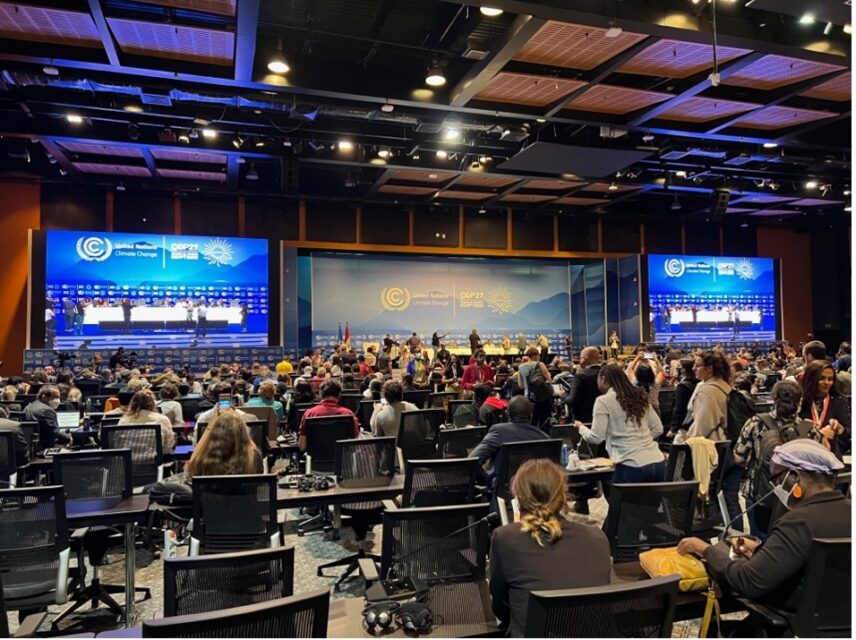
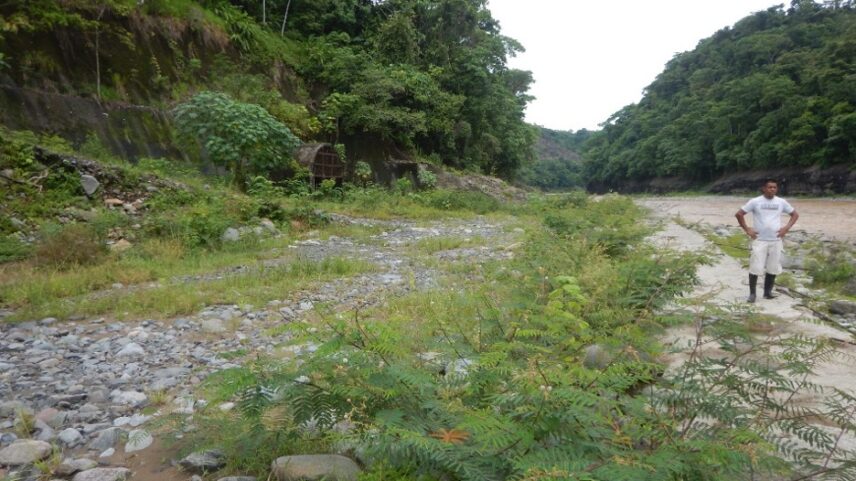
Approaching the venue that morning, police stopped me to see my UN accreditation. I hadn’t checked in yet, but my Observer acceptance letter from the University of Colorado Boulder and my passport sufficed. I was permitted to continue along my way and soon I merged with the crowd and shuffled through airport-style security into the climate arena—Katowice’s Culture Zone. It was a series of permanent sporting event spaces connected by multiple temporarily constructed tent structures, large enough to entertain at least 30,000 delegates. What seemed massive at the time, in hindsight it was actually small in comparison to subsequent meetings I have attended, including COP26 in Scotland in 2021 (40,000 delegates), COP27 in Egypt in 2022 (40,000 delegates), COP28 in the United Arab Emirates in 2023 (85,000 delegates), and COP30 in Brazil in 2025 (53,000 delegates). These megaevents are increasingly sites of anthropological inquiry as they are the spaces where much of global climate governance decisions are orchestrated (see Negotiating the Crisis: Critical Perspectives on Climate Governance, for example). I was there to observe decision-making processes regarding climate mitigation to inform my understanding of how proposed hydropower projects have impacted and been challenged by the Brörán peoples in Costa Rica, and Indigenous peoples and local communities more broadly (Figure 2).
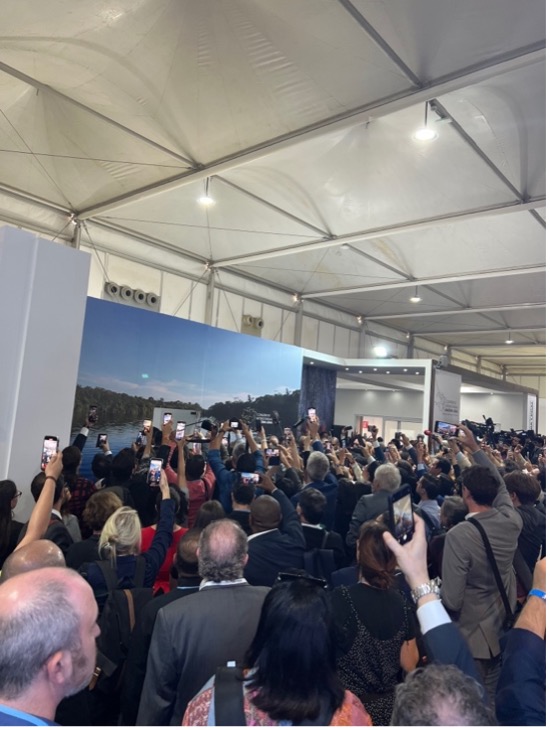
When asked “What is COP like?” my default is to answer “It is chaotic.” COP conference arenas are dizzying vortexes pulsing with activity—waves of people rush to high-level meetings, plenary sessions, state negotiations, roundtables, and side events, while many others clog hallways searching mobile apps and teleprompters for schedules and room assignments or stand around anxiously waiting to photograph dignitaries like President Lula of Brazil (Figure 3). COP28 in Dubai’s Expo Center was its own small city built around a central hub with people crammed into every corridor (Figure 4). Floor-to-ceiling color-coded diagrams hanging at each intersection attempt to help navigate the maze through side-event pavilions, negotiation rooms, media centers, art installations, and exhibitor spaces—where various countries and NGOs have their own booths showcasing innovative technological displays, models of sustainable and efficient products, food samples, regional music, and their own additional presentation schedules.
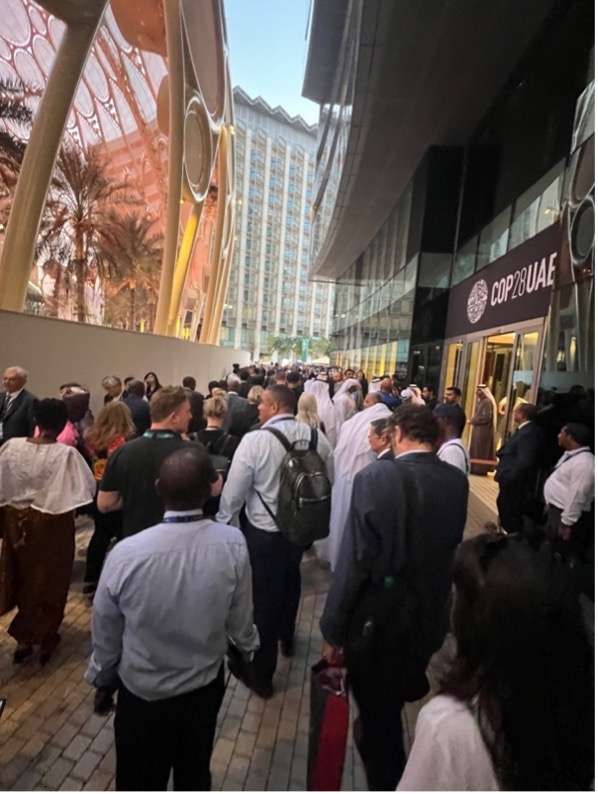
Lines to enter COP meetings often span multiple corridors resulting in long waits; many are inaccessible due to their required walking distances. I easily clock over 16,000 steps per day. Water and bathroom availability are often lacking and can’t always accommodate the masses; translation services are not always available for side events; food costs are too high for many attendees. Hotels and lodging sites can be exorbitant. Rentals are known to cancel prepaid reservations at the last minute only to raise prices and relist them; early speculative lodging in Brazil put a single bed in a family home at a few thousand dollars per night. Fans and AC systems do not always work, as was the case in Egypt and Brazil where heat was overwhelming and a fire broke out in Brazil due to overloaded electricity outlets.
These factors complicate access, ability to complete research, attend meetings, and conduct interviews in a meaningful way—let alone successfully negotiate climate decision-making, processes, and policies, particularly for first-time observers. Despite the chaos, there is a certainty of order, a series of expectations whereby negotiators are held to a high standard of conduct. There are queues for speaking. Negotiators utilize specific narratives and language in structuring discussions, decisions, and texts, often kindly referring to each other as “my brothers or sisters from X country.” They have some of the politest disagreements I have ever witnessed, masking deep disagreements with coded terminology. All the negotiations are mediated in a strictly controlled manner by a session chair, resembling the security guards who monitor the entrances to the venues (Figure 5).
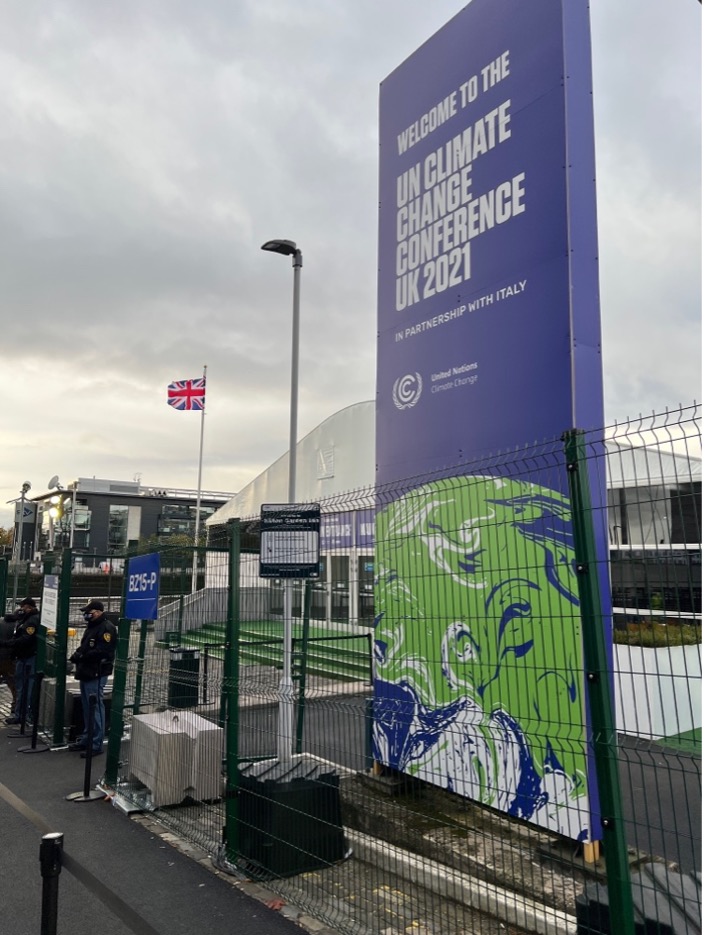
As an ethnographer rushing from one room to the next, trying to interpret all the minute nuances of the discussions, there is a constant anxiety of being in the wrong place and missing out on taking required notes needed to capture all the vignettes that are required for my research and writing to be successful. Fear of missing out is real, as people post on social media other key moments that I fear I “should” be at, as well as a fear of missing that one point or one quote at one talk because it slips by under the table, a bold statement disguised by formal niceties.
Naveeda Khan, in her book In Quest of a Shared Planet: Negotiating Climate from the Global South refers to the process of climate governance at COP as “a mammoth,” a space that requires traversing multiple domains, and the need to narrow ones focus to privilege one group or a single agenda item to be successful. In large part this is why I have worked to create momentum for collaborative event ethnography (CEE) among social scientists to observe climate meetings together, to share notes, insights, and findings, and to discuss multiple perspectives. Collective insight can be greatly beneficial to gaining a broader understanding of the climate governance process in these spaces, given their size and their multiscale and intricate structures. Some scholars have shared work on CEE of the UNFCCC process assessing the power and (in)justice of COP28 in Climate and Development and on Ethnographic Insights into Climate Worlds in Engagement, the online publication of the anthropology and environment society of the AAA. It is in this same effort to share research and encourage collaborative work that a collection on climate governance now appears in Anthropology News, setting the stage for the upcoming COP31 in Türkiye.
The future of COP meetings may be uncertain, as attendees lament the size, frequent petrostate locations, presence of oil executives, sheer magnitude of the meeting agendas, sometimes unfavorable outcomes, over-negotiated and weakened texts, and the lack of political will from many nations to directly cut fossil fuels. Nonetheless, COP meetings are arguably critical systems for addressing climate change. The meetings draw together all UN member states along with thousands of concerned stakeholders in unofficial capacities to discuss urgent issues. People share knowledge, science, solutions, innovations, and ideas; they discuss justice and financing; they directly take steps to confront climate change. These are spaces not only worthy of ethnographic study, but that require it.
In the accompanying essays, anthropologists who conduct research at the “sites” of climate governance, including, but not limited to, the UNFCCC COP meetings, the Convention on Biological Diversity (CBD), meetings of the Subsidiary Bodies, facilitative working groups, the Intergovernmental Panel on Climate Change (IPCC), National Climate Assessments (NCA), and other relevant forums, share their ethnographic experiences and personal insights into these spaces. Scholars consider the following questions: How have your observations, interactions, and research in the sites of climate governance shaped understandings of power, decision-making, and the distribution of knowledge? In what ways has your work illuminated how expertise is produced, contested, and legitimized, or how communities and individuals adapt, resist, and influence policies? What does your work reveal about the often-invisible mechanisms shaping global climate action and governance?
Contributors reflect on their direct engagements in these spaces to enrich the collective understanding of these critical arenas and anthropology’s role in unveiling governance processes and interactions. At this pivotal moment in the U.S., where climate science faces political challenges and global governance structures are under strain, it is vital to elevate our work, strengthen collective action, and support one another as scholars and practitioners engaged in climate research, policy, and the study of power in these systems. For those interested in participating or becoming more involved in this research, please consider submitting an essay and being involved in the Climate Change Interest Group of the AAA, as we coordinate research and manage Observer badges to the UNFCCC meetings, as well as assist in co-organizing and co-sponsoring side events where our colleagues present their expert knowledge and lived experiences with climate change and governance decisions (Figure 6).