

Article begins
The sight of masked immigration agents rampaging through cities, ripping people of color from their cars and homes, and killing at least ten people on the streets has sown terror and mass outrage across the US. Innumerable abuses by the second Trump administration’s Immigration & Customs Enforcement (ICE) and Customs & Border Protection (CBP) have, naturally, thrust their agents onto center stage in public imaginaries. Local police by contrast have been cast into unusually ambiguous roles after many years in the critical spotlight, as also happened after the January 6, 2021 coup attempt. Immigration agents’ overt cruelty and violence have led commentators to frame police departments as more professional and well-trained in comparison, and some departments have even been refigured as defenders of anti-ICE protesters against ICE violence. At the same time, many departments have eagerly acceded to the Trump 2.0 mass deportation agenda and strengthened their connections with ICE, both in and out of the public eye.
Our respective ethnographic fieldwork on policing and surveillance in the US showed us how the relations between police and other arms of state violence are vexed and worth disaggregating. Here we discuss how the police/immigration enforcement nexus has changed under the second Trump administration, with a particular focus on the surveillance practices, deputization, and objections of local police. On the one hand, the institution of US policing was already primed for closer alignment with the Department of Homeland Security (DHS) and cooperation with its explicitly xenophobic and white supremacist agenda. Police serve as the frontline violence workers within the US, police officers themselves already skew conservative, and their agencies have long served as auxiliaries for ICE and vital nodes in the “borderland circuitry” that ensnares and immiserates immigrants of color. On the other hand, analyzing the contemporary forces driving deeper police engagement in the Trump administration’s mass deportation agenda—alongside institutional cross-currents and even resistance—offers key insight into how and why the police/immigration nexus is strengthening today.
Surveillance
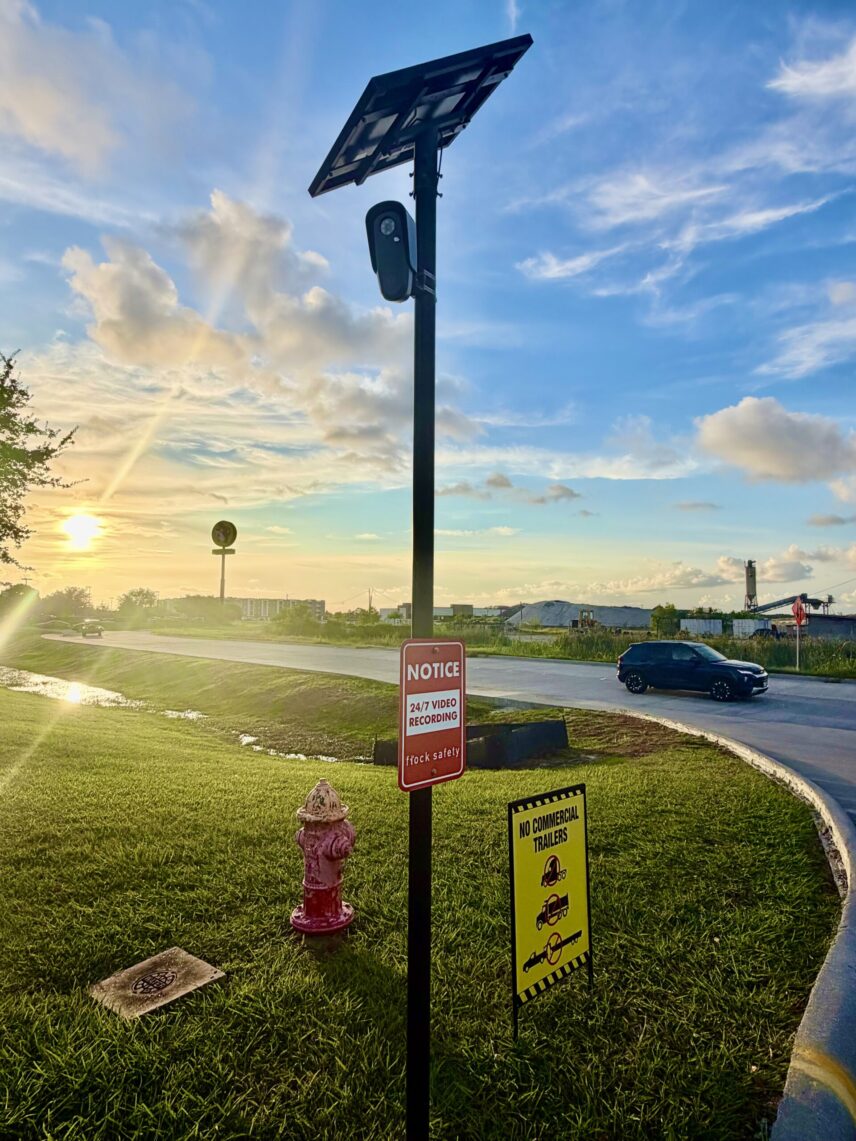
A growing public debate has emerged about how local police departments and sheriff’s offices are granting ICE access to expansive surveillance networks. This kind of collaboration is not new—federal and local law enforcement agencies have long teamed up through embedded surveillance infrastructures—but the scale is simply increasing. Beginning in 2018, federal agencies like ICE and the DEA were concealing cameras in everyday objects such as streetlights and traffic barrels, paying private companies like Cowboy Streetlight Concealments for video recording and reproducing equipment. The DEA also utilized digital speed-display road signs equipped with automated license plate reader (ALPR) technology. This practice represented an early phase of embedding federal surveillance directly into the public landscape—surveillance infrastructure that remained available to local law enforcement even in jurisdictions where departments publicly resisted direct collaboration with ICE (see below).
During our separate fieldwork (JK 2015-2018 and JO 2018-2020), we repeatedly heard police officers verbally distance themselves from collaborations with ICE. Yet, they rarely framed their use of surveillance technologies and data that originated through federal agencies as the same kind of collaboration. Officers who criticized working directly with ICE nonetheless often regarded accessing shared surveillance systems or federally generated intelligence as ordinary components of policing rather than participation in immigration enforcement per se. For officers, this distinction helped render federal surveillance infrastructures more palatable to their communities even where formal partnerships with ICE remained controversial.
Surveillance collaborations have since expanded dramatically through police partnerships with companies like Flock Safety. Flock’s network of ALPR cameras, now deployed in thousands of municipalities across the country, generates a vast web of vehicle-tracking data. While Flock Safety states they do not directly partner with ICE and claims no responsibility for how local police departments share data, reporting has shown that direct collaborations aren’t needed. ICE can access surveillance information through local law enforcement without formal information-sharing agreements with the technology providers themselves. The proliferation of technologies through companies like Flock marks a new phase in which local infrastructure itself effectively becomes a vehicle for federal immigration enforcement. What began as covert surveillance using concealed cameras has evolved into a normalized infrastructure that local governments maintain and that further embeds immigration enforcement within everyday policing.
287(g) Expansion
Another major way the immigration/police nexus has expanded is through 287(g) agreements in which police are deputized, as the ACLU caustically puts it, as “deportation assistants.” Local officers already can and do voluntarily help ICE and CBP, sometimes in violation of municipal sanctuary ordinances that limit such collaboration, without taking on federal immigration authority per se. The 287(g) program broadens their powers by officially delegating some immigration authority, for example by allowing officers to screen the immigration status of people they arrest or simply encounter on the street. It has been controversial among the public and even police themselves, as we describe below. It has also proven a key “force multiplier” in the Trump administration’s mass deportation agenda, dramatically amplifying ICE’s reach into local communities.
The landmark One Big Beautiful Bill Act (OBBBA), passed over unanimous Democratic objection in July 2025, supercharged today’s 287(g) expansion. The OBBBA provided an unprecedented infusion of funding into DHS operations, notably including $75 billion over four years to ICE and nearly $65 billion to CBP. These staggering figures multiplied both agencies’ budgets many times over, for instance doling out a 400 percent increase in ICE’s annual detention budget. In June 2026, an act sponsored by the late Senator Lindsey Graham approved a further $70 billion to DHS, on top of the $170 billion over four years already granted by the OBBBA. Vast sums of this $240 billion total injected into the burgeoning “deportation-industrial complex” will be funneled to local and state police for immigration enforcement. At least $14 billion from the OBBBA is specifically earmarked for local and state governments’ border walls, detention centers, and 287(g) agreements.
The number of agencies with active 287(g) agreements has mushroomed: from around 135 at the end of 2024 to over 1,800 by July 2026, a thirteen-fold expansion under Trump 2.0. Over one-tenth of the country’s police agencies, serving over 16 percent of the U.S. population, now participate in 287(g). The overwhelming majority of these new agreements are a type of 287(g) agreement called the task force model, which enables officers to question and arrest people at any time for immigration violations, without any suspicion of crime. Predictably, the task force model encourages stopping working-class brown and Black people with non-American accents. It was terminated by the Obama administration due to severe racial profiling but quickly reinstated under Trump 2.0; meanwhile, the Supreme Court recently blessed immigration officers’ profiling practices. Thanks to the OBBBA, 287(g) task force model participants can now reap serious financial benefits from ICE: free training, $100,000 for new vehicles, full salary and benefits for each 287(g) officer, and bonuses for finding undocumented people. Sheriff’s offices, National Guard units, fish and wildlife departments, and at least seventeen colleges and universities in Florida have all signed task force model agreements since 2025.
Republican-led state governments have also helped expand 287(g), pairing financial inducements with legislative mandates to persuade local police to participate. One example of the latter is Texas Senate Bill 8 (SB 8), signed into law in June 2025, which requires every sheriff operating a county jail to enter into a 287(g) agreement with ICE by December 1, 2026, even though no major city in Texas—including Austin, Dallas, and Houston—currently maintains such an agreement. The state’s Attorney General has the authority to sue any sheriff who refuses to comply. Similarly, Florida now requires every county sheriff operating a detention facility to participate in 287(g). At the same time, several Southern and Midwestern states mandate that local officers honor ICE administrative warrants, even in the absence of formal 287(g) agreements. Together, these measures show how state governments are transforming participation in federal immigration enforcement from a discretionary local policy into a statutory obligation.
State funding has also proven a potent tool to expand local cooperation. Florida and Texas have supplemented ICE’s financial incentives by deploying hundreds of millions of state grant dollars to tempt cash-strapped agencies and to defray their longstanding fiscal objections to 287(g) participation, discussed below. Even jurisdictions that have resisted these temptations and sought to limit cooperation have faced substantial political and financial pressure. Houston’s “30-minute rule battle” shows how state governments can leverage fiscal power to reshape local policing. In 2026, Houston adopted an ordinance, designed to preserve community trust, that prohibited HPD officers from detaining individuals beyond thirty minutes solely to facilitate ICE custody transfers. The City Council reversed the policy after Governor Greg Abbott threatened to withhold $110 million in state funding from the city.
These mobilizations of federal and state funds to strengthen local police collaboration with ICE illustrate a significant power imbalance between localities and other levels of government. Cities’ financial dependence on state funds, combined with the OBBBA’s massive cash infusion, influences local policy and may undermine cities’ ability to determine their own paths. Given today’s barrage of dollars and legislative actions, then, it is no surprise that so many departments have agreed to serve as the hands of immigration enforcement.
Internal Objections to Expansion
Nonetheless, deeper police collaboration with ICE has faced strenuous opposition, not only from the public and sanctuary jurisdictions but also from some police leaders. Two of the key reasons that police object to expanding cooperation with immigration authorities involve department resources and community trust.
Police departments nationwide have complained of understaffing since at least 2020, and immigration enforcement and training can divert labor and drain budgets. For example, although some police executives claim that their officers’ participation in 287(g) merely amounts to checking for outstanding immigration warrants when they stop someone, departments have also set up highway checkpoints to screen for arrestable noncitizens, lent out their officers for multi-day trainings and multi-agency operations, and overspent on enforcing immigration law while failing to fulfill core duties such as clearing homicide cases. From an abolitionist perspective critical of police claims to “crime-fighting,” shunting resources from ordinary police work to immigration enforcement might be a classic case of six of one, half dozen of the other. However, it causes much consternation among police concerned with case closure rates and strapped budgets. So too does the heightened risk of civil lawsuits over racial profiling and other rights violations that comes with immigration policing.
Police officials also object to ICE collaboration on the grounds of community trust, as referenced above. Patrol officers told JK during fieldwork in Maryland that any whisper of departmental immigration enforcement would frighten local residents away from reporting crimes or serving as eyewitnesses, a concern unsurprisingly borne out many times over in studies and reporting. Similar sentiments were echoed during JO’s fieldwork in Houston, where constables and patrol officers emphasized the important distinctions between local police and ICE. They expressed concerns that if local police were to assume the duties of ICE agents, or vice versa, it would undermine the relational policing approach professed by HPD—an approach premised on community policing ideals of trust-building and cooperation. In the opening days of the Biden administration, a group of police executives urged DHS to rebuild a wall between local law enforcement and federal immigration policy, arguing that police must “prioritize local safety, rather than sacrificing community safety to become pawns” of ICE. Their calls to end 287(g) went entirely unheeded but demonstrated internal resistance to the first Trump administration’s efforts to annex local policing to ICE.
Today, amidst the rising tide of shared surveillance and freshly inked 287(g) agreements, police resistance—on police terms—persists. Some department leaders have attempted to reassure residents that their officers will not actively help ICE. Others have rejected ICE requests to sign up for 287(g), or publicly proclaimed they would crack down on ICE abuses. Notably, nine states, including New Mexico and Maryland, restrict local involvement in federal immigration enforcement and effectively ban state and local law enforcement agencies from entering into 287(g) agreements. For its part, DHS has struggled to overcome police objections to greater cooperation through not only funding but also calls to “defend the homeland” and, more straightforwardly, promises to “bring hell” on departments that refuse to assist ICE.
Conclusion
The Trump 2.0 administration has systematically incentivized police collaboration with immigration enforcement, transforming sporadic cooperation into a standardized apparatus for mass deportation. This has been achieved through a combination of financial inducements, legislative mandates, the significant expansion of 287(g) deputization programs, and the normalization of shared surveillance infrastructures, all designed to embed local police as indispensable partners in federal immigration efforts. While some police leaders have voiced resistance, citing concerns over departmental resources and the erosion of community trust, federal pressure and financial dependence have overcome these objections for many. Consequently, local law enforcement is becoming structurally integrated into the federal deportation machine. Blurring the distinction between local policing and federal immigration enforcement not only redefines the nature of local policing but solidifies a pervasive architecture of fear and control, making the terror of overt immigration actions an insidious, everyday reality for vulnerable populations.
Jessica Olivares and Cagri Yoltar are section contributing editors for the Association for Political and Legal Anthropology.