

Article begins
Gina Núñez-Mchiri, San Diego State University, President of the Association of Latina/o and Latinx Anthropologists 2024-2026
As ALLA, we seek to connect with people and organizations that work with Latines (gender-neutral term favored in spoken Spanish) in the cities where our annual American Anthropological Association meetings are held. Knowing these diverse Latine communities expands our sense of community beyond our profession. Last November in 2025, we met with Latine communities in New Orleans in partnership with two community groups, Familias Unidas en Acción and the Caribbean and New Orleans Arts (CANOA) Center, and Dominican musician Fermín Ceballos and his band. Through a grant supported by the AAA, we hosted an evening of dialogue, music, dancing, and shared testimonios. A local food vendor sold flautas and tacos de cochinita pibil, a Yucatán specialty, to feed our participants, co-hosts, and musicians.
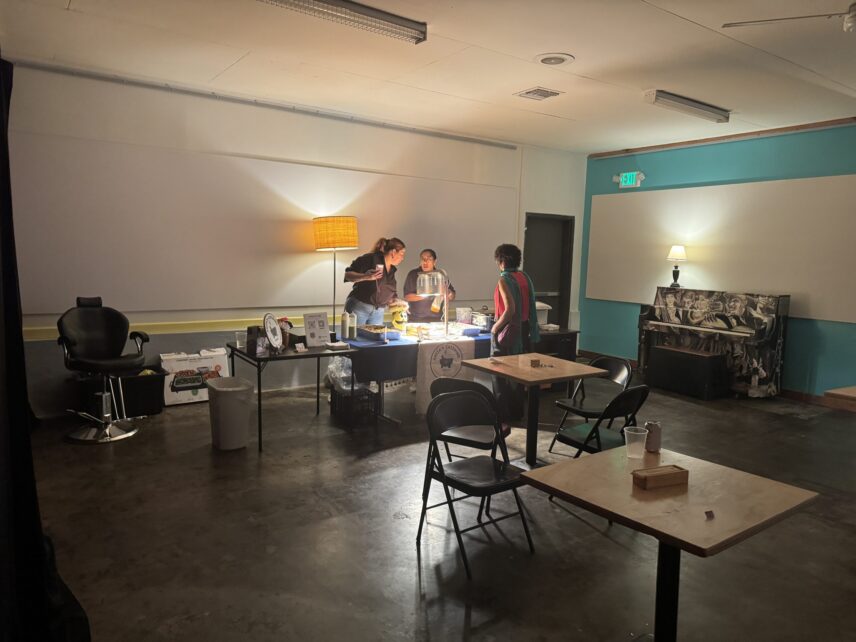
This kind of gathering does not happen because a professional association shows up in a new city with good intentions. It happens because anthropologists take the labor of relationship-building with organizations and cultural workers already embedded in community life seriously. Convivencia takes work as critical spaces of communication, where testimonies, life stories, pláticas, generational knowledge, and experiences are shared. There is concrete methodological, theoretical, and ethical value in sitting with members of local nonprofits before, not after, we claim to understand a place. Convivios, living with and among one another in joy, struggle, and celebration, are relational and collective learning spaces and events used in community organizing and celebrations. Familias Unidas en Acción (FUA), an immigrant rights organization, holds institutional memory and a pulse on a community’s crises, resilience, and everyday needs that no archival research or short-term fieldwork can replicate. Meeting with FUA in person before the event reoriented our purpose. We were not there to extract stories for our own advancement, but to offer presence, resources, and accompaniment—a platform for relationship-building that could outlast a single conference visit and signal our solidarity with their struggles.
Our planning unfolded over months of emails, Zoom calls, and phone calls with Fermín, Leticia, and Marcela Hernández from FUA. Building trust to host an event during our annual meeting required consistency and perseverance. In a climate of fear and distrust, we recognized that asking people to gather and share stories of their struggles carried real risk. We learned about the history of migration from Honduras in particular, often by AfroLatines who faced grueling journeys through Central America and Mexico to reach New Orleans. We shared our ALLA website, with photos and biographies of our board members, and made our case for a meeting of the minds—collaboration and celebration together—through calls, texts, and emails.
This slow, relational approach made space for something that conferences rarely allow: mutual vulnerability. FUA staff and community members were not simply informants answering our questions; they were partners deciding, on their own terms, how much of their organizing work, fears, and joys to share with visiting scholars. That shifts anthropology from observation toward accompaniment, where trust is earned through follow-through, patience, and a willingness to adapt our timelines to the rhythms of frontline organizing.
Arriving in New Orleans in November 2025, Dra. María Cruz Torres (ASU), Dr. Patricia Zavella (UCSC, emerita), and I visited a neighborhood home that serves as FUA’s headquarters—an open seating area and a backyard food pantry used for meetings, social services, and public events. We learned of the organization’s efforts to support people through crises, particularly COVID and Hurricane Katrina. Marcela, FUA’s executive director, described the group’s work distributing meals and networking with other immigrant rights organizations to share strategies for avoiding encounters with ICE and local law enforcement. Sitting with Marcela and Leticia revealed a benefit easy to underestimate: nonprofits already know how to hold space for hard conversations under real risk, protecting community members’ safety and dignity while still allowing outsiders in. Anthropologists who partner with them gain not just access, but a working model of ethical engagement grounded in mutual aid rather than extraction. In a follow-up email, Marcela described the devastating impact of ICE raids on FUA’s members—detentions, family separations, and children left without parents—a crisis compounding daily for their community.
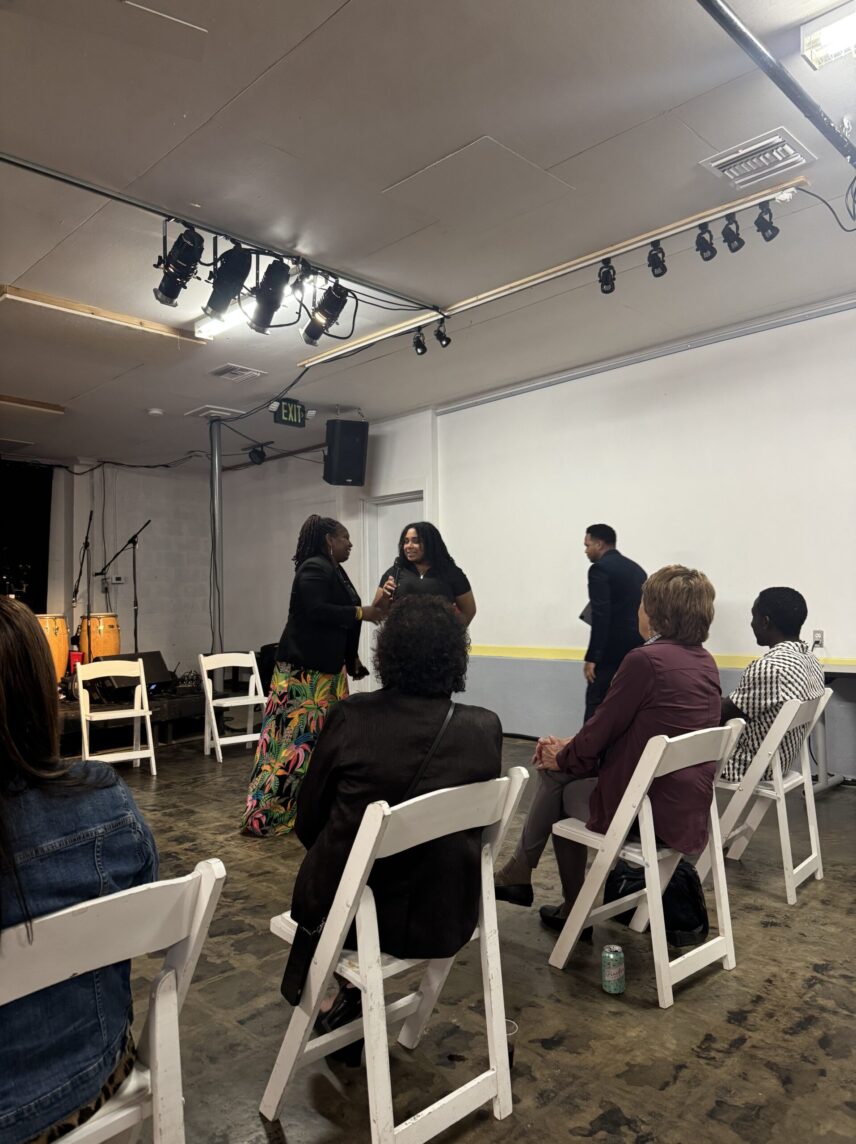
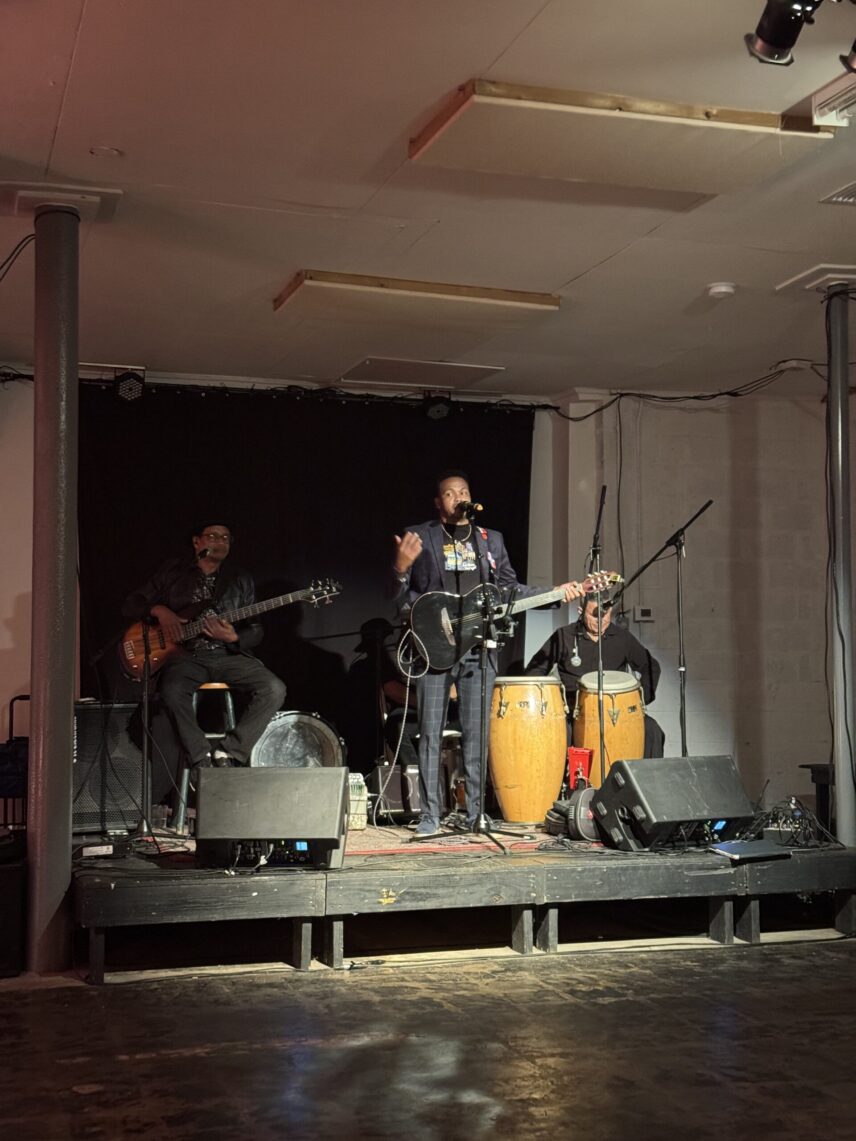
Fermín Ceballos, whose music documents the everyday lives of immigrants living in the shadows as they try to make a living, was central to the event. He shared that efforts to secure driving licenses for immigrants in New Orleans had failed. He later shared a new song, “Suma y resta,” about the economic contributions Latine communities make locally, statewide, and nationally. As a personal mission, Fermín writes and performs music that elevates the call for humanitarian responses to immigration, understanding music’s power to convene, gather, and build bridges across linguistic and cultural differences. He also raises support to buy instruments and school supplies for young musicians in the Dominican Republic. He remains an active FUA member, regularly organizing and playing at concerts and cultural celebrations in the city.
Working alongside Fermín revealed a different, equally important benefit: music carries knowledge that interviews and field notes cannot fully capture. Fermín served as a broker between us and FUA, gathering input, scouting our venue at CANOA, and identifying participants willing to meet visiting anthropologists. His songs condense years of political argument, economic precarity, and communal pride into verses that an entire room can sing together. Partnering with musicians rooted in immigrant communities gives anthropologists access to a form of collective testimonio—performed and embodied rather than mediated solely through transcription. Fermín’s brokering meant that the evening’s knowledge was co-created in real time through call-and-response, dance, and laughter. We met immigrants from Central America, mainly Honduras, and the Caribbean, some of whom had lived in New Orleans for decades. We learned how generations of immigrants have built relationships with the city through trade, education, music, language, and culture—part of New Orleans’ origins and its ongoing fusion of Indigenous, African, Spanish, French, and Latine cultures.
Time felt both urgent and elastic in planning this event for months. FUA had more pressing things to attend to, on the front lines of daily survival, while we operated from the relative distance of academic space. We tried to consider the organization’s needs before asking anything of them, and patience mattered as much as persistence in securing both a date and funding.
The question is: how can we, as ALLA members, stay connected at this encuentro (encounter)? This question may be the truest measure of whether this encounter was worthwhile. The value of meeting with local nonprofits and musicians isn’t contained within a single evening—it lies in what the relationship makes possible next. Because we invested time building trust beforehand, we left New Orleans with more than fond memories. We left with a concrete list of needs—transportation, meals, know-your-rights information, instruments, and school supplies for young musicians in the Dominican Republic—that our association can support long after the conference ends. Community-engaged anthropology of this kind resists the extractive pattern in which scholars parachute into a city, gather what they need, and disappear. Instead, it models reciprocity as an ongoing practice.
On Friday, November 21, 2025, we gathered at CANOA, brought together in dance and celebration by Fermín Ceballos’ band. There, we heard testimonios from Honduran and Venezuelan immigrants who had made New Orleans home. By the evening’s end, we reflected on the value of carving out space for community—for breathing and aching together for a few hours—and on the work still ahead. Marcela and Leticia shared their stories and invited ALLA members to stay in communication and community with them. There were expressions of gratitude and solidarity because, for a few hours, we took the time to connect, dance, pause, reflect, and feel alive in a shared space.
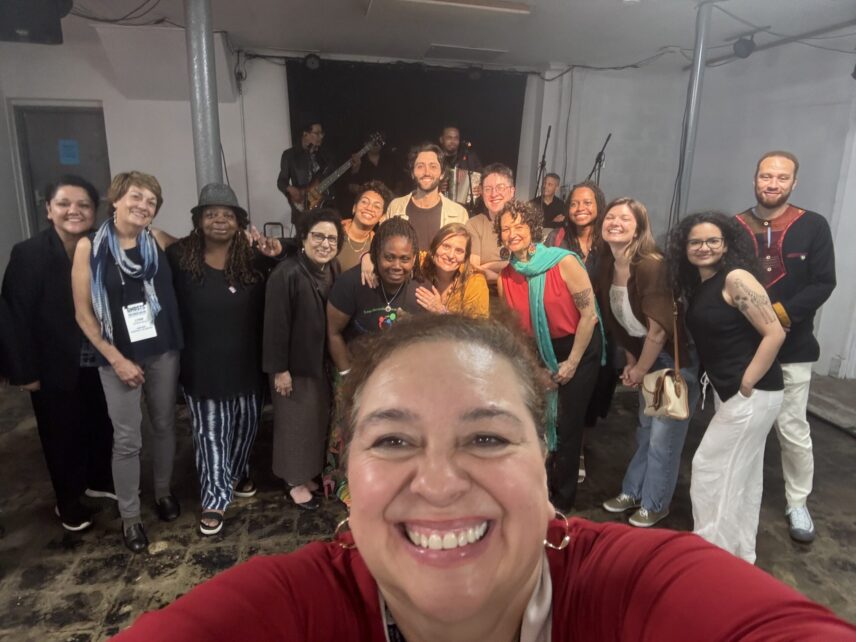
This experience affirmed that anthropology grows richer, more ethical, and more relevant when built on sustained relationships with local organizations and cultural workers who already carry the weight of community care. Familias Unidas en Acción offered an institutional understanding of crisis and resilience; Fermín Ceballos offered an artistic, embodied understanding of belonging and struggle. Together, they showed us that the borders between researchers and communities are porous, and that some of the most meaningful anthropological insights may not be written down. They are sung, danced, shared over a plate of flautas or tacos de cochinita pibil, and carried forward in the commitments we make to one another after the music stops. It is an anthropology that enriches your soul y nos da vida.
Sergio Lemus and Jerry Hernandez are section contributing editors for the Association of Latina/o & Latinx Anthropologists.
Visit our ALLA website at https://alla.americananthro.org for images of events. Familias Unidas en Accion’s website is https://familiasunidasla.org, and Fermin Ceballos Music may be found on various platforms, including YouTube and Spotify.