

Article begins
It was the sixth day after Lunar New Year in 2025. I was on my way to the outskirts of London to meet the Wong family. Typical of many middle-class families who left Hong Kong in the politically fraught post-2019 emigration wave, Jason and Emma, a married couple in their mid-forties, moved to the UK with their children in 2022. The couple left well-paid jobs in Hong Kong to pursue a more liberal life for their children in the UK. Unlike other migrant families who sold their houses to purchase new ones abroad, the couple retained their property back home and chose to rent in Outer London. Aside from their property, they also left behind their parents, pets, and friends. These “left-behind” categories recurred over our dinner conversation and shaped many of their immediate plans. Trivial as they may seem, these elements create invisible ties that stitch migrants to their home city.
Through the lens of affect—what Brian Massumi describes as “a felt bodily intensity”—I focus on the embodied connections that migrants maintain with their home city but are often invisiblized by migration bureaucracies. In both scholarly and popular discourse, migrants’ nostalgia is often linked to the notion of a “place of origin.” Moving beyond this place-based category, this essay examines migrants’ spatial longing for the “left behind” to illustrate the nuanced co-production of affect and space.
The Official Six-Year Immigration Clock
Jason and Emma left Hong Kong after the tumultuous 2019 Anti-Extradition Bill Movement—a protest against a bill that would have legalized extradition from Hong Kong to other jurisdictions, including mainland China—and the subsequent political shift toward authoritarianism in the city. An emigration wave arose amid a host of social anxieties over the erosion of freedoms of speech, press, and protest, and was further catalyzed by the UK’s relaxed immigration policies (with Canada being another popular migration destination). Like many other concerned parents, Jason and Emma lost confidence in the local education system and hoped their children could experience a more liberal education and way of life.
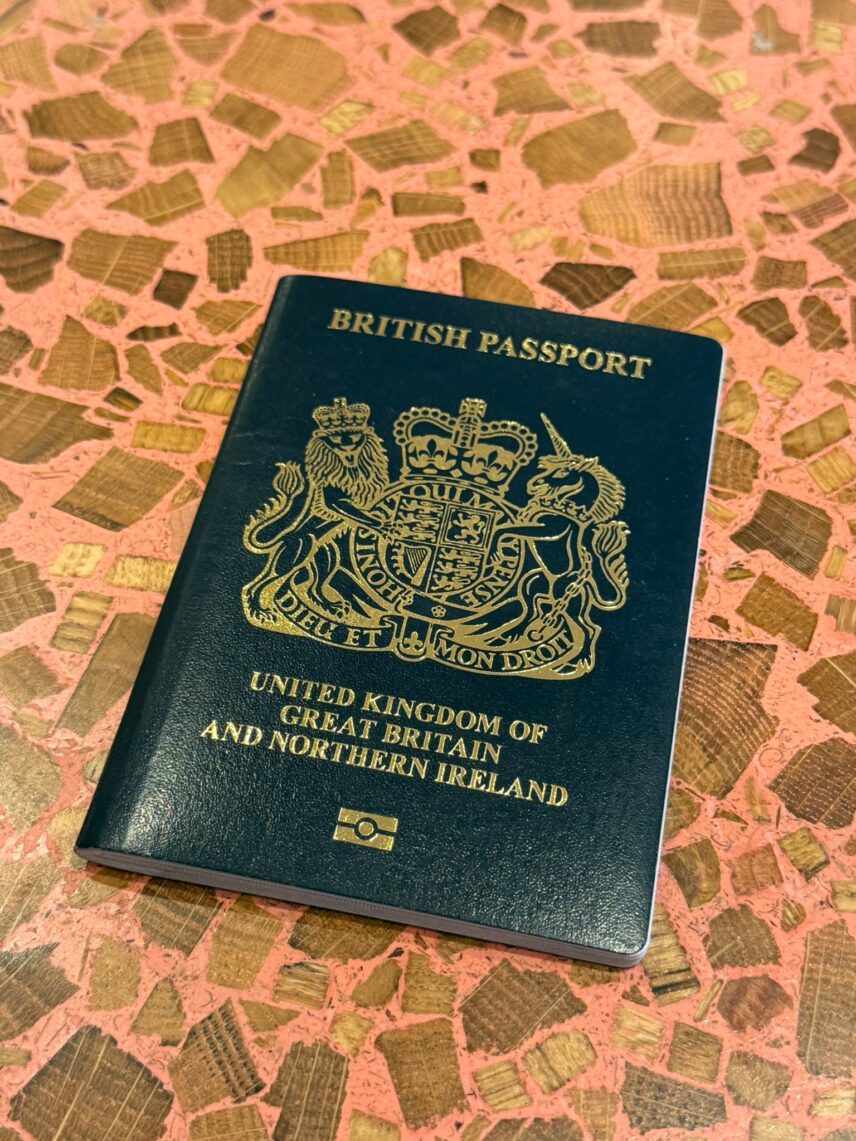
In 2022, they entered the UK via a special immigration pathway called the “British National (Overseas) visa” (BNO visa), which allows eligible applicants to obtain British permanent residence after five years, and British citizenship after an additional year. Since then, their future plans have been choreographed around this six-year timeframe, an institutionalized temporality of immigration and imagined social integration.
Jason and Emma’s aspiration for a liberal life also encompasses an aspect of intergenerational class mobility. They spared no effort to offer their children what they considered the best education, from choosing an English tutor with the “right” accent (read: middle-class white American or British) to selecting schools with the most promising public exam results. While they deemed cultural integration into British society an advantage for their children, the middle-aged couple did not consider the UK home: “Citizenship matters; we haven’t purchased a home here, though. We are not sure if this is where we’ll retire. We may move to Japan once our kids go to university.”
Jason continued: “I worry about our leased property in Hong Kong. The current tenant caused some damage to the house… moldy bathroom floor. We handled it online. Spent a lot to fix it. But I couldn’t see the renovation work myself.” Talking about their property soon led to something closer to their hearts: their parents and pets. As our conversation lingered into midnight, it dawned on me: their relationship with Hong Kong is defined not the city but the loved ones they left behind.
An Open Wound, Embodied and Spatially Stretched
Within the six-year immigration clock, the couple must fulfill a list of requirements to secure their citizenship. They need to pass standardized tests on English and British culture, pay a healthcare surcharge, and save for their children’s university tuition. These settlement tasks, though demanding significant time and energy, did not diminish their connections to the loved ones in Hong Kong.
Emma shared her travel plans: “My puppy in Hong Kong was gravely ill. I planned to go back for a week in April with the kids. Unfortunately, it passed away before we could make it.” She signed: “The puppy had spent a decade with my parents. I figured they would need my company. Still, if it weren’t for the puppy, I wouldn’t go back. I’d rather pay my parents a trip to Europe.” I wondered aloud: “So the puppy was the main reason you decided to visit Hong Kong?” She agreed: “Yes. There isn’t much in Hong Kong. And we couldn’t stay too long—we have to time everything carefully.”
The couple had never considered migration before the emigration wave. The post-2019 political transformation in the city powerfully reshaped their life trajectory, as it did for more than 185,000 BNO visa holders. Emma’s reference to “tim[ing] everything carefully” alludes to the “continuous residence rule” within the immigration program, which limits applicants to no more than 180 days outside the UK in any given 12-month period during the five-year residency requirement.
Gifted with numbers, Emma was the architect of the family’s immigration plan. She flawlessly managed the administrative, accounting, and logistical tasks while keeping costs low. “No small feat for a working mother,” as Jason acknowledged. Who would imagine an ill puppy could compel such a practical planner to spend thousands of dollars to fly home? She understood that her parents, now without the puppy’s companionship, would need her. That said, she was clear about one thing: the location didn’t matter, so long as she could meet them in person. This orientation created a spatial flow that emphasized togetherness over destination. When compared to the grandiose matters of citizenship, passports, and children’s futures, the human-animal bond is often dismissed as a backseat issue. Yet Emma’s story shows that pets do matter in a migrant’s decision to visit—or not to visit—their home city.
As an act of care, Emma eventually treated her parents to a summer vacation in Europe—an experience commonly seen as middle-class in Hong Kong. Like Emma, many middle-aged migrants care deeply about their aging parents at home. This emotional bond often translates into moral indebtedness, as they expressed guilt about leaving behind their parents for their children’s sake. A father recounted: “I’m jealous of those whose parents moved to the UK. For me, it doesn’t add up financially. I miss mom but my kids are here. There is no other way (mou baan faat 無辦法).”
In Confucian culture, adult children are responsible for taking care of their aging parents. While anthropologists have explored the moral economy of intergenerational responsibilities in Chinese families, there are fewer studies on how Chinese migrants manage these spatially stretched and competing responsibilities towards parents and children in different places, materially and emotionally. Not all migrants manage to bring their parents to the UK, hindered variously by financial barriers, medical concerns, or more commonly, the parents’ unwillingness to relocate. This often results in unresolved guilt. While it might not surface in everyday life, guilt is embodied and seldom subsides easily. For some, it haunts them as an affective cost in migration. In the dilemma of leaving or staying, the migrant father reasoned: “There is no other way.”
A year before I penned this essay, I met a migrant who could not make it back in time to bid farewell to his hospitalized mother in Hong Kong. A warehouse worker and sole breadwinner for his wife and kids, he worked six days a week. When he learnt of his mother’s critical condition, he wanted to catch the earliest possible flight home. In Chinese society, seeing one’s parents before their passing is considered an important component of filial piety; missing the farewell could be traumatic and leave prolonged guilt in some children.
The migrant hit a hard reality: his family needed his income, and his job didn’t allow sudden leave. He had to make the crushing decision not to return before his mother’s passing. Two weeks later, he flew alone to Hong Kong for the funeral. His siblings were understanding. But who can truly grasp the weight carried by a son flying thirteen hours alone to his mom’s funeral—knowing what he had already missed?
In the emigration wave, many migrants bear the emotional costs of unfulfilled responsibility toward their parents. The migration decision is itself a moral impasse: leaving as a form of care for their children, or staying behind to care for their parents. The crisp phrase “no other way” envelops a world of resigned grief for their parents far away. This moral debt is an open wound in migrants’ lives, at once embodied and spatially stretched.
Spatial Longing for the Left Behind
More than a linear flow of people and belongings, migration is mobilized in a choreography of responsibilities, care, money, love, and grief. It nonetheless often leaves migrants caught in difficult decisions: to whom they feel morally obliged, to whom they actually extend care, and from whose responsibilities they ultimately decide—however difficultly—to resign. While ethnographers have richly documented migrants’ lived experiences under visa and border regimes, this essay illuminates the affective ties invoked by the loved ones migrants left behind—ties often rendered invisible by state immigration systems.
Emma’s frail puppy became a pivot in the international travel plans for her parents and herself. Jason’s property in Hong Kong, whose rental income cushioned his family’s life in the UK, remained a stressor. These migrants expressed guilt at not being able to care for their aging parents, an unwilling price paid to secure their children’s future. And the migrant son who missed his mom’s farewell would find solace in his family’s empathy and shared grief. Their spatial longing is not grounded in place but oriented toward their loved ones. Treading a migration path marked by care and guilt, these migrants embody a sense of home woven together by loved ones across continents.
Alex Wolff and Yanping Ni are the section contributing editors for the Society for East Asian Anthropology.