

Article begins
“The purpose of this communication is to notify you that the U.S. Environmental Protection Agency is hereby terminating [your] Assistance Agreement.”
With that short sentence, we lost $15 million dollars.
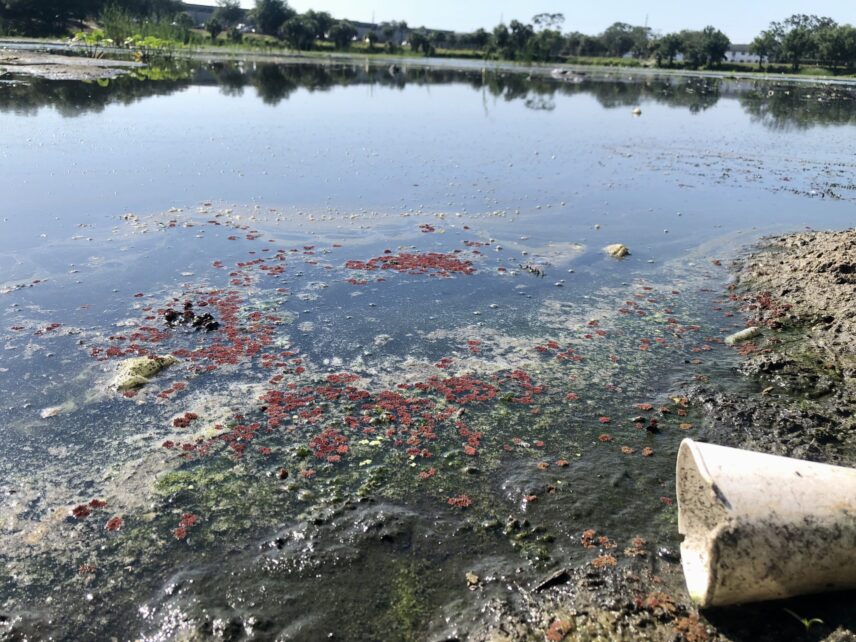
It was May 2025, just after my spring semester ended, and I was excited to begin what was supposed to be environmental justice work aimed at helping community residents near my university in Tampa, Florida, who experience chronic flooding and have contaminated drinking water in their homes (Figure 1). The University Area neighborhood, which consists of mostly Black and Hispanic families who were resettled here in the 1960s–1980s from urban renewal projects, is one of the poorest in the state for human and environmental health.
But under a new Presidential Executive Order 14151, “Ending Radical and Wasteful Government DEI Programs and Preferencing,” our funding was revoked and our community partners lost the promise of clean water. We struggled to understand the termination, especially because Pillar #1 of EPA’s new strategic plan “Powering the Great American Comeback” calls for “clean water for every American.” Why were we targeted? What could we do about it?
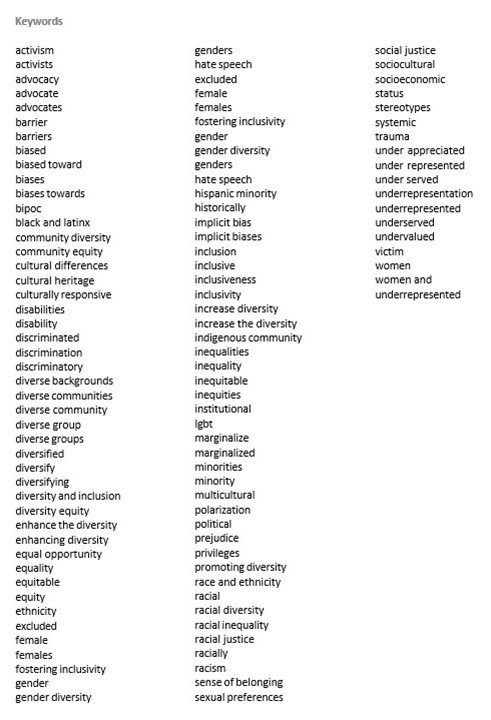
In subsequent meetings with agency representatives, we learned that because our research gives preference to racial and ethnic minorities, it could not be supported under the new executive order. In a statement to a local news station about our grant, the EPA said, “The Biden-Harris Administration shouldn’t have forced their radical agenda of wasteful DEI programs and environmental justice preferencing on the EPA’s core mission.” If we wanted to continue our work, we would have to—in their words—“scrub” our workplan of all references to race and ethnicity, among other disallowed terms, including variations of “culture” and “community.” They even provided us with a handy form displaying all the banned terms (Figure 2) and a “decision tree” (Figure 3) they use to flag projects that do not comply.
![Figure 3: A “Decision Tree” used to flag proposals and other grant materials for—according to an email I received from the Environmental Protection Agency—“questionable terms that would be out of EO [Executive Order] alignment.”](https://www.anthropology-news.org/wp-content/uploads/2026/03/Wells-Fig-3-856x683.jpg)
Was “scrubbing” some new form of ideological censorship by the federal government or was it staffers’ attempt to put policy into practice? When I first heard the term “scrub,” I recalled anthropologist Sally Engle Merry’s influential book Colonizing Hawai’i, where she argued that throughout the colonial period, when a coalition of actors gained ascendancy at a particular historical moment, a critical strategy for building and legitimizing power was to institutionalize their meaning of key terms in law. This process involved the creation of new terms as well as the deletion of others. Words matter, not just for governance but because they shape how we construct, express, and experience our worldviews—what we believe is possible or impossible in our lived realities. This has practical significance, too, because “You can’t be what you can’t see,” as one of our community partners articulated elegantly. Being asked by the EPA to “scrub” my research of people’s identities and how they talk about their struggles gave me that strange but familiar feeling of the colonial strategies Merry describes for native Hawaiians in her book and their entanglement with capitalism, imperialism, and white supremacy.
Of course we did it. We scrubbed our work plan in hopes of hanging onto our funding. This was not our decision, however. At a hastily organized community meeting one night after the news of the grant’s termination started to settle, residents told us they desperately needed the resources and wanted us to do “whatever it takes” to make it happen. They did not like the censorship, to put it mildly, but understood how structural racism works, and that to dismantle it sometimes means “working from within” the system. So, we scrubbed. We used the EPA’s list of banned terms to identify those in our workplan, and we replaced them with alternatives we thought would be acceptable or less controversial. For example, we turned “environmental justice” into “integrated brownfields challenges.” References to race and ethnicity were changed to different forms of the word “impoverished.” And so on. By the time we were finished, the workplan still retained our desired goals and outcomes, but the language used to convey them was altered to comply with what our research partners called “anti-DEI ideology.”
In the end, the EPA decided to uphold the termination and keep the money—at least for now. The loss of funding and all the help it promised to bring has been hard on the community. It has further eroded the fragile trust that residents have in the government and in my university as a partner for change. At one of our town hall meetings, one man stood up and said, “Look, we been sold too many dreams already. It just ain’t gonna happen.” What will it take to rebuild trust, not just with this community, but with the hundreds of others whose funding—and identities—are being scrubbed away? For many in the community we work with, it is also about visibility. Forcing people to divorce their identities from their lived experiences makes them feel like those identities do not matter, like they do not matter as people.
If “scrubbing,” like racism, is about invisibility, then resisting these actions or restoring what they remove must involve knowing, seeing, and revealing. This is a vital role for anthropology in these uncertain times. As anthropologists, we can use our skills as cultural brokers, translators, storytellers, partners, advocates, and activists to work collaboratively with communities to direct attention to erasures and understand their implications for justice, equity, and humanity.