

Article begins
Bach’s Minuet cuts through the cacophony of the respiratory ward. A nurse emerges from the station, moving purposefully toward a patient’s room. This is just one moment in the sonic landscape of a hospital in suburban Osaka, Japan—a world where coughs, beeping monitors, footsteps, and countless other sounds create a complex auditory environment that medical staff must learn to navigate and interpret.
This melody is the nurse call, a tone generated by pushing a button attached to a hospital bed, that is used by patients to call a nurse for help. When a patient presses the nurse call button, a melody plays from the nurse call machine in the nurse station. There are several types of this melody, and the minuet is used in this hospital. At the same time the melody plays, the name of the calling patient and their room number are displayed on the screen. The nurse picks up the receiver and asks, “How may I help you?” If a patient cannot speak or it appears to be an emergency, the nurse will go to the patient’s room immediately when they hear the sound.
Standing in the corridor, I witness another sonic event: a sharp buzzer erupts from a patient’s room. The reaction is immediate—every nurse in the hallway snaps to attention. The nurse closest to the room rushes in, and seconds later, the alarm ceases. This is a ventilator alarm, a sound that can signal a life-threatening emergency.
The sound of the alarm on the ventilator varies according to three priority levels: low, medium, and high. If there are significant physical changes and an increased risk to life, a high alarm is issued. The cause of the alarm cannot be determined at a distance, so when the alarm occurs, the nurse must go to the room to check the device and respond accordingly with the care the patient needs. This respiratory hospital ward is where many patients with respiratory illnesses such as lung diseases are hospitalized. Here, life-supporting medical equipment such as ventilators are often in use. As breathing is vital to life, dealing with ventilators is a top priority.
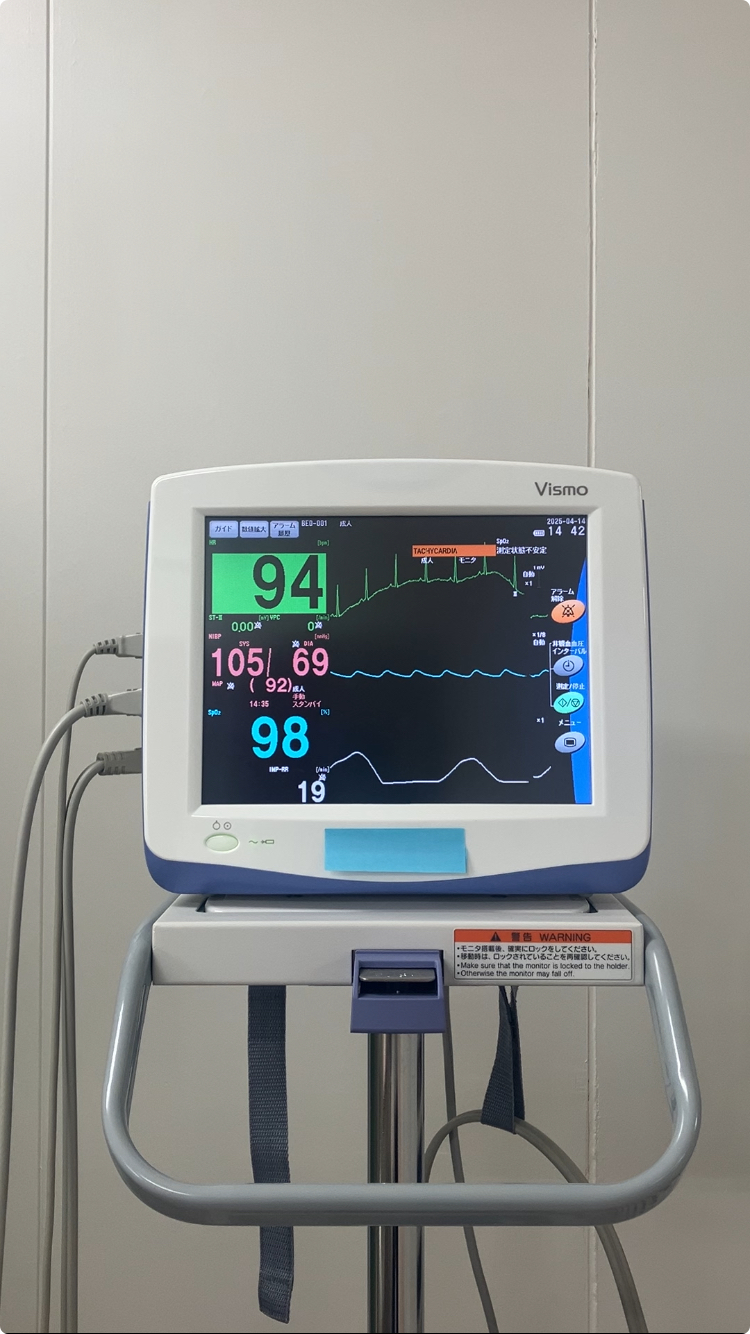
As this short example shows, hospital wards reverberate with sounds generated by many people, things, and places, such as nurse calls and alarms from medical equipment. Nurses in these hospital wards hear a wide variety of signals coming from unspecified sources and, as part of their daily routines, are always listening for a wide variety of sounds to which they must respond. This nurse call is an indication from a patient that they require assistance, which can occur at any time, from any room. Signals, such as those associated with ventilators and heart rate monitors, serve to alert patients to sudden changes in their physiological status.
Before I started my PhD program in Anthropology at Osaka University, I worked as a nurse in the respiratory ward of a university hospital in Osaka for six years. My first days on the ward remain vivid in my memory. I stood paralyzed amid the symphony of sounds—Bach’s Minuet from the nurse call, the shrill beeps of heart monitors, the urgent buzz of ventilators. Even though I could hear the sound, I didn’t understand what it meant. As mentioned earlier, when the senior nurses reacted to the alarm on the ventilator, I, as a new nurse, was unable to do anything. There were also times when I was unsure which I should respond to first, a nurse call or a heart rate monitor alarm, which sounded at the same time. In our ward, about ten nurses looked after more than forty patients day in and day out. Deciphering signals became more important at night, when our staff dropped from ten to four. We couldn’t be everywhere at once, making these auditory signals our critical connection to patients when we weren’t physically present. Over my six years of practice, I gradually developed what I now recognize as a sophisticated form of auditory expertise—learning to differentiate between sounds, assess their urgency, and respond appropriately.
The use of a stethoscope to listen to sounds from inside the body is likely to be the most familiar method of medical diagnosis for many people. In addition to the use of sound, the diagnosis process also makes use of the senses of smell and touch. The presence of an odor associated with excreta may indicate the possibility of infection. Swelling and heat are signals felt by touching the skin. Medical equipment converts signals from the body into sound and transmits them to medical staff.
The sounds produced by medical equipment may offer insights into the patient’s condition. For example, alarms can indicate abnormal vital signs or nurse calls from patients in pain. In order to respond effectively, nurses do not (and cannot) react to every signal they hear. Instead, they prioritize and assess which sounds require their attention, responding accordingly based on the context. Even if the sounds come from the same device or source, the nurse’s response may vary depending on the situation. Nurses who take care of multiple patients at once must especially pay attention to the sounds not only of the individual in front of them, but also to the sounds generated by the various parts of the hospital ward.
Three years ago, for my master’s thesis, I conducted interviews with nurses working in the respiratory ward of a university hospital in Japan. Ms. Watanabe, who had been a nurse for four years at the time, said:
“First-year nurses cannot hear any sounds. The sounds from medical equipment have become ‘the ambient sounds’ (生活音in Japanese). They can hear it when they try to listen for the alarms, but before that, it is only ‘ambient sounds’.”
This struck me as a profound insight. New nurses are of course physically capable of hearing the alarms and calls—but they haven’t yet developed the perceptual framework to distinguish what matters from what doesn’t. Also, “getting too used to the environment where the nurse call is ringing” makes the extraordinary situation feel normal. The sound that is supposed to be a signal from the patient (or their body, in the case of the devices monitoring their vitals) sometimes becomes noise.
When the new nurses are unable to hear the nurse call or alarm, the senior nurses encourage them to pay attention to the sound by saying things like “Can you hear it?” and “It’s ringing.” The new nurses are able to notice the sound when it is pointed out to them. I have also been warned by senior nurses. After being told verbally that the alarm is ringing, I could perceive the sound. This pointing out encourages the new nurses to really listen to the particular sounds of these calls and alarms.
Ms. Watanabe also said that not only new nurses, but also experienced nurses, are sometimes unaware of nurse calls and medical equipment alarms that come through. Although these sounds emanating from the many different kinds of medical equipment are vital to executing nursing care practices, there are still many difficulties in actually listening to them, even for the experienced nurse.
Ms. Nishiwaki, who had been a nurse for nine years at the time, spoke to me about a ventilator alarm. She explained: “The speed of our reaction is different depending on whether it’s a low-level alarm or a high-level alarm.” Thus, the level of the alarm tone determines whether the nurse has to rush to the patient’s room or not.
She further added: “Sometimes even the most urgent alarms are given urgent attention and sometimes they are not. But when I was new, I couldn’t make that determination and rushed to the patient for every alarm.” The importance of the response also differs depending on the extent to which the patient is dependent on the ventilator: whether or not they can breathe on their own. How a nurse responds to an alarm is thus based on the individual nurse’s judgment, not only in terms of the type of sound, but also in conjunction with the patient’s physical condition and situation. The speed of their response varies depending on the type of alarm priority and the content of the alarm, which is decided by combining it with the patient’s condition. Thus, attuning oneself to these sounds, combined with the experience built over time means that not all nursing care is done according to the manual.
This sophisticated listening extends to all monitoring devices. When a heart monitor alarm sounds, the nurse must not only hear it but interpret it through multiple layers of knowledge: What does this rhythm indicate? Is it consistent with the patient’s condition? Is it an emergency or an artifact caused by movement? Is it a true change or a false alarm from a displaced sensor? Unlike the direct communication of a nurse call button, these device alarms represent the body speaking through technological mediation. Without knowledge of the physiology involved in these numerical values generated by the machines and an understanding of the particular patient’s treatment situation, it is not possible to link the sound to subsequent action. Therefore, nurses develop their everyday care practices based on these embodied, complex knowledges and assessments: not only on the sounds they hear but also based on experience in assessing the context behind them. These many sounds are not perceived in isolation, but are judged in combination with a variety of information nurses are constantly taking in. It is important to make decisions that combine sounds, the patient’s condition, numerical values, and scientific knowledge.
One day, Ms. Ayano (a nurse in her seventh year at the time) said to me: “Isn’t there a time when you can feel someone’s footsteps? I can tell who it is by their footsteps.” I asked her, “With both patients and staff?” She answered, “Yes.”
She is able to tell the difference between the footsteps of patients and medical staff by their type of footwear and the way they walk. In the case medical staff, the sounds made by items such as the disinfectant bottle they carry or the medical supplies in their pocket can also be clues.
In order to protect the environment for the patient’s recuperation and prevent accidents, nurses don’t run in the hospital ward. However, if they hear the sound of a nurse running, they say they suspect that a problem has occurred. In that case, they offer their support by asking, “Is everything ok?”
This auditory expertise extends beyond electronic devices to the human soundscape of the ward. Experienced nurses develop an unconscious catalog of footsteps, movements, and ambient sounds that form a baseline of “normal.” They are concerned about changes in the condition of patients, not only from coughs and voices, but also from the sound of footsteps and things moving. Sometimes, they can tell who has moved where just from the sounds they hear. Not just sounds generated by medical equipment sounds, but all kinds of noise can be a signal for nurses.
Nurses listen to many kinds of sounds that are generated by a changing number of people and places in the hospital ward day-to-day and moment-by-moment, not only from individual patients’ voices or the sounds from their bodies. The nurses must learn to assemble the sounds heard, biological data, and specific patient information to make a combined assessment of the situation and then react. Sounds that may seem like noise are also important information for nurses to know about changes in patients and the condition of other medical staff. Attuning carefully to noise on the hospital ward, and distinguishing between signals to which they must respond, is one skill that nurses must learn and embody.
Nurses develop specialized auditory knowledge of listening to sounds generated by many people, things, and places, such as nurse calls and alarms from within the hospital wards. All kinds of noise can be a signal for nurses. Sensory knowledge changes and becomes more sophisticated as one moves from novice to expert. This skill is a generalized specialty in health care and nursing. Even at this very moment, nurses are attuning carefully to the cacophony of hospital wards and, once again, catching new signals.
Note: All names in this article are pseudonyms.