

Article begins
1947–2026
Joachim Voss, whose research and leadership expanded understanding of sociocultural dimensions of agriculture and development, died April 5. He was 79. An eminent scholar of Central Africa and Southeast Asia, he also served many years in distinguished international leadership roles.
Voss had a highly distinguished career as a sociocultural anthropologist who worked outside the discipline in international development research institutions. He served as director general of the Centre for International Agricultural Research (CIAT, now known as Alliance of Bioversity International, 2000–2007), and on the Board of Governors at SeedChange (2014–2020). He had earlier served as the head of research and representative to the Consultative Group on International Agricultural Research (CGIAR) at the International Development Research Center (IDRC Canada, 1988–2000) and on the selection committee of the Rockefeller Foundation’s “RockyDocs” for five years in the early 1990s.
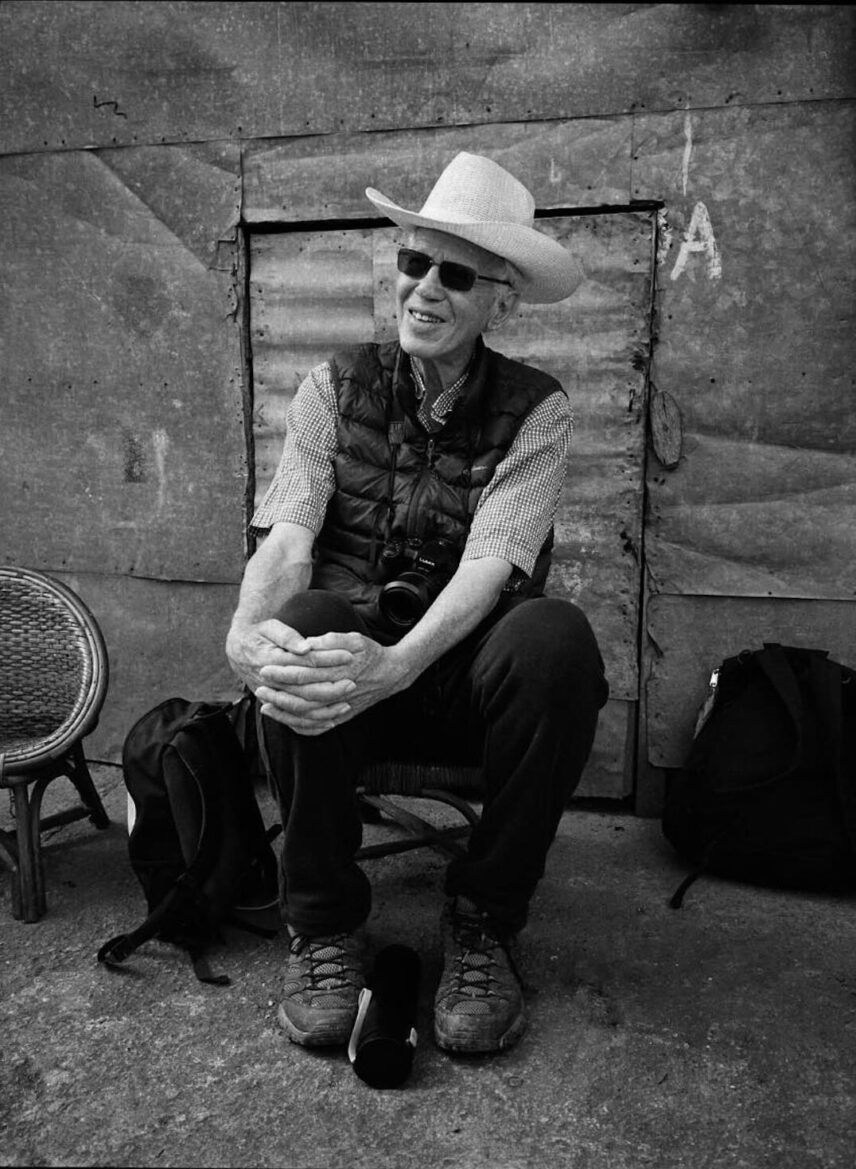
As the first anthropologist and social scientist to hold the position of director general at CIAT or any CGIAR center, he played a pathbreaking role in dismantling silos by championing the integration of anthropological and wider social-scientific research in development institutions otherwise dominated by biophysical scientists. He led CIAT toward novel and rigorous interdisciplinary research for development approaches in subject areas such as climate change, nutrition, ecosystems, and gender analysis, while expanding its work in sub-Saharan Africa. Voss credited his parents for his lifelong commitment to feminist principles, and he was ahead of his time in seeking out, hiring, and promoting bright women anthropologists, social scientists, and biophysical researchers. This included women (and men and youth) of diverse racial, indigenous, and Global South backgrounds at a time when they were not always recognized or supported in scientific circles.
Voss took anthropology to the most important issues of our time: climate impact, food insecurity, indigenous knowledge, local agricultural practices, local land rights, participatory research, and gender equality, to name a few. He built on a strong foundation of training in sociocultural anthropology at the University of Toronto and his doctoral research, which took him to the Northern Luzon, Philippines, a place that became his second home and refuge for life, where a world of redistributive feasting was encountering the Green Revolution and all the forces of agrarian change.
Early on, he was awarded the prestigious Rockefeller Foundation “RockyDoc,” which took him to Rwanda and neighboring countries to work for CIAT’s Bean Programme, bringing local knowledge and farmer-first research processes into the identification and development of new seed varieties and mixes that were appropriate to the lives and ecologies of farmers in the African Great Lakes Region, spanning across into Zaire (now the Democratic Republic of Congo). Through this lens of seeds, he investigated the everyday struggles of farmers in accessing land, managing labor, and securing food in the face of increased capitalist penetration and neoliberal development interventions that led to their decreased control over resources and to their disadvantage, as well disruptions to cooperative relations of reciprocity and exchange (Voss 1983). These learnings later shaped his approach in his leadership roles, where he championed the importance of understanding complexity and lived experiences through ethnographic and qualitative methods that sought to document cultural knowledge, social relations, rituals, and practices that sustain life and environments (Voss 2006).
He made connections and made things happen, always in support of others who flourished around him, but always among those dedicated to the cause against economic poverty and injustice. Many anthropologists, social scientists, and biophysical scientists alike owe their careers and their scholarly trajectories to Voss. “Joachim was always uplifting for me, always so encouraging,” said James Fairhead, professor of anthropology at the University of Sussex. “He took me on as a naïve doctoral researcher and helped me to find my feet researching fertility and health is soils and crops in North Kivu, and nurturing an anthropology that mattered.” His acts of caring for all around him fed a life then forever cheerful. “He was a heart pulsating through so many anthropology lineages that will miss him as much as us individuals.”
“I first met Joachim in 1985 when hitching a lift to Butare, where we both lived and researched”, said Johan Pottier, professor emeritus at the Department of Anthropology at the School of Oriental and African Studies. Speaking to the immense insights of indigenous agricultural knowledge and practices that Voss generously shared with him, he recollects, “it was the beginning of an exciting intellectual journey and friendship. Joachim became a fountain of knowledge and a guru. It was only until I returned there decades later, that I poignantly understood the extent of my professional debt to Joachim. And it all began with a hitchhiker’s lift.”
Voss is survived by his partner, Villia Jefremovas, a recently retired Queen’s University anthropologist and professor of Global Development Studies, and his daughter Larysa, the outreach and education coordinator at the Billings Estate National Historic Site in Ottawa, Canada.
(Ritu Verma)
References
Voss, J. 1983. Capitalist Penetration and Local Resistance: Continuity and Transformation sin the Social Relations of Production of Sagada Igorots of the Philippines. PhD Thesis. University of Toronto.
Voss, J. 2005. Ritual / Life: Sagada Photographs 1976–1982, Baguio City: A-Seven Publishing.