
Article begins
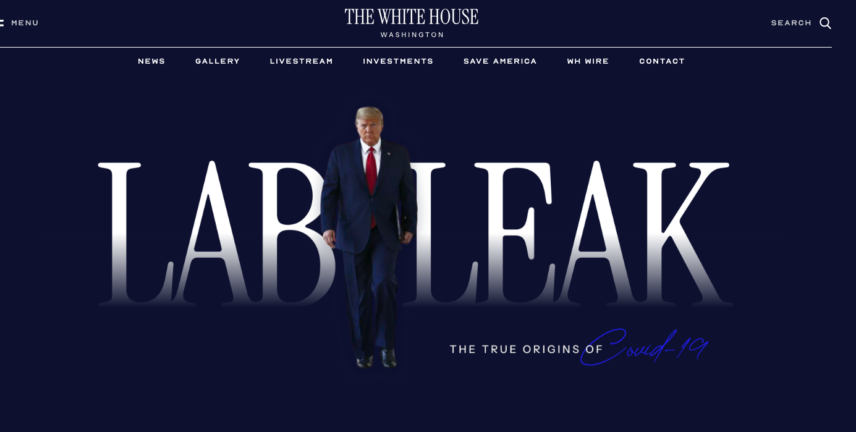
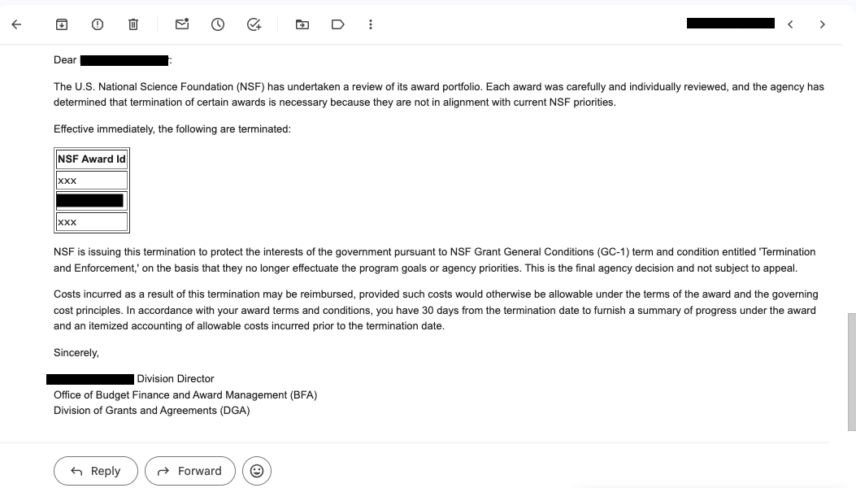
It was only a matter of time, and we knew it. Still, when the email from the National Science Foundation arrived on April 18, 2025, our hearts sank. The very same day our research team learned that our study of COVID death, mourning, memory, and misinformation was terminated (“effective immediately”), the Trump administration published its overhauled COVID.gov website. Gone from the site was any mention of pandemic death or prevention, replaced by recriminations and accusations—all unfurled beneath a banner with the noticeably svelter figure of President Trump emerging midstride between the words “Lab” and “Leak.”
Our project, “Rituals in the Making,” didn’t start out studying the kinds of pandemic revisionism encapsulated in the current White House’s website dedicated to the virus. In the first few months, supported by a National Science Foundation (NSF) RAPID grant, our research team posed the simple question, “How do we mourn when we cannot gather?” With a second grant from NSF and additional internal funding through the Knight Foundation, we traced the counters of pandemic loss in the United States through digital and in-person ethnographic research. For five years our team of undergraduate and graduate students, faculty, research consultants, and special advisors examined what was so unique about COVID death and mourning, its novel forms of commemoration, the impact of mis/disinformation, and, more recently, processes of social forgetting and denialism.
Already attuned to the rising tides of “compassion fatigue,” the desire to “return to normal,” and the deeper political schisms around COVID and associated mandates, the email from NSF didn’t come as a surprise. But it has made documenting how and why American society has so seamlessly slipped into a collective amnesia about 1.3 million deaths that much harder.
In the wake of the “terminated effective immediately” notice, we have tried to pivot, seeking alternate sources of funding and trying to chart a path forward that responds to the experiences of our interlocutors, especially the COVID bereaved. We’ve reached out to numerous private charitable foundations but received no reply; since April 2025, we’ve applied to three major private funding sources but with no success. We recognize of course that federal support for research on COVID, misinformation, and denialism has been almost entirely cut. But we also sense that private funders are taking note of the current administration’s position, e.g., that “[t]he COVID-19 pandemic is over, and [the Department of Health and Human Services] will no longer waste billions of taxpayer dollars responding to a non-existent pandemic that Americans moved on from years ago.” Despite these headwinds, our core team remains “in it” for the duration—with the ten-year commemoration our foreseeable end point—even as we know we’ll likely be working without institutional support or funding.
For now, our aim is to keep documenting the effects of loss, a concept that intimates much more than death itself. Take, for example, a project we began in 2023, “More Than a Healthcare Hero,” that collects oral histories of healthcare workers who treated COVID patients during the height of the pandemic. Through more than forty online interviews with medical professionals across the country and from different sectors, we are trying to capture what it meant—and continues to mean—to provide care while not being taken care of. Recently, the project has sharpened its focus on these experiences, speaking with clinicians who continue to provide treatment, information, and resources to migrant communities, unhoused populations, rural residents, and others with limited access to healthcare.
Another of our ongoing projects is building a database and associated archive of Suzanne Brennan Firstenberg’s public art installation honoring COVID death in the United States, In America: Remember. Of the more than 700,000 individual white flags planted on the National Mall to mark individual lives lost to the virus, some 20,000 bear messages of remembrance. Volunteers from In America: Remember and Rituals in the Making have worked to clean and store the flags, and then transcribe, translate, and code their messages, transforming them from material artifacts into a permanent digital record. Penned in English and many other languages, the messages range from simple but powerful farewells, intimate family anecdotes, and everyday remembrances to denunciations of poor medical care, critiques of state responses, and laments about social indifference. The project has already become a robust archive for generations to come. Moreover, it is a pillar of the COVID Memory Archive that our research team is currently developing and which we hope to establish at our home institution, George Washington University. That hope turns on the pro bono labor of the project’s faculty, students, research consultants, and volunteers. Rather than expanding, e.g., hiring new undergraduate or MA students as research assistants to complete the work of the healthcare oral histories or the flag database, we at Rituals in the Making have adjusted our own timelines. We’ve become more patient and determined—out of necessity, rather than choice.
Nowadays the pandemic is referenced in popular discourse and culture most frequently in broad similes. AI is viewed as a threat that looms but no one knows what will happen, like COVID. The ICE raids in Minneapolis create an atmosphere of isolating fear about what lies outside one’s front door, like COVID. And yet, we believe, without concerted efforts to center COVID directly, 1.3 million people will become no more than reference points—if they are remembered at all. Hence our commitment to building this archive, an archive for the dead and also the living. Through it, the anthropology that could have been becomes the anthropology of what is.