

Article begins
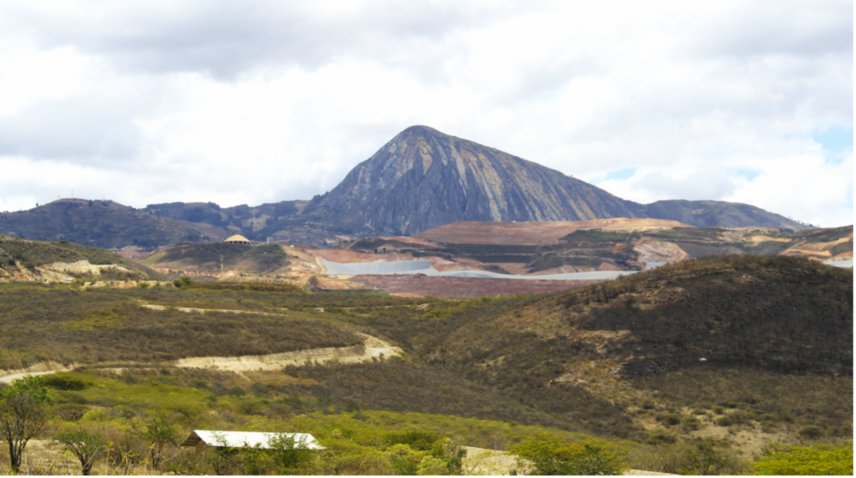
Algamarca is a remote village in the Cajamarca region, in the northern Peruvian Andes, nestled on the slopes of a hill. Deep within that hill, local miners extract copper-rich minerals through an intricate network of tunnels and galleries, bringing to life an underground world that is as dynamic as it is hidden.
The miners of Algamarca often say that they practice a form of mining that is a “daughter of conventional mining” or, as some prefer to call it, a “residual mining,” since it takes place on the infrastructure and debris left behind by another operator from a different mining stratum.
In the first half of the 2000s, local residents began extracting ore through shallow excavations at the top of the hill, using rudimentary tools such as pickaxes, hammers, wheelbarrows, and buckets. Over the years, in their search for richer deposits, they gradually moved their operations to the abandoned facilities of an old Peruvian-owned mine, Compañía Minera Algamarca, which shut down its operations on the hill in the early 1990s. Through the access points that the company left at different altitudes on the hill, the miners were able to venture deeper inside, gradually expanding these tunnels or even opening new mines from scratch over time.
The greater hardness of the rock at depth forced them to progressively mechanize their mining work. During my ethnographic fieldwork between July 2022 and May 2023, some of these underground galleries already exceeded a kilometer in depth, extending day after day to the deafening rhythm of the drilling machines and the detonations of explosives that the miners use to break through the rock walls.
As soon as one enters these facilities, the temperature can rise rapidly and even exceed 30 degrees Celsius (or 86 degrees Fahrenheit), in stark contrast to the characteristic cold of the Andean highland landscape. This abrupt change becomes a first sensory warning: the entry into an underground landscape governed by laws foreign to the surface.

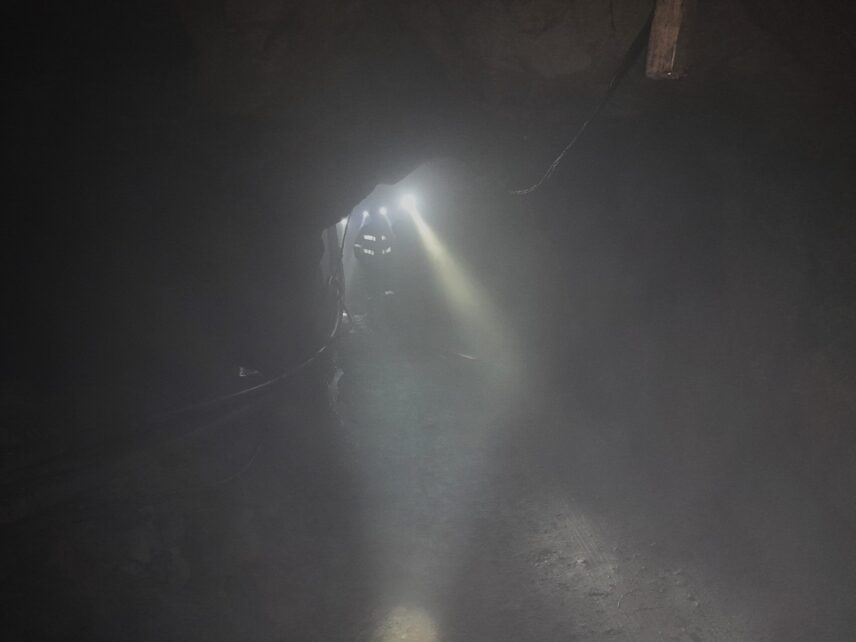
The dimensions of the tunnels vary along their course: in certain sections, the corridors widen enough for two or three people to walk upright, side by side; in others, the space narrows to the point of forcing one to walk sideways or crouch down for several meters. In some sectors, water naturally seeping through the rock walls slightly floods the path, making the journey even more difficult.
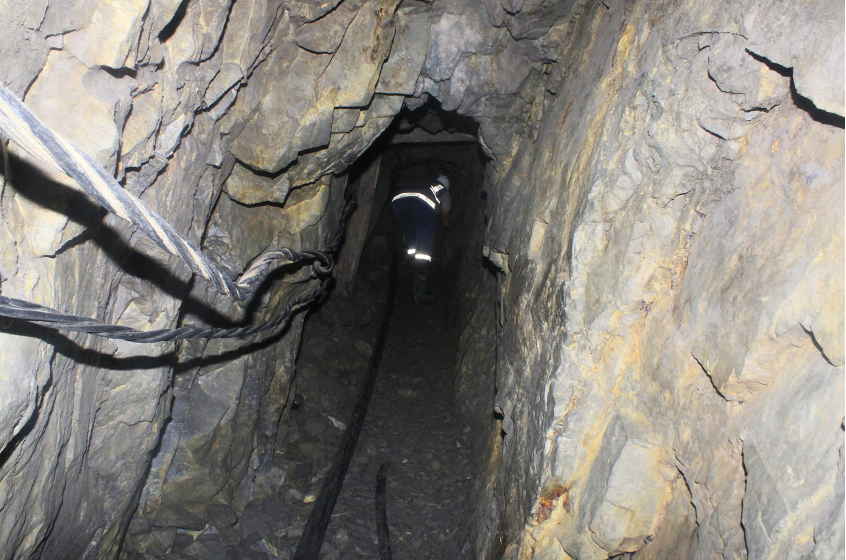
Under these conditions, safety gear—boots, helmet, and respirator mask, indispensable for protection against the gases left behind by the explosions—ends up becoming an additional burden, intensifying physical strain and making movement within the mine even more arduous.
Following the Vein
The miners of Algamarca explain that their underground work consists of following the traces of the veins that run through the hill. These veins are like strips of concentrated mineral embedded in the rocks, formed over thousands or even millions of years. For the miners, they are like hidden paths underground that reveal where the most coveted minerals are placed.
According to the miners’ geological knowledge, these veins are mainly composed of copper, with smaller proportions of silver and only traces of gold. They are recognizable by their blackish tone, although sometimes they reveal bluish or yellowish flashes. Their thickness usually ranges between ten and twenty centimeters, although in certain cases they can reach greater dimensions.
The miners patiently follow the trajectory of these veins and then transport the extracted ore by truck to the coastal cities, where it is sold in raw form.
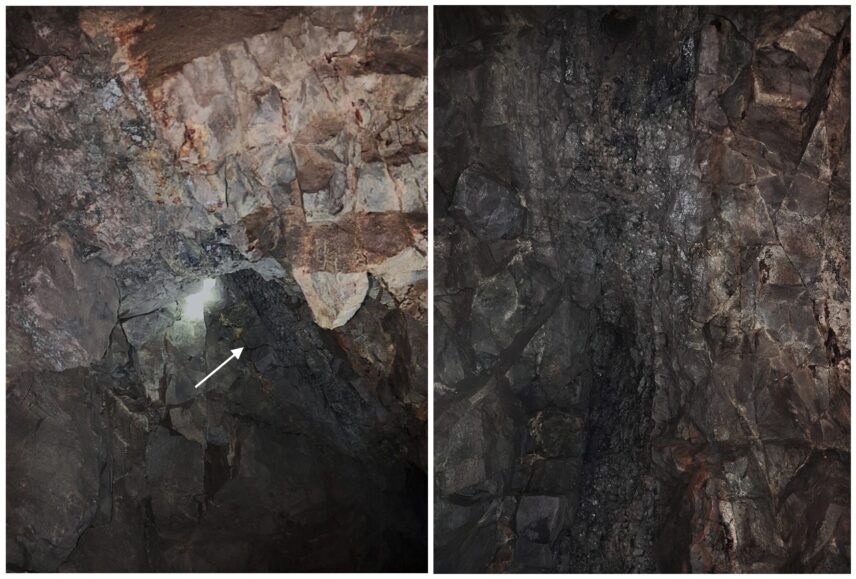
Miners often describe the veins as if they were animated entities, endowed with a “complicated behavior,” since they rarely flow in a straight, uniform, or horizontal line. Their trajectories tend to be sinuous and unstable: at times they vanish from sight, only to reappear meters ahead, interrupted by geological faults that disrupt their continuity.
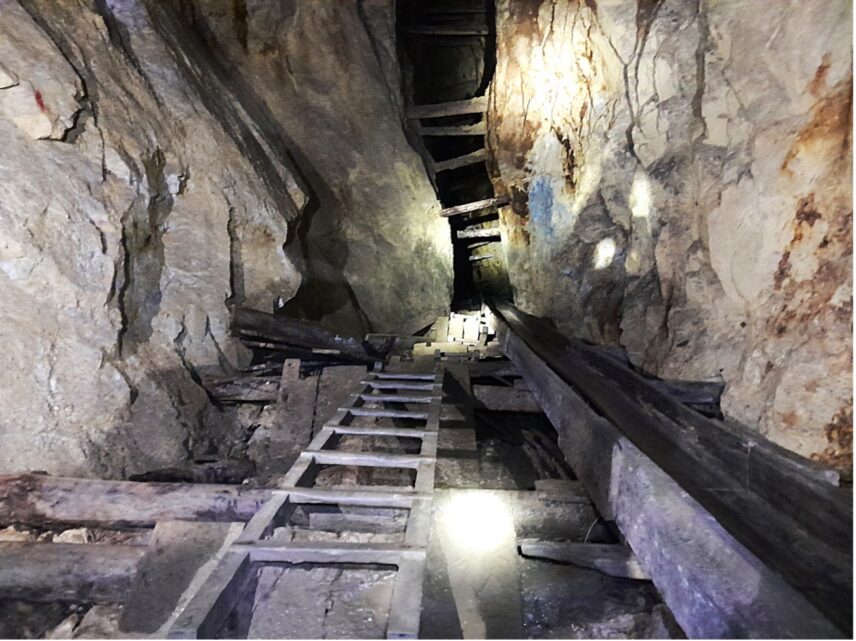
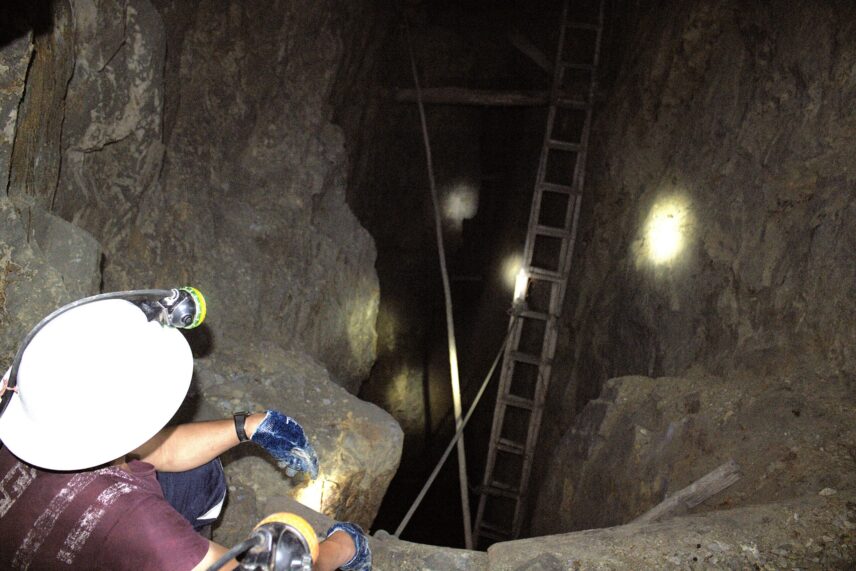
Some firmly believe that the veins are born in the depths of the Earth’s crust and therefore tend to run upward and vertically from below. This is why mining work often requires pulleys to lift the ore from the deepest areas, which workers reach by descending ladders of varying sizes and states of preservation.
“The mineral is like a river,” a miner told me during one of my subterranean incursions in Algamarca. I would add that these rivers spring from the deepest reservoirs of the Earth. Following this fluvial analogy, just as a river advances with curves and detours, adapting to the topography of the riverbed, miners believe that the veins carve their way through the softer rocks, altering their course according to the geological imperfections they encounter along the way.
If veins are like a river, abundant and generous as they flow, they can also dry up suddenly, leaving no trace of life. Thus, after months of digging, some miners are forced to suspend their work when the vein that initially promised abundance is reduced to threads so fine that they evoke the fragile strands of a spider’s web.
Just as the mineral can suddenly disappear, it can also reappear meters ahead. That is why some miners compare the mineral’s course with the design of a rosary, a devotional object in Christianity that can function as a necklace, composed of small, generally spherical beads joined by a thread or cord. Some miners explain that certain veins flow with a similar pattern: they show sections of greater thickness and mineral concentration (comparable to the beads of a rosary) interspersed with areas where the mineral fades or minimizes (similar to the thread connecting the beads), before the mineral emerges again, like a new bead on the necklace.
For this reason, when miners discover a vein, they follow it carefully until they are sure that there is no more ore left to extract.
The Formalization Process
The activities that the miners carry out in the facilities of the old mine are located within a concession owned by Pan American Silver, a Canadian company that operates an open-pit gold mine in an area adjacent to the hill where they extract ore. Through mining concessions, the Peruvian state grants rights over subsoil resources to private companies, which is different from the rights associated with the surface of the land.
Currently, Algamarca miners are organized into an association that brings together approximately one hundred “associates,” a term used to designate the de facto owners of mining operations, who together employ around 1,500 workers. Almost all of the associates are local residents with family roots in the area, and many have property rights over the surface where their operations are located. Nevertheless, the right to exploit the subsoil belongs to the Canadian company. Lacking this right, the miners of Algamarca extracted resources from the subsoil for many years outside the law, without formal consent from the company or official authorization from the state.
It was only in 2012 that the miners began the process of formalizing their activities with state institutions, relying on a set of regulations recently issued by the Peruvian government to regulate artisanal mining in the country. These regulations allowed them to continue extracting ore while advancing in the administrative process. By merely initiating the formalization procedures, the miners ceased to be considered “illegal” and instead adopted the transitory status of “informal miners.” Peruvian law defines “informal miners” as those mining operators who, unlike “illegal miners,” have started the formalization process, even though they do not yet fully comply with all state regulations. Until May 2025, the Regional Office of Energy and Mines of Cajamarca was responsible for overseeing and certifying the formalization of their activities.
Although their work has gradually advanced in terms of technification, the miners of Algamarca are registered in the formalization process under the category of “artisanal miners.” This is because their activity still fits within the production and scale parameters established by Peruvian regulations for this type of mining: operations with a maximum capacity of 25 metric tons per day in an area not exceeding 1,000 hectares.
Despite certain advances, the formalization of the Algamarca miners has not been possible in all these years, partly due to the Canadian company’s refusal to sign an exploitation contract authorizing local miners to extract minerals in specific areas of its concession. This contract is an essential requirement in the formalization process. Only in recent months has Pan American Silver shown greater willingness to sign such agreements.
However, the path to formalization continues to face other obstacles, stemming from a state design that imposes a model of mining landscape governance that is in open tension with the spatial conception that Algamarca miners deploy several meters underground.
Containing the River
The state’s formalization design requires miners in Algamarca to delimit their mining activities from a fixed, two-dimensional perspective.
In addition to the exploitation contract, Algamarca miners must submit the IGAFOM as part of the paperwork for their formalization. This document is an environmental assessment tool that includes a set of measures that artisanal miners must implement to identify, control, and prevent the environmental impacts of their operations. As part of this document, miners are required to indicate the location of their mining areas, both those in which they currently operate and those in which they plan to work in the future. The IGAFOM must include a map showing the boundaries of their activities within a polygon, which is a closed flat figure formed by connecting the vertices according to the coordinates specified in that document.
State regulations stipulate that a miner may be excluded from the formalization process and, therefore, considered “illegal” if they mine outside the areas documented in the IGAFOM.
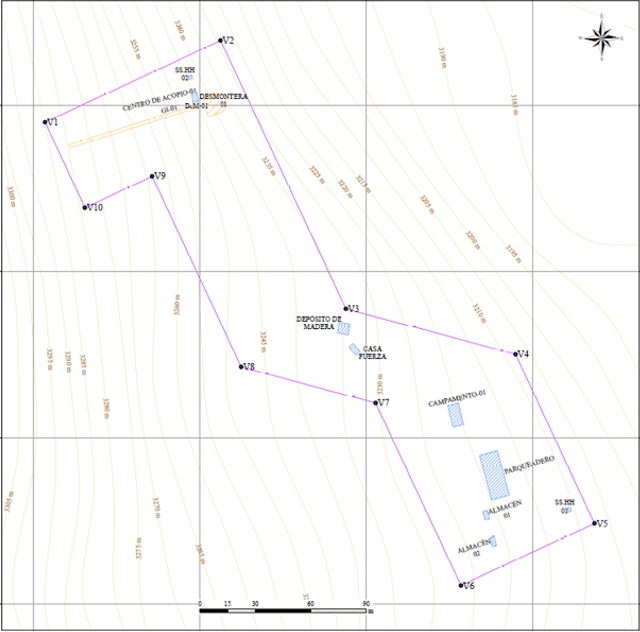
The state governance scheme imposes a territorial order in which mineral resources are treated as a static element confined within the imaginary lines of the polygons. Moreover, it establishes a flat, two-dimensional orientation that ignores the vertical dynamic through which miners follow the flow of mineral veins rising from the depths of the subsoil.
The miners of Algamarca instinctively adopt a three-dimensional perspective, conceiving mineral resources as a volumetric entity in motion, taking into account not only the width and length of their course but also their depth. This conception adds a vertical component to their extractive activities, challenging the flat orientation of the formalization policies reflected in the IGAFOM.
Polygons act as dams or dykes, fictitiously containing the mineral, which contrasts sharply with the perspective of the Algamarca miners. They see minerals as dynamic entities that flow sinuously, making them difficult to track. If the mineral vein resembles a river, the miners’ work consists of letting themselves be carried along by its currents.
“If the vein takes us beyond the polygon, we would be crazy not to continue; we follow it,” confessed a miner.
The rigid, two-dimensional design of the formalization process ultimately discourages compliance with state regulations, even among miners most willing to adhere to it. The approval of an IGAFOM can take months, even years. Thus, although miners can submit new documentation with better-defined areas than those in their original IGAFOMs, doing so would mean navigating a bureaucratic maze that drags on excessively and fails to align with the rhythms or uncertainties of their activity.
On the other hand, the expansion of artisanal mining in Algamarca has reached such magnitude that miners from different directions often find themselves underground following the traces of the veins, generating conflicts and disputes over the de facto possession of the deposits. Although IGAFOM is officially conceived only as an environmental assessment tool, in practice both artisanal miners and some bureaucrats assume the areas declared in this document as criteria for defining de facto ownership of an exploitation zone among local miners.
However, as noted, IGAFOM only requires miners to represent their mining areas on a map, without specifying the altitude or depth. In the context of internal confrontations, the IGAFOMs end up becoming a confusing and imprecise document for determining the underground location and de facto ownership of mining deposits, as these are developed at different depths that are not adequately reflected in the polygons drawn on the official maps.
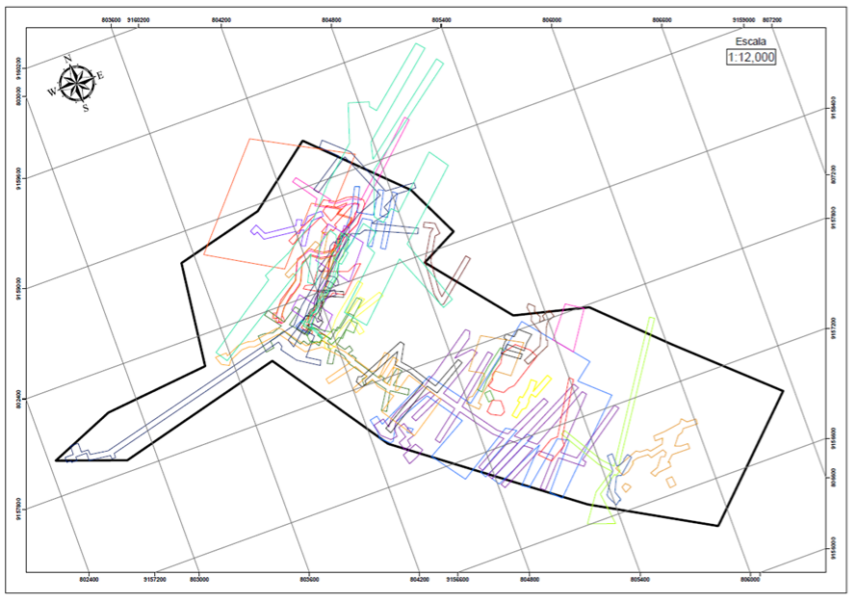
In recent years, bureaucrats and artisanal miners have agreed, in an “extra-official” manner—to use the term they themselves employ—to also incorporate the altitude of their operations in their formalization documents in order to ensure governance of the subterranean space in which they operate. However, officials emphasize that such inclusion can only be requested as a “recommendation,” since state formats and documents neither provide for it nor require it.
The subterranean practices of the miners of Algamarca seem to unfold in a parallel world, difficult to capture within the designs and abstractions of the formalization instruments. Their work beneath the surface challenges the state’s territorial governance and compels us to reimagine the mining and subterranean landscape from a vertical and more fluid perspective.