

Article begins
The 25th anniversary of the Society for East Asian Anthropology (SEAA) this year offers an occasion to take a longer view on anthropological research and the historical record at a moment when both have come under increasingly complex pressures. This essay grows out of a set of overlapping intellectual commitments that have taken shape over time. As an anthropologist who has been on the faculty of a history department for nearly twenty years, now with a joint appointment in anthropology, I have worked on the politics of memory, contested histories of the present, and the long afterlives of historical trauma across Cold War and post-Cold War contexts. Approaching these concerns with a special interest in what resists marginalization or erasure, I have taken up related questions in more specific ways in my own research and advising: from writing about the Korean War and its ongoing legacies, to serving on a PhD committee for a dissertation on public history in the wake of the Cambodian genocide, to my current work on sustained forms of transnational dissent through which dangers rendered invisible in official accounts can nonetheless become sites of political and archival contestation. It is from within these concerns that I offer the following interlinked tributes reflecting on the legacies of three scholars: Francis L. K. Hsu (1909–1999), May Mayko Ebihara (1934–2005), and Sue-Je Lee Gage (1973–2020).
Though an earlier version of this essay had been commissioned as part of the section’s yearlong anniversary initiative, SEAA@25, and written to coincide with Asian American & Pacific Islander Heritage Month in May, what I did not anticipate was how evocatively a tribute to the lives and work of Hsu, Ebihara, and Gage would come to speak beyond those occasions. Each scholar offers a different way to think about what anthropology inherits and how such inheritances are carried forward: Hsu through his forceful public critique of Western-centric anthropology, which began as an influential lecture, became a major disciplinary intervention, and was followed by his election as president of the American Anthropological Association; Ebihara through her field-defining longitudinal fieldwork in Cambodia as well as her singular body of oral-history interviews with US anthropologists across fields and generations, now held in the National Anthropological Archives; and Gage, whose impact on the lives of those she touched was so compelling that her untimely passing moved colleagues and friends to turn mourning into a generative force for creative work and community-building sustained through an ongoing residency. In thinking with the memory of these three scholars, what began as a commemorative reflection eventually offered a way to think more broadly about what endures through turbulent times, including periods of upheaval, displacement, rupture, and historical transformation.
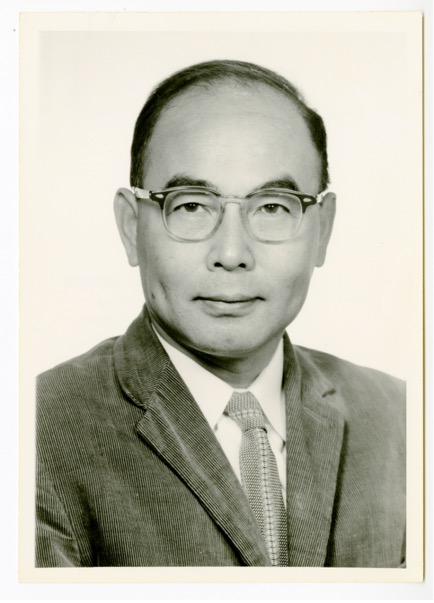
Francis L. K. Hsu and the Making of Psychological Anthropology
“Francis Lang-Kwang Hsu was one of the twentieth-century leaders in the study of culture and personality, which at his suggestion was renamed psychological anthropology.” So begins the obituary of Hsu published in the American Anthropologist, and the shift it records was not merely terminological. It reflects Hsu’s conviction that the field needed a framework capable of holding psychological and cultural analysis together without reducing one to the other. Born in 1909 in China’s Liaoning province, Hsu trained at the London School of Economics under Bronisław Malinowski, then returned to China to conduct fieldwork and teach. When he eventually joined the anthropology faculty at Northwestern University in 1947, his appointment there was itself a hard-won breakthrough, as the dean at the time had expressed doubt about a Chinese faculty member teaching American students. Though an endorsement by Melville Herskovits helped to overcome that initial skepticism, Hsu’s excellence as a lecturer settled the question on its own terms. He remained at Northwestern for over three decades, including a remarkably long tenure as department chair from 1957 to 1976.
His best-known work, Americans and Chinese: Two Ways of Life (1953), drew on his own experience living between cultures to illuminate the contrasting values, social structures, and modes of selfhood at work in each society. The monograph was notable for challenging the Western psychological obsession with the autonomous self as a universal standard, and its two subsequent reissues generated an impact that would extend well beyond the academy. Famously, the book’s second edition was among the main texts read by US president Richard Nixon before his 1971 trip to China, a measure of Hsu’s standing as a public intellectual at the height of the Cold War. The book’s origins reflect an earlier episode of redirection due to geopolitical barriers: in 1949 Hsu had received a grant to do fieldwork in South China, but when the political situation prevented him from entering the country, he pursued fieldwork in Hawaii instead. Based on extensive interviews with Chinese Americans residing in Honolulu and elsewhere on Oahu, Hsu produced a 1951 article, “The Chinese in Hawaii: Their Role in American Culture,” published in Transactions of the New York Academy of Sciences. That redirection ultimately deepened rather than diminished his analysis, producing insights into the continuity and adaptation of cultural patterns that became newly visible in diasporic contexts. Subsequent fieldwork in India and Japan added further comparative depth, with each study challenging long-standing assumptions that anthropology’s primary focus should be small-scale nonliterate societies rather than large-scale literate ones. His “situation-centered” framework positioned Chinese social life as organized around relational and affective bonds rather than individual autonomy. More than a comparative observation, this posed a methodological challenge to forms of Western reductionism that had largely shaped the field.
That confrontation extended to the discipline’s institutional culture as well, as Hsu was notably unflinching in his critique of what he warned was becoming “White American anthropology.” In his 1973 article “Prejudice and its Intellectual Effect in American Anthropology: An Ethnographic Report,” Hsu challenged the Western-centric assumptions that had shaped the discipline. Hsu’s article would later become the earliest work included in a 2020 American Anthropologist virtual issue on “Race, Racism and White Supremacy,” underscoring the extent to which contemporary decolonial scholars have recognized the prescience of his intervention. Hsu’s election as the 62nd president of the American Anthropological Association in 1977 is widely regarded as a pivotal moment in the discipline’s reckoning with its own colonial and epistemological inheritances. It marked the recognition of an Asian American scholar who had documented and confronted institutional racism and who used one of the discipline’s most prominent leadership positions to advocate for a more globally expansive vision of anthropological inquiry.
May Mayko Ebihara and the Longitudinal Record
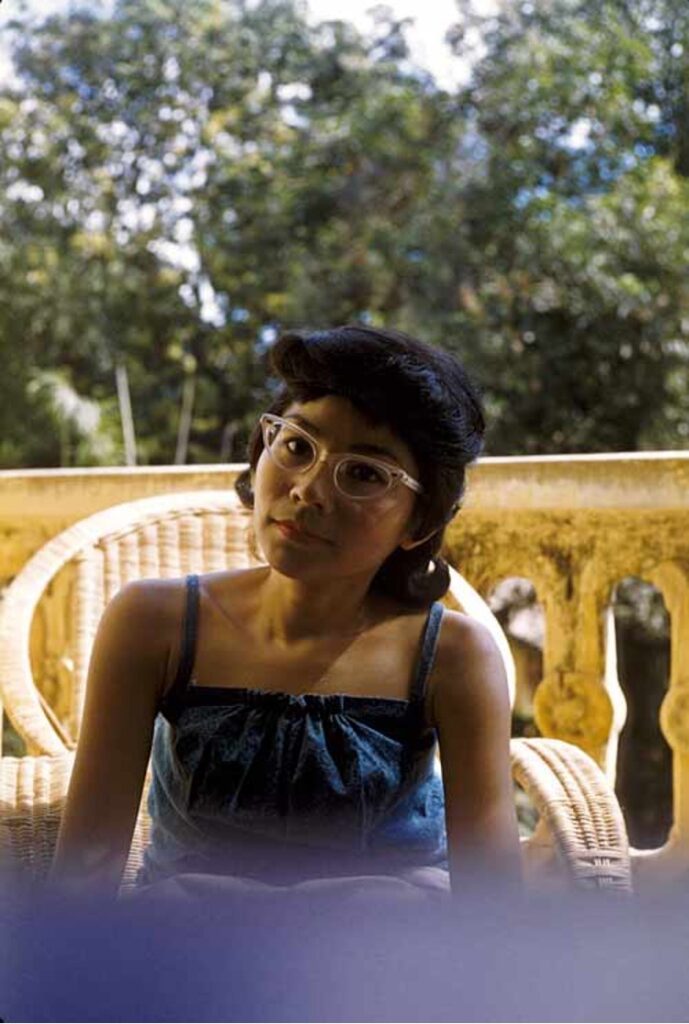
May Mayko Ebihara’s work is distinguished by the depth and duration of her commitment to documenting social life in Cambodia, where she became the first American anthropologist to conduct sustained ethnographic fieldwork. In 1959-1960, she undertook research in the Khmer village of Svay, producing what became a foundational record of prewar Cambodian village life. A less frequently discussed dimension of Ebihara’s work is her own history as a survivor of the Japanese American incarceration during World War II. From 1942 to 1945, she and her family were detained at Minidoka in Idaho, one of the War Relocation Authority camps where Japanese Americans were forcibly incarcerated. While this experience is not foregrounded in her scholarship, it offers a way to understand her sustained attention to the textures of everyday life and to the fragility of what might otherwise have been taken for granted.
Born in 1934 in Portland, Oregon, Ebihara received her bachelor’s degree from Reed College in 1955 and later completed her PhD at Columbia University, where she studied under Margaret Mead and Conrad Arensberg. Trained within a tradition that emphasized close, immersive fieldwork, Ebihara’s approach was marked by careful attention to everyday practices and the insights they generated into kinship relations, land use, household structure, economic life, and informal authority. In 1964, Ebihara joined the Department of Anthropology at Lehman College of the City University of New York (CUNY) as a faculty member and would go on eventually to serve as department chair while also holding a parallel appointment at CUNY’s Graduate Center. After years in which war, revolution, and the violence of Khmer Rouge rule had cut off contact with Svay, Ebihara was able to return in May 1989 as part of a delegation organized by the Social Science Research Council, amid the political changes that followed the withdrawal of Vietnamese forces. Among the villagers she had known, half had died under Khmer Rouge rule, including members of her adopted family. Re-establishing contact with Svay meant documenting survival and reconstruction but also bearing witness to losses that could be understood with particular force because she had known the community before it had been upended by catastrophic violence. Drawing on several return visits to Svay between 1989 and 1996, her work showed that the losses, while sweeping, had not been total: relationships to land and local knowledge could be rebuilt, however partially and unevenly, in the aftermath of devastation and dispossession.
At a moment of renewed public debate over the value of anthropology, Ebihara’s work serves as a reminder of what long-term ethnographic research can make possible. The remarkably detailed ethnographic record that she had created as a doctoral student, based on her fieldwork in 1959–1960, became a crucial archive of reference for understanding village life prior to the upheavals of the Khmer Rouge period. Yet, its significance extended far beyond a single village. For decades before its eventual publication as a book, her two-volume dissertation became legendary for how it circulated among scholars and students in the form of dog-eared photocopies and microfiche. When Cornell University Press finally released a monograph edition in 2018 as Svay: A Khmer Village in Cambodia, its publisher’s description captured the work’s far-reaching impact: “Never before published as a book, Ebihara’s dissertation served as the foundation for much of our subsequent understanding of Cambodian history, society, and politics.”
Ebihara’s commitment to the discipline’s own memory extended beyond her fieldwork in Cambodia. Her oral history interviews with over two dozen prominent anthropologists are now held in the National Anthropological Archives at the Smithsonian Institution, representing a sustained act of disciplinary self-documentation consistent with Ebihara’s broader archival sensibility. Conducted across nearly three decades, the interviews preserve firsthand reflections when many members of the discipline’s earlier generations were still living. While the scope of Ebihara’s oral history project spans multiple branches of mid-twentieth-century anthropology, including cultural anthropology, archaeology, linguistics, and culture-and-personality research, the significance of this work lies not only in the preservation of institutional memory. Much like her longitudinal engagement with Svay, the project reflected a belief that the study of anthropology is carried forward through lived experience and interpersonal transmission, as well as the careful recording of how people understand their own worlds over time. That the scholar undertaking this work had herself navigated the discipline as a Japanese American woman lends the archive an additional resonance, particularly given how underrepresented such perspectives had historically been in anthropology’s own self-understanding. Today, an ongoing SEAA Oral History project continues in a similar spirit, recording interviews with contemporary anthropologists reflecting on their own research, careers, and involvement in the life of the discipline, including the collaborative work of maintaining an academic professional society that has helped to establish both formal and informal connections across generations of anthropologists.
Sue-Je Lee Gage and the Afterlives of War
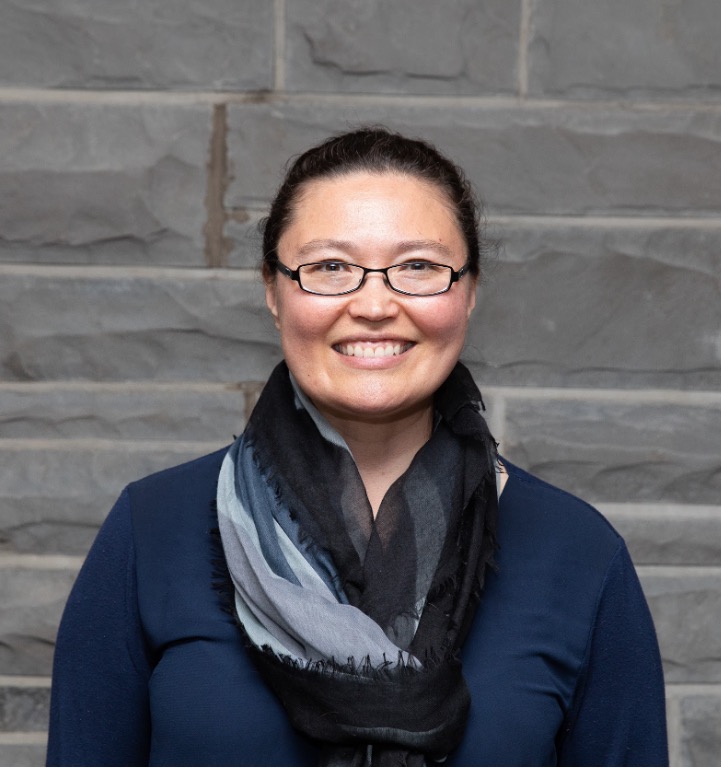
Sue-Je Lee Gage’s work centers on the enduring consequences of war as refracted through lived relations. Born in 1973 in Garden Grove, California, and trained at Indiana University under Roger Janelli, she brought to her work a distinctive Asian American perspective shaped by the entanglements of diaspora, militarization, and racial formation across the Pacific. Her ethnographic studies of Amerasian communities in South Korea examine how reverberations of the Korean War persist not only as a historical event but as an ongoing condition shaping identity and belonging. In 2021, during the annual meeting of the Association for Asian Studies, a session on comparative analyses of racism and transnational antiracist solidarity in South Korea opened with a tribute to Gage, in recognition of her pioneering research in this area. On the panel Eleana Kim shared remembrances of Gage’s personal and intellectual generosity while also reflecting on the groundbreaking contributions of her scholarship. Kim described how Gage’s work had posed a direct challenge to the myth of Korean monoracial ethnic purity, defying how such narratives had generated exclusion across both South Korean and US social worlds at the margins of empire. Gage’s scholarship also participated in a broader reckoning with what had historically been understudied or left unexamined: her centering of Amerasian subjectivities and camptown women within the analytical frameworks of US empire and postcolonial ethnonationalism eloquently interrogated the silences structuring mainstream accounts in both South Korea and the US, bringing sustained attention to those whose stories had often been rendered invisible on both sides of the Pacific.
In “Ashwiwŏ hada: Feeling the Want of Something More,” a 2012 essay published in Practicing Anthropology, Gage reflected on her field research among elderly women near US military bases, women who had worked in the militarized sex industry and who eventually adopted her as a fictive daughter. Gage wrote of feeling the longing for something more, “to be a medium through which their lives can be known,” and also held that topics which may seem bleak often “reveal their fissures to help create openings for positive change.” At Ithaca College, where she was a faculty member for twelve years in the Department of Anthropology and was affiliated with the Center for the Study of Culture, Race and Ethnicity and the Women’s and Gender Studies program, colleagues and students have attested to how this conviction deeply informed not only her research, but also her dedication as an educator and mentor.
That spirit today continues in the Sue-Je Lee Gage Sunlit Residency for Human Rights & Social Justice, established in her former home in Ithaca, New York. Hosting scholars, writers, artists, and activists for short-term residencies to pursue projects related to mixed-race studies, AAPI studies, reproductive rights, or other fields of social justice, the residency has transformed a personal space of memory into a platform for the next generation, ensuring that the relational archive enabled and inspired by Gage continues to deepen and expand.
SEAA at Twenty-Five and the Building of a Transnational Academic Community
Though the careers of these three scholars do not map squarely onto SEAA’s own institutional history, it is nonetheless timely to consider their work at this juncture. Each, through a different trajectory, centered questions that span regions and challenge the siloing limitations that have long characterized area studies. They also return us to the question of what endures, whether in the determined inquiry that persists despite the closing of borders, or in closely observed documentary records rendered indispensable in the wake of catastrophe, or in the human costs of militarized empire that persist across generations, carried forward in relational ties as well as through witness and grounded forms of advocacy.
If the present moment often feels marked by instability, the contributions of these scholars suggest that our work entails discerning how continuity can be sustained. The early history of SEAA points to a related set of concerns. The organization emerged at a time when East Asian anthropology occupied an uncertain position within the discipline, and SEAA’s formation required sustained effort to establish a place for work that was not always recognized as central. Today, as former SEAA President (2014–2015) Li Zhang has argued in her reflections on SEAA, East Asian anthropology is not only regionally grounded but globally generative, positioned to contribute to broader disciplinary conversations precisely because the region’s diverse historical trajectories and rapidly transforming societies offer perspectives that have challenged prevailing theorizations and expand the scope of anthropological inquiry. The field’s growing visibility within the wider anthropological community is evidence that this potential has been increasingly realized by comparative work and collaborations and through the theoretical contributions by scholars of East Asian anthropology to the discipline as a whole.
At twenty-five years, what endures from these efforts is a mode of practice oriented toward connection: maintaining ties across distance, securing a place within the discipline that could be opened to others, and committing to the cross-generational and cross-regional mentorship that makes such openings possible. It is a commitment that the work of Hsu, Ebihara, and Gage each models in their own way, and that SEAA’s anniversary offers an occasion to celebrate.
Yanping Ni, one of the section contributing editors for the Society for East Asian Anthropology, reviewed this essay, which was curated by Christine Yano, SEAA’s past president.