

Article begins
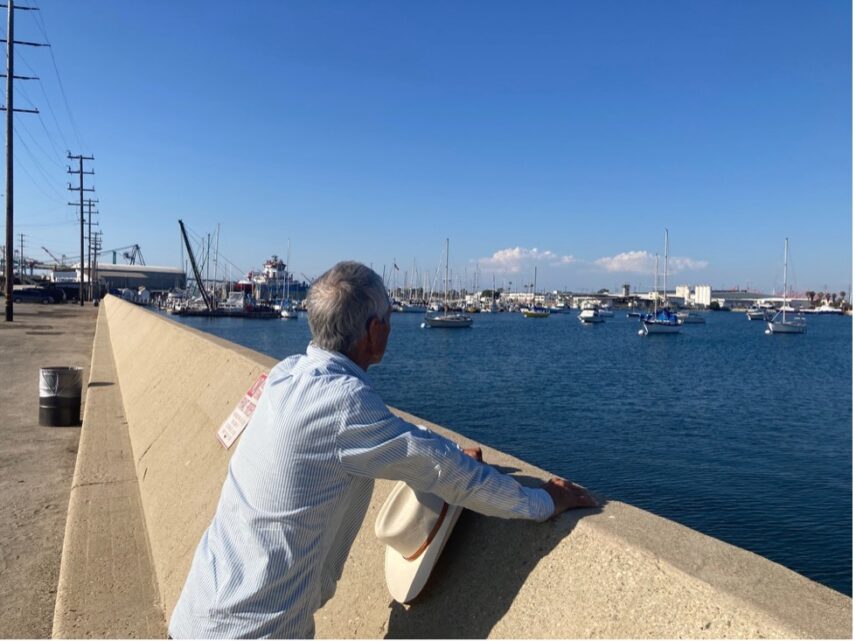
On an autumn day, Armando and I met outside his home in Wilmington, a neighborhood of Los Angeles, California, and made the 5-mile drive to Terminal Island. Terminal Island, a largely manmade island located off the coast in the San Pedro Bay, was once the center of canned tuna production in the United States. It is the place where Armando, with hundreds of his neighbors and family members from his home community in Urequío, Michoacán, México worked side by side on the assembly line processing fish, packing cans, and serving in the cannery workers’ union. The tuna canneries of Terminal Island have long since closed, with the center of the global canned seafood market shifting to Thailand. In the aftermath, many migrants would go on to work intermittently in service positions with little to no benefits and no opportunities for union membership.
Today, most of the area is owned by the Port of Los Angeles, which has demolished almost all of the cannery buildings, despite the efforts of various nonprofits and organizations dedicated to preserving historical sites in Los Angeles. When we arrived at the Chicken of the Sea Cannery, a shuttered white building that once housed the island’s longest-operating cannery, a Los Angeles Port Police vehicle seemed to watch us from the parking lot. It pulled up again when we drove to the Star Kist Tuna Cannery Main Plant and followed our car until we left the island. Surveillance of the area has likely only intensified with recent immigration sweeps, as the Coast Guard base located on the island is currently being used as a staging area for Customs and Border Protection (CBP) and Immigration and Customs Enforcement (ICE).
Many migrants in Wilmington, including those with documentation attesting to their citizenship, have expressed fears of incarceration and retirees like Armando are now choosing to spend more time in Urequío. Urequío is an agricultural community in the highlands of Michoacán, home to approximately six hundred permanent residents. There, migrants are tending to their gardens, attending to the maintenance of public spaces, and participating in meetings to steward their community. Their work, across time and distance, is as expansive as the waterways that today sustain their beloved rancho, carrying practices of environmental stewardship that shift and variate in response to climate change and hardening borders. They are oriented towards the challenges of the present as well as the future, to fears of drought and deportation, and carry with them the transformative potential of collaboration.
El Agua Escondida (The Hidden Water)
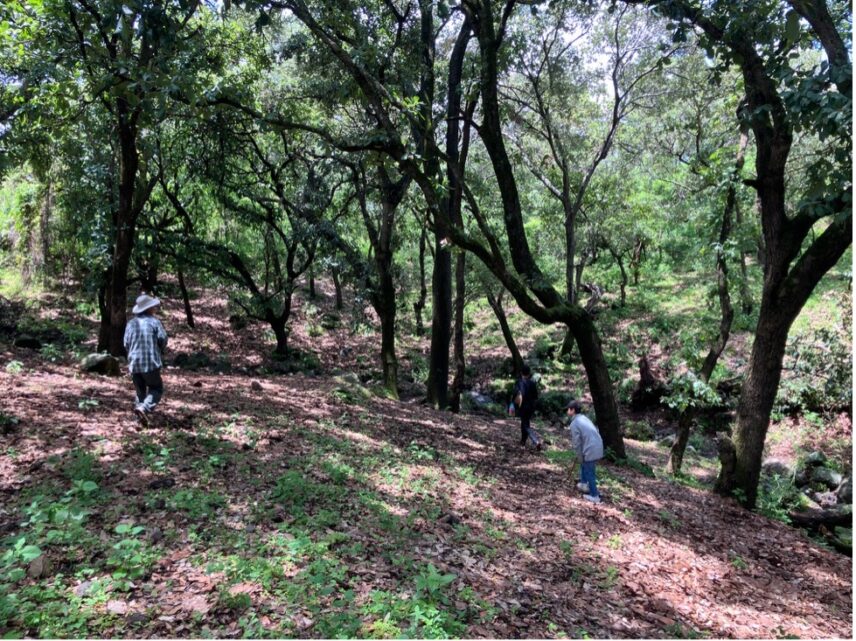
In Urequío, Armando is my guide once more. He takes me to a brook, a welcome sight on an unseasonably warm day. Water trickles slowly down to a shallow basin, curving over small rocks and ground vegetation, cool and clear. It is not safe to drink—at least, not for me. Armando smiles and says that only people from here can drink the water without getting sick. His warning makes his grandchildren, who have joined us on this hike, reach for their water bottles instead. They were not raised here, either.
But we made this climb so that Armando could show them more of this rancho, of his home. It has been arduous. There were no clear trails leading from the village and its brightly colored concrete homes to what residents call el agua escondida (literally meaning, the hidden water). Our guide slices through branches and thorny bushes with a machete and at times pauses, going ahead alone to confirm the path. At times, he draws our attention to pipes, jutting out from between the trees.
The pipes are precariously suspended atop concrete posts, angled downwards towards the rancho and carrying water from the aquifer underneath el agua escondida to deliver it to its residents. Before these pipes, the community relied on various natural wells for potable water; however, severe drought conditions in the Pacific Coast of México and central México in the 1990s left the wells dry, and residents in desperate need of a more reliable source of water. The construction of Federal Highway 15D, located 1.5km from Urequío, provided residents with the opening to radically shape the environment as well as establish new pathways for collaborative survival. Motivated by a rise in national infrastructure spending, roadbuilding projects expanded across México in this period. When construction machinery belonging to Empresas ICA—one of the country’s largest construction and engineering companies—leveled the land for the highway, they uncovered the large groundwater reserves emanating from el agua escondida.
It was no discovery. The water source was familiar to residents, who had long ago named it. It was an opportunity. Residents hosted a series of secret meetings, ultimately forming a water committee to seek out the necessary concessions from the Mexican government to tap the aquifer. When the bureaucratic process stalled, they took direct action. Community members occupied the highway, declaring that construction would not be allowed to continue until they received their concession. The third day ended with the arrival of federal employees and Empresas ICA representatives, who took members of the water committee to Morelia, the state capital, for their concession. In the years to follow, residents would go on to establish various democratically elected local positions to manage water and public works.
Residents of Urequío did not act alone. The results of the Mexican federal election of 1988 had led to protests across the country and marked a critical moment in México’s democratic transition, with the state of Michoacán serving as the epicenter. In addition to broader growing movements for political change, securing the flow of water in Urequío depended on the hundreds of migrants like Armando, who were then living in Wilmington. In Wilmington, migrants established a parallel water committee, responsible for collecting remittances to fund the purchase of construction materials. Armando’s name is listed in a notebook still in possession of one of the committee members, who continues to use these records to resolve water disputes in Urequío. As we stood in the clearing on that hot day, he motioned at the brook with his machete, explaining that the residents who had hauled the pipes and dug the trenches which house them, building the potable water infrastructure through a form of communal labor named faena (literally meaning “task”), came here to rest. And when they did, they ate from cans of tuna, contributed by migrants in the United States.
An Environment in Flux
The men who first cut their way through these woods nearly thirty years ago to build this infrastructure are now middle-aged or elderly and make their living from the rancho’s agricultural industry, largely dominated by strawberry farming. Anecdotally, residents mention the environmental harms associated with the types of pesticides that target spiders drawn to strawberries. Turtles and frogs, once plentiful in the streams and marshes, have died off as well as various insects. Toxins, fluid in their transmission, escape the borders of agricultural fields and touch every part of life. Furthermore, the amount of water required to nourish the plants is significant and severely taxing the groundwater supplies that the community worked so hard to secure. In 2021, Michoacán prohibited the granting of new water concessions across most of the state due to decreased rainfall and declining groundwater levels. However, as U.S. consumers’ demand for strawberries increases and Urequío’s local economy continues to rely on this revenue, the introduction of any additional guidelines seen to potentially harm this industry are unlikely.
Residents have increasingly relied on other forms of technologies, grassroots and otherwise, to address the growing water crisis. This has included the restoration of historically used watering holes as well as experimentations with solar technology to power water pumps and reduce energy costs, though the results thus far have failed to meet expectations. Remittances too are fluid and adaptive; utilizing social media, residents in Urequío now film the sites of infrastructure breakdown and, following their repair, share the names of those who contributed monetarily. Even as these strategies raise questions regarding the limits of local environmental adaptation strategies, the fluidity of the movements of people and funds across borders, of water in the underground and pesticides through the air, will undoubtedly shape the future of the community. And in these circuitous routes, they carry with them the possibility of imagining and enacting more environmentally just worlds.
This research was supported by the Wenner-Gren Foundation, the American Association of University Women, and the University of California, Irvine.
Liliana Ramirez and Tannya Islas are the section contributing editors for the Society for the Anthropology of North America.