

Article begins
In museums across the world, Kamëntšá masks, textiles, and even the Ancestors’ remains are confined to vitrines and narrated through foreign epistemic regimes that sever them from the land, language, and responsibilities that sustain their life. The Tsebionán Curatorial Center rejects this extractive logic. Rooted in Kamëntšá ethics of tsanÿenam (care), and sustained through ceremony, seasonal cycles, and environmental custodianship, Tsebionán understands heritage not as an object to be possessed but as a set of relational obligations enacted through practice. This essay asks what is silenced when museums consolidate epistemic authority through colonial materialism and object fetishism, and what may be reclaimed when curatorial work affirms Indigenous ethics of care as a legitimate foundation for knowledge, stewardship, and rights. Decolonial care, grounded in Kamëntšá life and continuity, demands nothing less.
Object Fetishism and Epistemic Injustice in the Museum
Museums worldwide emerged as instruments of order and control, seeking to classify, preserve, and regulate what they defined as “culture,” often stripping objects from their living worlds and rendering them into specimens for display. In Colombia, as elsewhere, this logic was deeply entangled with colonial projects: Indigenous peoples’ objects, bodies, and sacred expressions were seized not for care, but to be cataloged, redefined, and interpreted within Western epistemologies. In Kamëntšá lands, such work was carried out by the Capuchin missionaries at the Center for Linguistic and Ethnographic Research of the Colombian Amazon to support their colonial mission of “enculturation.” Their collection and studies sought not to protect Kamëntšá life, but to transform it—to translate, discipline, and ultimately assimilate the Kamëntšá people into Western culture and the Colombian nation. Yet, institutions such as museums continue to praise these missionary endeavors for allegedly “saving” Kamëntšá language and culture. This paradox exposes the museum’s role in perpetuating the celebration of colonial knowledge production through Indigenous cultures’ erasure and oppression.
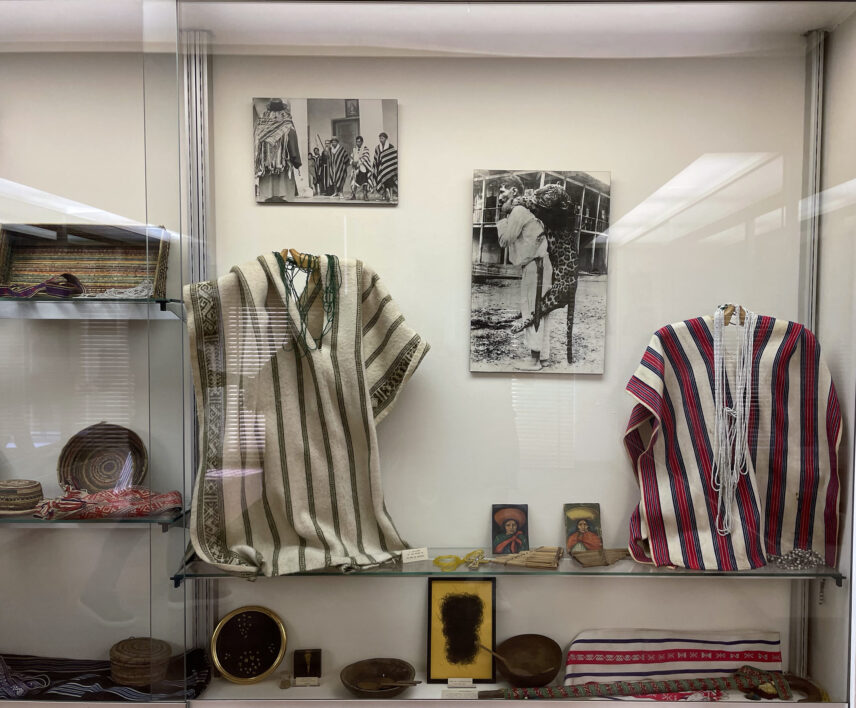
For the Kamëntšá, this history is painfully present. Ceremonial objects and the remains of Ancestors are held in museums, locked away in drawers or exhibited in glass vitrines where they are reduced to curiosities. The museum’s logic enforces silence, subjugation, and separation as normative conditions of value. What is sung, played, worn, and celebrated is rendered a static emblem of “tradition,” severed from the cycles of life and from the Peoples who sustain it. Exhibitions too often reproduce this violence: Kamëntšá objects are framed as relics of a bygone past, classified as “pre-Columbian,” and interpreted through lenses never applied to Western art.
Attempts to transform this relationship have consistently met resistance. When we approached museums to discusspossible collaborations and establish dialogues around care grounded in Kamëntšá ethics—matters far less contentious than restitution or rematriation—the response was apathy, or worse: the reiteration of colonial arguments that museums “protect” heritage “the right way.” At times, these encounters were marked by arrogance or outright dismissal, revealing how deeply entrenched colonial premises remain. Such responses expose museums as far from neutral repositories; they are colonial structures that continue to deny Indigenous Peoples’ rights and relationality. For instance, a private collector’s refusal to restitute ceremonial masks, justified on the grounds that Kamëntšá lands allegedly lack appropriate infrastructure (exhibition space with security measures, humidity control, etc.), ignores other ontological and spiritual approaches to their meaning and care, in which they might be offered ceremonially or burned as symbolic acts of transformation and relation. Moreover, restitution claims are dismissed as merely political, rather than as appeals for respect and recognition that these “objects” hold affective ties to Ancestors, nurture belonging and kinship, and sustain the care of land and life.
Museums’ reluctance to engage meaningfully with Indigenous Peoples in Colombia reveals a deeper failure to recognize their juridical, epistemological, and ontological standing as Peoples, not as “ethnic communities.” Operating within Western regimes of ownership and conservation, museums disregard Indigenous understandings of heritage as reciprocal relation and ethical responsibility. This perpetuates a colonial logic—preserving “objects” in artificial suspension, severed from the relations that make them alive and from those who hold the right and responsibility to care for them, and produces a parallel process of forgetting within Indigenous homelands. As our colleague Izaira López Sánchez observes, colonial education was deliberately designed to make Indigenous descendants forget their roots and valorize colonial Western culture and structures as inherently superior. In this way, museum practices do not merely displace cultural expressions spatially; they reinforce pedagogies of erasure that estrange new generations from their own histories, knowledges, and responsibilities. The museum thus functions as a repository of epistemic injustice: its authority depends on extracting objects from their relations and converting living worlds into property, evidence, and display. To see beyond the glass and labels is to recognize that these are not inert artifacts, but fragments of worlds that colonialism sought to pin down—a process that continues to harm rather than care for Indigenous Peoples’ cultural heritage.
Tsebionán and Kamëntšá Ethics of Care
Against this backdrop of epistemic injustice, the Tsebionán Curatorial Center in the Sibundoy Valley of Colombia offers another path. Founded by Kamëntšá researchers, artists, and allies, Tsebionán emerged from the recognition that heritage cannot be cared for through confinement behind glass or hanging on walls. Instead, it must be grounded in the work of healing from and moving beyond the colonial, violent, and reductive logics that have long governed museums, and woven into the continuities of Kamëntšá life—cycles of land, ceremony, memory, and language. Our institution’s very name, tsebionán, refers to the collective, humble, and respectful practice of feeling, caring for, and valuing Kamëntšá knowledge, history, and thought, in solidarity and with reverence for the elders and Ancestors. This commitment is not only ethical but methodological: it shapes curatorial strategies rooted in sustained community engagement, the sharing of authority, and creative experimentation within institutional and material constraints.
Curatorial practice at the Center is therefore collaborative with, accountable to, and guided by Kamëntšá ethical protocols. Here, a mask is not an “artifact,” but a being with responsibilities and relationships. Songs are not “intangible heritage,” but living presences that must be sung to remain alive. A weaving is not a textile “piece,” but a thread of memory connecting hands across generations. What matters is not possession but care; not classification but connection. The Center defines its work as curatorial not in the conventional sense of managing a collection, but as a practice of cultivating reciprocity, continuity, and care for knowledge and heritage. This understanding is grounded in Kamëntšá ethics and ontology, in which knowledge and care circulate constantly between generations, ceremonies, and existential planes. This form of caring is what is referred to as tsanÿenam: caring with affect for the memory and teachings of the Ancestors. To care for heritage in this context is to sustain its circulation and ritual transformation.
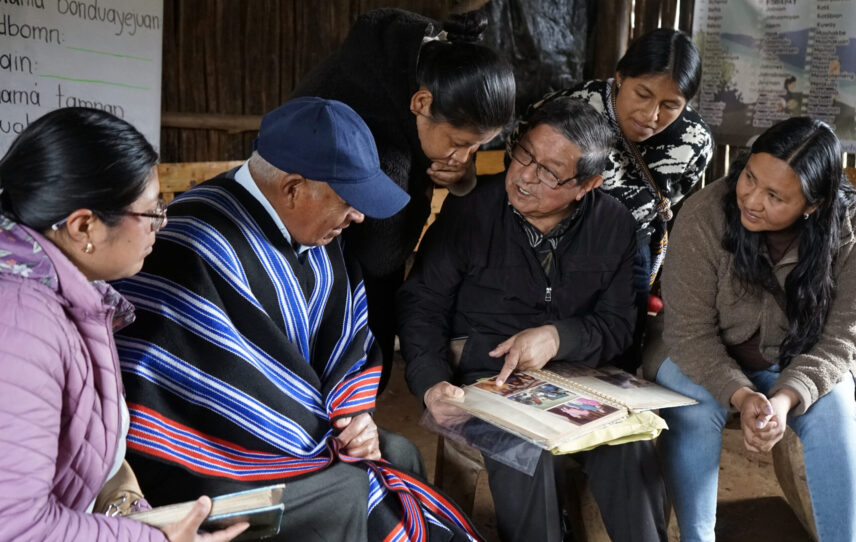
This principle of care is embedded in the Kamëntšá ethical aesthetic-ethical matrix that guides collective life known as Botaman Juabnëng—Beautiful Thoughts—and it informs when, where, how and with whom cultural practices occur. From this vantage point, material forms—masks, weavings, musical instruments—do not carry fixed meanings detached from time, reciprocity and kin; their significance is produced through responsibility, ritual propriety, and ongoing care. Certain objects and practices are enacted within specific seasonal and ceremonial contexts, and protocols determined by elders govern their activation, transmission, and renewal. To displace those objects into a vitrine, reducing them to objects of display and study, is therefore to sever them from the ethical and temporal relations that constitute their life.
Tsebionán organizes its work around these temporalities and relations rather than around exhibition schedules. The Center aligns its activities with the Kamëntšá ancestral calendar—jaguáshëntsám (sowing), jashakam (harvest), jastajuayam (offering) and jaklestrinÿam (celebration)—and its programing is designed to support intergenerational knowledgetransmission and communal well-being. Weekly activities combine artistic practice with communal gatherings (juashëntsán), reflective discussions (jtsenojuabnayán) around the hearth (shinÿak), and work in the vegetable and medicinal garden (jajañ). The Center also undertakes research in ecological knowledge, seed recovery, and reciprocal exchanges (jastajuayam), and it makes deliberate use of new media and archival materials as tools for community revitalization rather than ends in themselves. Crucially, Tsebionán situates curatorial practice within pressing material realities—drinking water scarcity, flooding, environmental degradation, and extractivist pressures—insisting that art and research must contribute to communal care and well-being as much as to cultural continuity.
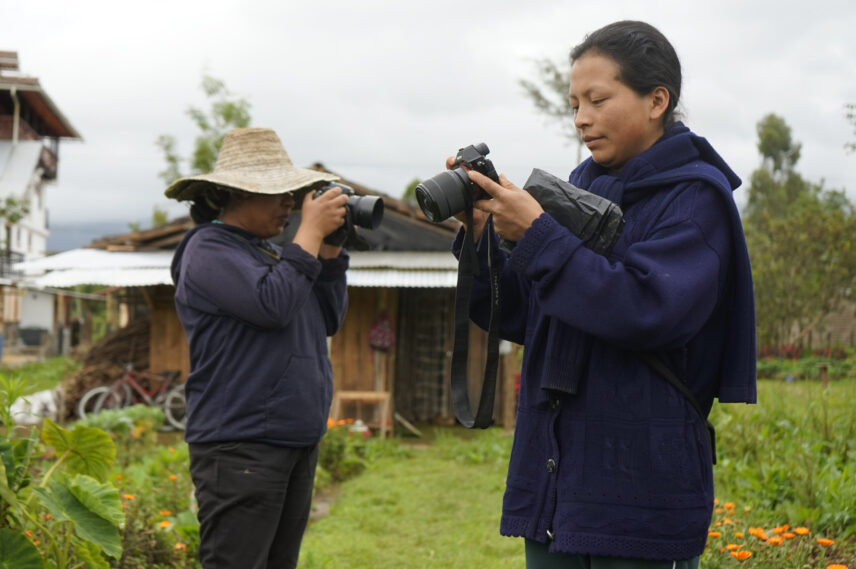
To take relationality seriously is to understand heritage as a network of obligations and responsibilities, not as an object. At Tsebionán, heritage is not preserved in isolation but sustained through practices of care, transmission, and accountability. The Center resists the museum’s logic of epistemic control by cultivating dynamic forms of research, curation, and artistic practice that cross disciplinary boundaries, languages, and generations. In doing so, it redefines heritage not as something to be stored or displayed apart from life, but as life itself.
Envisioning Institutional Futures
The contrast between the Western museum’s logic and the Tsebionán approach could not be sharper. Museums, as they have historically operated, specialize in extracting and controlling objects: they catalog, label, vitrify, and, by so doing, impose silence and sever relational contexts. Collections become instruments of taxonomy and homogenizing national narratives; they reassure state and scholarly authority by asserting mastery over time, knowledge, and difference. Tsebionán advances an alternative logic: it foregrounds relationality, accountability, and community-centered care. Where museums prioritize objects as evidentiary tokens, the Center prioritizes the relationships, responsibilities, and ethical obligations that give those objects meaning.
Yet modeling alternatives grounded in Indigenous methodologies, ontologies, and epistemologies remains profoundly challenging, for it entails reshaping inherited institutional structures and reorienting knowledge toward relation rather than control. Entrenched hierarchies, nationalist agendas, and the disciplinary authority of conservation and curatorial professions continue to impose rigid expectations of what “art,” “heritage,” and “knowledge” are. For instance, during a visit to the Center, a bureaucrat from the Colombian Ministry of Culture openly derided our work because there was no art “hanging on the walls,” exposing how colonial aesthetics and imaginaries still govern the recognition of cultural value. This dismissal was not merely aesthetic, but symptomatic of funding regimes and evaluation criteria that reward extractive display over relational practice, rendering Indigenous epistemic models structurally vulnerable. Thus, transformation requires a move beyond Western materialist and capitalist property concepts and harmful practices, to the recognition, validation and legitimization of Kamëntšá and other Indigenous values, principles and practices of caring for knowledge and cultural heritage.
When institutions insist that value lies in collection and display rather than in living relation, they jeopardize the practices through which languages, ceremonies, and knowledge are transmitted—often with and through “objects,” further erodingIndigenous Peoples’ cultural continuity. Tsebionán builds a culturally, ethically, and spiritually grounded rights-based practice that could inspire and work as a foundation for more meaningful and respectful museums, sustaining Indigenous cultures and supporting human and more-than-human rights. The question is therefore existential: will museums remain repositories of injustice, or can they be reconstituted as accountable institutions capable of sustaining Indigenous life, knowledge, and rights through genuine partnership?
Lilia McEnaney is the section contributing editor for the Council for Museum Anthropology.