

Article begins
(1945–2026)
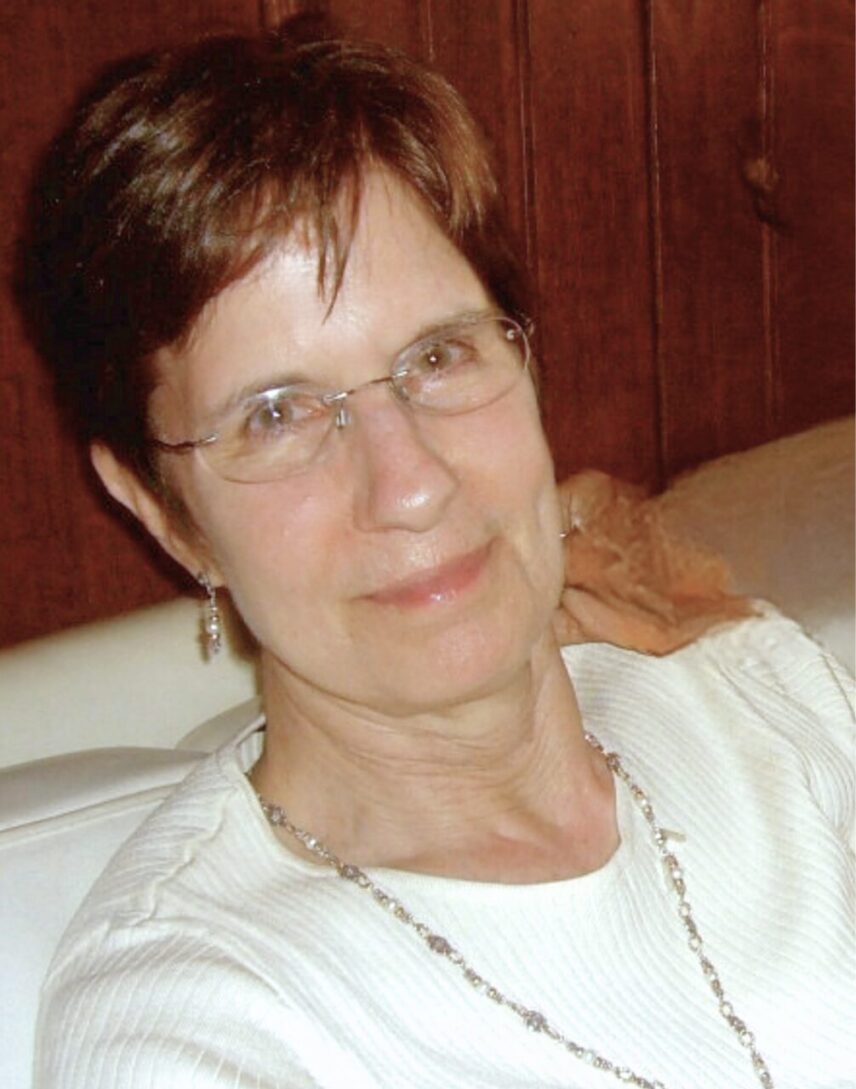
Susan Makiesky Barrow was a social anthropologist and Caribbeanist, who built on that foundation during a 45-year career as a research scientist and senior lecturer in which she explored the intersections of gender, migration and racial consciousness, and social epidemiology, urban policy studies, and homelessness. Born in Nebraska in 1945, she received her BA in English from New York University (NYU) in 1967 and her PhD in anthropology from Brandeis University in 1976. As an undergraduate, she worked as a research assistant with NYU anthropologist Constance Sutton, who became her mentor, research collaborator, and lifelong friend. Working with Sutton, Makiesky Barrow began to document the emergence of the Black Power movement in rural Barbados, an observation which, combined with later study of Barbadian labor history and Barbadian migration to New York, framed her dissertation.
Makiesky Barrow drew on this research in coauthoring, with Sutton, three seminal articles on migration and Caribbean social, economic, and political life published between 1975 and 1977. These articles examined social inequality and gender in Barbados, migration, and West Indian racial and ethnic consciousness, and the nuanced relationship between Caribbean women, knowledge, and power. Makiesky Barrow and Sutton challenged the notion of bounded homogeneous cultures and communities and wrote instead of the bi-cultural connections they observed between rural Ellerton in Barbados and New York City, laying the groundwork for later transnational theorizing. At the same time, they situated Barbados in a larger context of racialized colonial and post-colonial labor, and social and economic systems. She later revisited this research in her chapter for the book dedicated to Constance Sutton’s work, which highlighted their collaborative efforts to merge feminist activism and scholarship
Makiesky Barrow’s early publications demonstrated two hallmarks emblematic of her entire career: they broke new conceptual ground and were the outcome of close collaboration among researchers. In 1973, Makiesky Barrow joined the New York State Psychiatric Institute (NYSPI) Research Center where she became a senior research scientist, while lecturing in anthropology at NYU, and later at Fordham, the New School, and Hunter College. After moving to the NYSPI Epidemiology Division in 1979, she directed major studies of homelessness and mental illness. Her anthropologically influenced studies of outreach in street homelessness are considered groundbreaking in the field. With NYSPI anthropologist Muriel Hammer, she published a foundational theoretical framework for understanding the relationship between social networks, social processes, and the social dimensions of schizophrenia. Makiesky Barrow was the principal investigator on numerous studies, some of which influenced national policies and programs, and collaborated with anthropologists Anne Lovell and Kim Hopper, among others. From 2005 on, she was also a senior lecturer in Columbia University’s Sociomedical Sciences Department and associate director of its Center for Homelessness Prevention Studies.
Makiesky Barrow brought feminist anthropology and kinship perspectives to a series of research papers that de-invisibilized “single homeless women” who in fact were mothers. She examined precursors to mother–child separation in the face of poverty and homelessness, showing family separation and shelter life to be transitory states, and how lack of institutional resources nevertheless worked against mother–child reunification after housing loss. By analyzing the perspectives of mothers, grandmothers, and service workers, she uncovered obstacles homeless women with mental health and substance use problems faced when attempting to keep their families together. In a widely cited study, Makiesky Barrow also showed chronic homelessness to be a major contributor to mortality, with shelter residents having rates four times that of the general population.
Always athletic, in her earlier life Makiesky Barrow was a competitive ice skater and swimmer and later became an active practitioner of Tai Chi and bike-rider. She lived her life between Barbados and New York City. She is survived by her husband, daughter, son, sister, two daughters-in-law, three grandchildren, and numerous friends in New York City, Barbados, and elsewhere, who deeply miss her insightfulness, wisdom, and quiet grace.
(Linda Basch, Anne Lovell, Nina Glick-Schiller)