

Article begins
The following is an edited conversation between Ana Croegaert, president of Society for the Anthropology of North America, and section co-editors Tannya Islas and Liliana Ramirez. The discussion explores what it means to do North American Anthropology historically, today, and future directions for the discipline.
Introduction
Can you tell us more about yourself and your work?
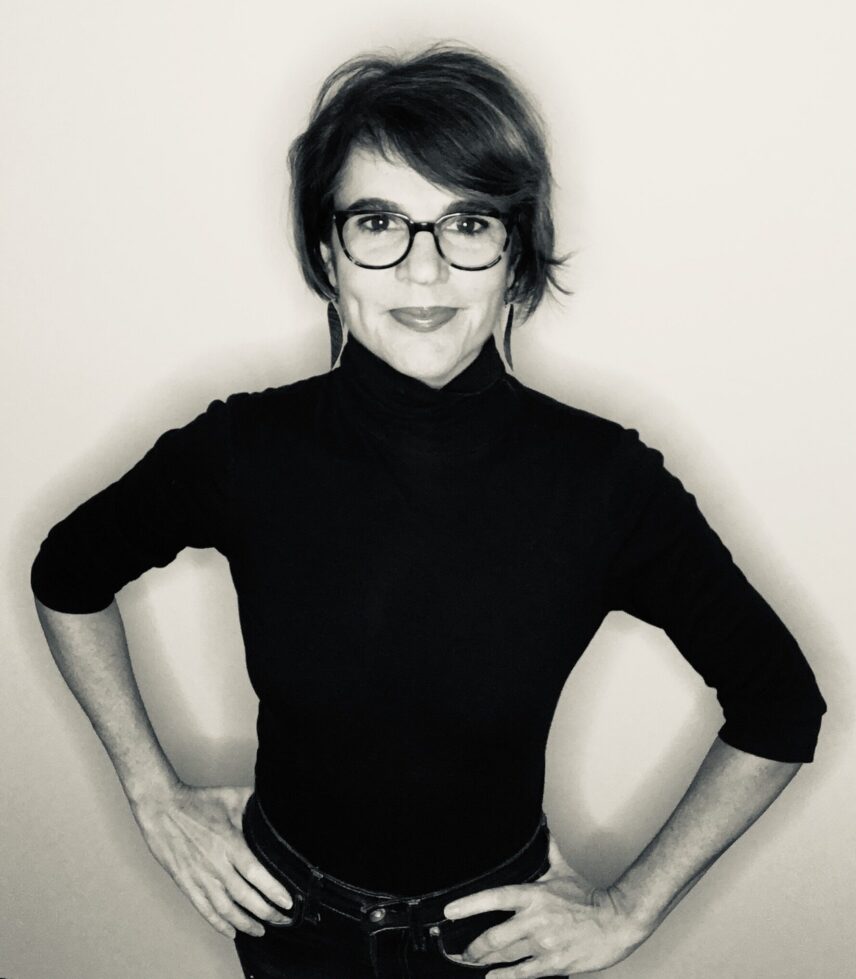
Yeah! I am an anthropologist and an ethnographer, and I would say my work lies at the intersection of migration, performance, and critical social theory to better understand twenty-first-century urban life. My fieldwork sites have included Chicago, the Herzegovina region in Western Bosnia of former Yugoslavia, and New Orleans.
My current work looks at the role of visual and material culture in mediating understandings of environmental knowledge and archival practices. I was formerly a professor of Anthropology and Gender Studies at Mount Holyoke College and at University of New Orleans. Since 2020, I have been based in Chicago as an independent researcher, working primarily with museums, nonprofits, universities, and a few small businesses.
Applied Work, Artistry, and Anthropology
How do you describe the connections between your work as a scholar, ethnographer, and applied researcher?
As anthropologists we really have such a range for what constitutes applied work.
For example, some of the people who I’ve worked with at the Field Museum have participated in a lot of rapid ethnographic research. That is the kind of work where there is a discrete and urgent social problem that often takes a team of people to gather interviews, participant-observation, and fieldnotes. An outcome of that research is then developed into protocols for a community-based response that addresses the problem.
In many ways, though, all research is applied, in that it’s going to have its applications; some that are intended and not intended. So, I try to be attentive to that dynamic. I will say that I’ve been really influenced by social practice artists. Specifically, what began as Solitary Gardens, and now is Freedom to Grow, which is an artist-led project with jackie sumell that uses architectural gardens designed in correspondence with people incarcerated in solitary confinement to highlight structures of harm, and center efforts to repair the violence carceral systems perpetrate on families and communities. And also ŠTO TE NEMA, which is a Bosnian phrase that translates to, “Where have you been,” or “Why aren’t you here?” But it’s also an artist-led project by Aida Šehović, a Bosnian American artist who pairs this phrase of longing with Bosnian coffee rituals and the (ongoing) aftermath of war and refugee life to invite people to consider memory and its significance in preventing genocide and war.
This notion of applied—for me—is conceptual and continuously collaborative, and is also an important part of understanding research applications. What I mean is, art-making projects like these bring attention to the generative aspects of relationships, and to the particular historical material contexts in which the art-making activities take—whether seeding kale or tracing the mouth of a coffee cup. This approach makes it impossible to ignore the constant hypothesizing we engage in daily—collectively—and so, impossible to separate theory from practice/applications.
Tracing Relations
How has studying transnational communities shaped your approach to North American Anthropology?
I think that transnational questions are so important. The question helped me to kind of think through my own development as a scholar.
As an undergraduate, I created my own major in American Studies. At the time, this field was new, and it was not a full-fledged department or program yet (at my college). And so that coursework drew from history, politics, anthropology, and literature. I minored in anthropology, but you know, the way in which I was understanding Americanness really gave me the tools to understand the United States as a place that is rooted in nineteenth-century imperialism, colonialism, and nation building. It also helped me understand the twentieth-century transformations, of the kinds of shifts in our histories that really beg a transnational lens—require it really— to understand the United States, to understand North America.
I also found the work of scholars who developed transnational feminist theories to be really helpful in my earlier work. Inderpal Grewal, for example, was really careful and clear to say that a transnational lens—and not a globalization framework—was critical to looking at gendered inequalities in the context of immigrant and diasporan experiences. These arguments were important to hear at the time because the globalization framework was so dominant. Transnational feminisms emphasized the historical specificities and centrality of relationships that are both delimited by and exceed political and communal borders, which really helped me to trace how transnational racial and gender frameworks shaped Bosnians’ experiences as refugees in the United States, and how the people I was working with made relational and material decisions based on social and legal ties, and ethical frameworks that were governed by transnational contexts.
A Guide for the Future of North American Anthropology
What advice do you have for Ph.D.s?
1. Claim your praxis.
Anthropology’s emphasis on analysis that’s holistic and comparative—an emphasis on a shared humanness—that type of analysis is needed now as ever. For me, that means doing ethnographic work that is historically situated and attentive to power. It is work that is collaborative and co-curatorial in its design and interpretation. A comparative framework that is totally non-reflexive in the apparatus that it’s comparing through doesn’t help us, but a framework that is attentive to histories, that is attentive to power, that is attentive to how it’s designed, attentive to how it’s being interpreted, and is mindful that it is an active framework; we need that perspective.
So, claim your methodologies. If you’re using ethnography, understand what it means to you and what your historical genealogy is. Lean it to that and be clear about it.
2. Diversify your work.
Make sure that you can talk about your research across different domains, and that you can appreciate different formats for doing anthropological work and for presenting anthropological work.
Two people whose work I really admire and who do this well are Jean Hunleth and Tracie Canada. Hunleth incorporates art-making as a research strategy, evaluating medical treatment and adherence protocols in ways that I think are really interesting and helpful to practitioners in a number of fields and the communities they serve.
Canada wrote a book about college football players called Tackling the Everyday. In that book, she investigates the racist and socio-medical aspects of college football in the United States, through a black feminist framework. I really admire the way that she has been constantly in conversation with athletes, with their parents, and with, not only the people who were the actual participants in her study, but the groups to which they belong and to anyone who can relate to this book. I think it’s a really excellent example of someone who is talking about what anthropological perspectives can bring to these wide-ranging features of our world right now.
3. Ask yourself:
- Can you discuss your research project with your participants?
- Can you discuss it with peer practitioners as well as other disciplines and professions?
- Can you explain what it is that you do to students and people of different generations from your own?
- Are you open to experimenting with doing anthropological research in different modalities, such as creating visual materials?
- Even if it is not your preferred mode of research, are you working on developing an appreciation of what it means to do multi-modal anthropological research?
4. Keep your chin up.
I know the job market is hard. We have to do what we can to protect our spaces within academia and continue to create spaces that are adjacent to or outside of academia for people who are trained and working in anthropological ways of understanding the world.
The academic job market has been tumultuous and difficult to navigate, and it’s going to be for a while. We need to keep all of these fresh, young perspectives on the discipline engaged and supported.
Liliana Ramirez and Tannya Islas are the section contributing editors for the Society for the Anthropology of North America.