

Article begins
Navigating Uncertainty, Structural Inequalities, and Ethical Responsibility
Marginalized students imagine, perform, and reconfigure their futures in the state-run “Gurukulam” schools.
“Today Aspiring, Tomorrow Inspiring”
– Fieldnote, 2022
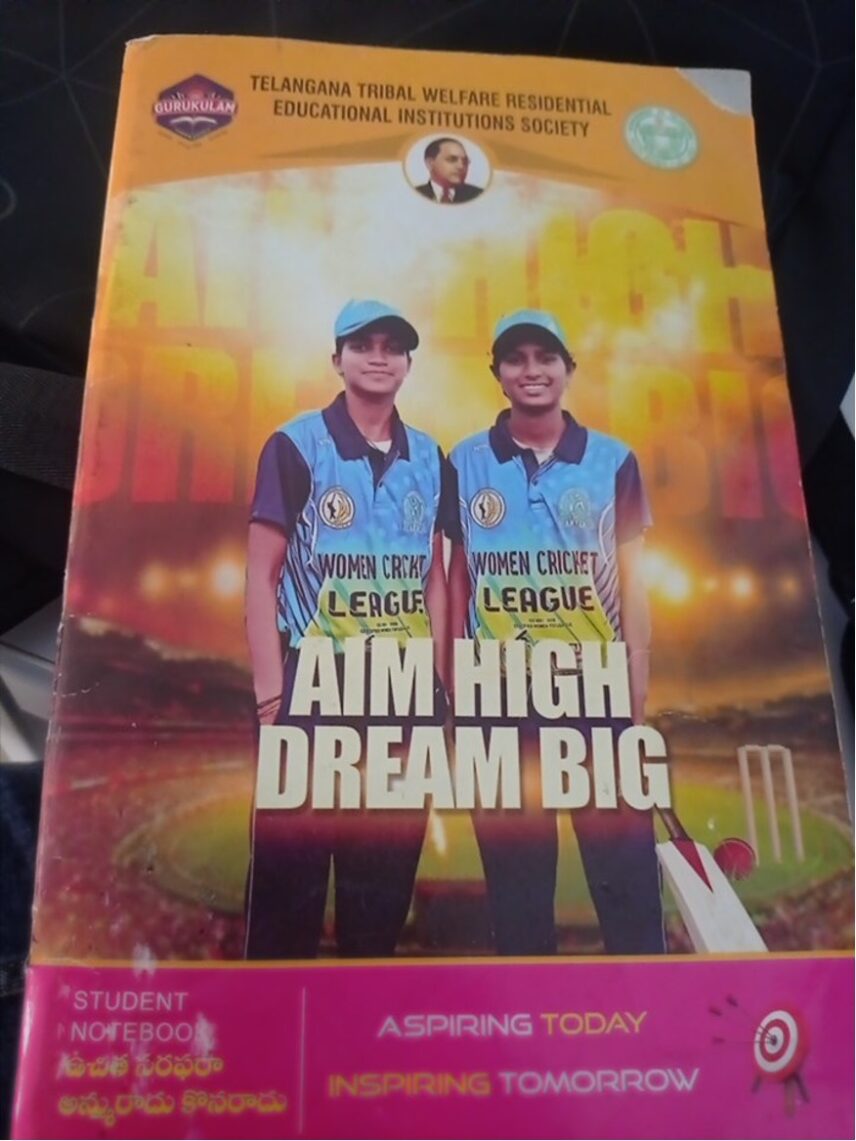
The first day of my fieldwork in 2022, I walked through the rusted, broken gates of one of the schools in the Telangana Social Welfare Residential Educational Institutions Society (TGSWREIS) network of campuses. The school premises, classroom walls, and even notebook covers were painted with motivational quotations such as “Aim High, Dream Big” (Figure 1), “Be the Change Maker,” and “Never Give Up.” Posters of premier universities, including Cambridge, Stanford, and the Indian Institutes of Technology (IITs), were prominently displayed, each marked with the distance from the school. For example, posters read: “University of Cambridge-UK, rank 4, School to University of Cambridge: 7,977 km,” “IIT-Kharagpur, rank 3, School to IIT-Kharagpur: 1,643 km,” “University of Stanford-California, rank 3, School to Stanford University: 13,813 km” (Figure 2).
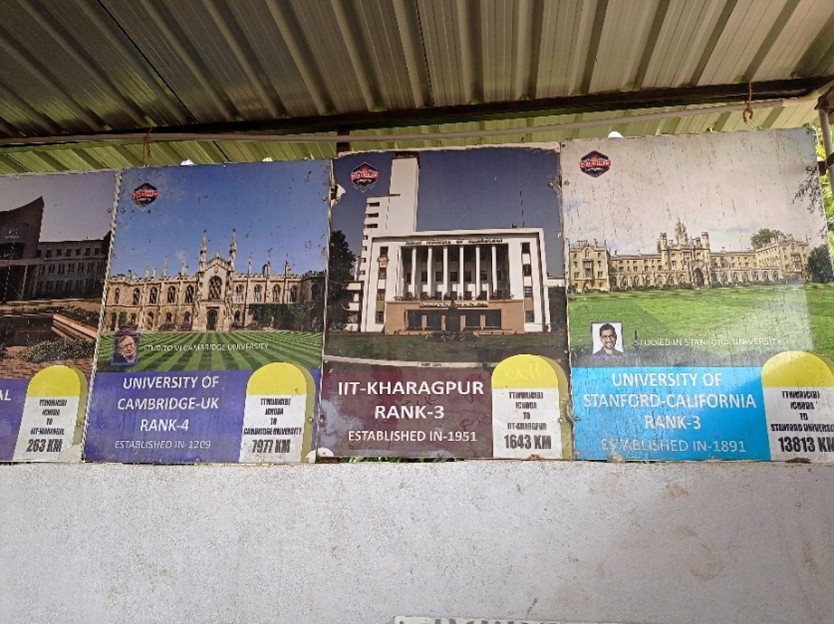
Through these aspirational infrastructures, elite institutions were making their way into students’ everyday lives. These images are not merely decorative; they function as material, spatial, and symbolic infrastructures that actively shape and restructure students’ imagination of the future. Here, distance itself becomes pedagogical: a calculated distance reminder that no goal is too far, and that, for a TGSWREIS student (known as a Gurukulam student), the sky is the limit.
The TGSWREIS is a network of government-run residential schools and junior colleges across Telangana, India. These schools are often called “The Society” or “Gurukulam.” The Society was originally started in 1984 in the state of Andhra Pradesh as Andhra Pradesh Social Welfare Residential Educational Institutions Society (APSWREIS). After the formation of Telangana state in 2014, it became TGSWREIS. Today, the Society operates over 268 Social Welfare schools for Dalit students (Scheduled Caste, SC) and 188 Tribal Welfare schools for Tribal/Adivasi students (Scheduled Tribe, ST).
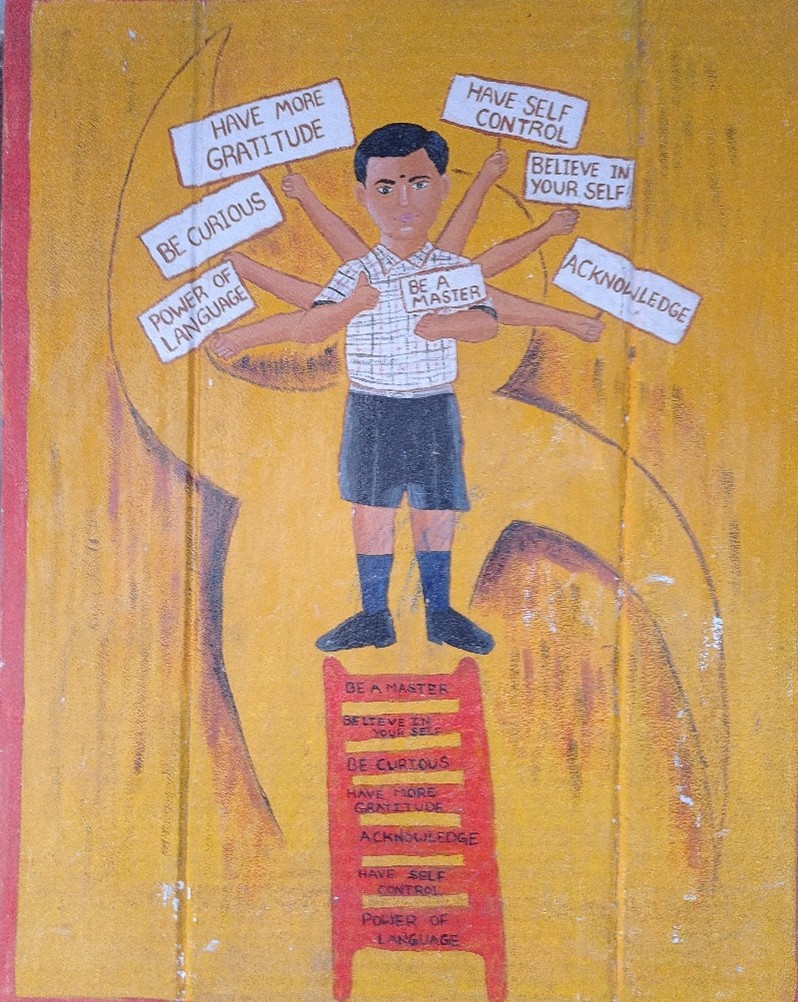
The Society’s caste- and gender-segregated residential campuses aim to provide holistic and high-quality education to marginalized children, especially Dalit and Tribal children, that is on par with education for advantaged children. The schools promote education as a means of development for marginalized communities (Figure 3). The official motto of the Society is “Educate, Excel, Empower.” The vision is to create confident, competitive, and globally oriented students for the 21st century. The Society also promotes school values such as teamwork, innovation, integrity, responsibility, equality, and goal setting. These values are displayed on walls and are part of students’ everyday learning (Figure 4).
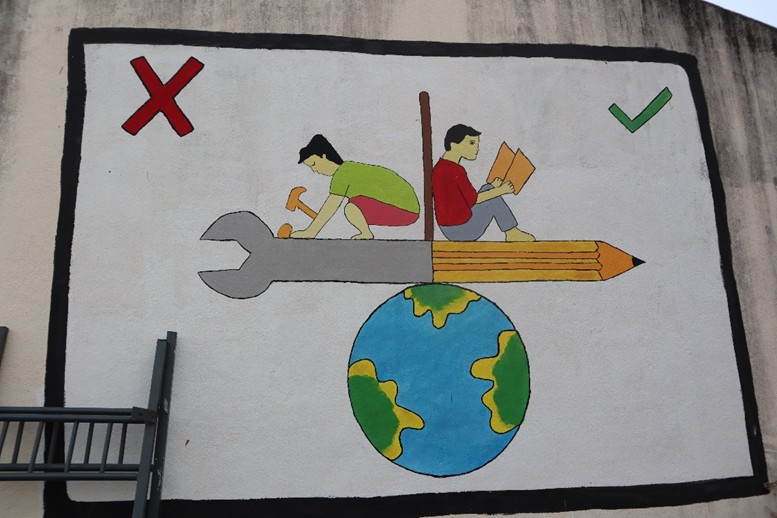
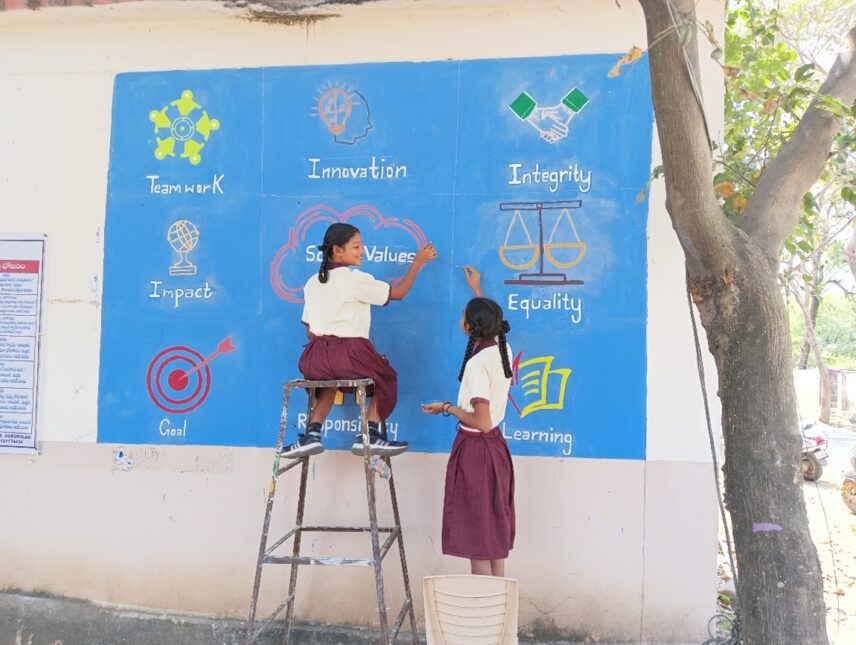
TGSWREIS plays an even greater role in choreographing the aspirations of the marginalized students through the everyday spaces, schedules, and aspirational infrastructures. The institutional scripts at TGSWREIS emphasize specific aspirations not only through the curriculum but also through coaching for competitive exams such as the Indian Institutes of Technology Joint Entrance Examinations (IIT-JEE) and the National Eligibility cum Entrance Test (NEET)—exams that play a pivotal role in producing the “hegemonic aspirations.” Nevertheless, my 18 months of ethnographic research at TGSWREIS revealed that student aspirations are neither static nor linear.
Sketching the Futures
After a few months of fieldwork, I met Ranjith (Pseudonym), a 12th-grade student. He came from a poor tribal family. Ranjith shared, “Before coming to the Gurukulam school, I never had any dream… I don’t know any competitive exams.” But when he entered the TGSWREIS school, he said his life changed. “Now I wanted to become an IITian,” he confidently said. “Coming here, I learned what life is. Anything can be achieved if I do hard work.” When I asked him what it means to be a Gurukulam student, Ranjith replied, “A Gurukulam student means to be self-controlled, never give up, can do anything, a risk taker, disciplined, always learning, and hardworking.”
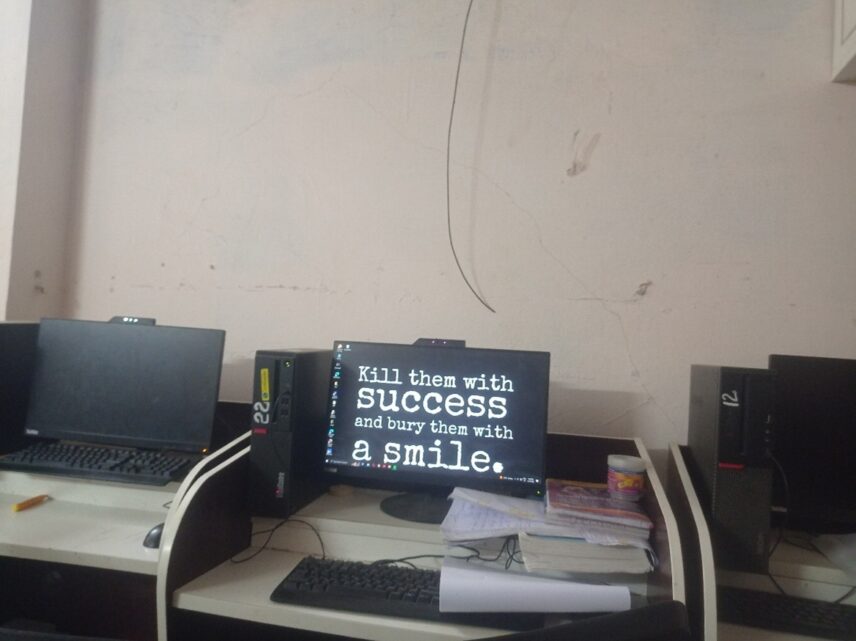
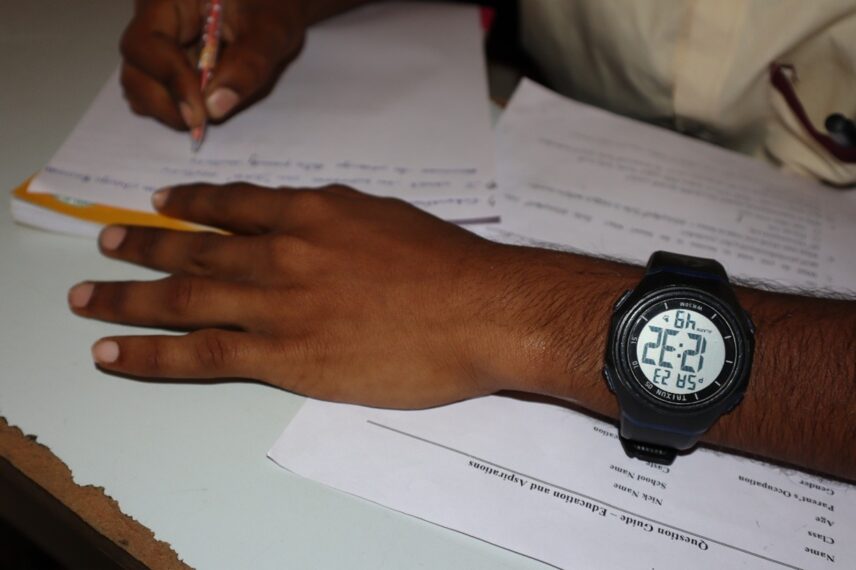
A week later, I visited Ranjith in the computer lab on the school’s first floor. On his desktop, a quote flashed: “Kill them with success and bury them with a smile” (Figure 6). He had spent long hours in the lab preparing for the IIT-JEE, a wristwatch constantly on his wrist to track his study schedule (Figure 7). Despite his efforts and discipline, he confessed to being confused, uncertain whether he would ever pass the exam. However, what drove him was the belief that his hard work will lead to success. As he said, “At least I am trying for something bigger.”
As part of a classroom activity called “Draw Your Future,” students were asked to sketch their imagined future trajectories. Most mapped aspirations along institutional scripted pathways that included passing competitive exams, pursuing higher education, and securing professional careers, such as engineering or medicine. Ranjith also drew his chart with the aim of becoming a computer science engineer. His aspirational artifact traced a seemingly linear journey from his current studies in the Gurukulam to cracking the JEE Advanced, completing a Bachelor of Technology (B. Tech) in Computer Science at IIT Kharagpur, and entering the software industry “with better income.” Yet his drawing also reveals that his journey is not linear or fixed. Instead, he imagines a life with parallel futures—becoming a civil or mechanical engineer, starting an online business, marrying by the age of twenty-five, and, in his own words, pursuing his ultimate goal: “being happy with friends and caring [for] family” until “last breath.”
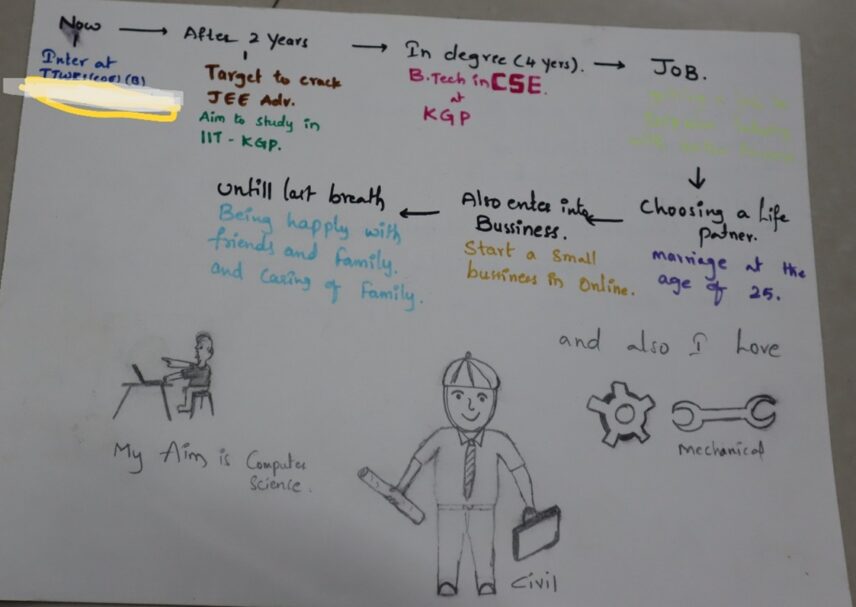
Beyond the classroom, however, aspirations unfolded with greater fluidity. In informal discussions, Ranjith emphasized that his ultimate goal was to “pay back to society” by becoming a civil servant, an Indian Administrative Service (IAS) officer, through which he could serve his community and bring social change. Alongside these long-term aspirations, he narrated multiple backup plans: pursuing Mechanical Engineering if not Computer Science, attending another reputable engineering college if not an IIT, or even preparing to become a police officer. These shifting articulations reveal that aspiration is never confined to classroom or institutional scripts but emerges from their lived experiences of social and economic realities, and the aspirations of marginalized youth are always fluid rather than settled.
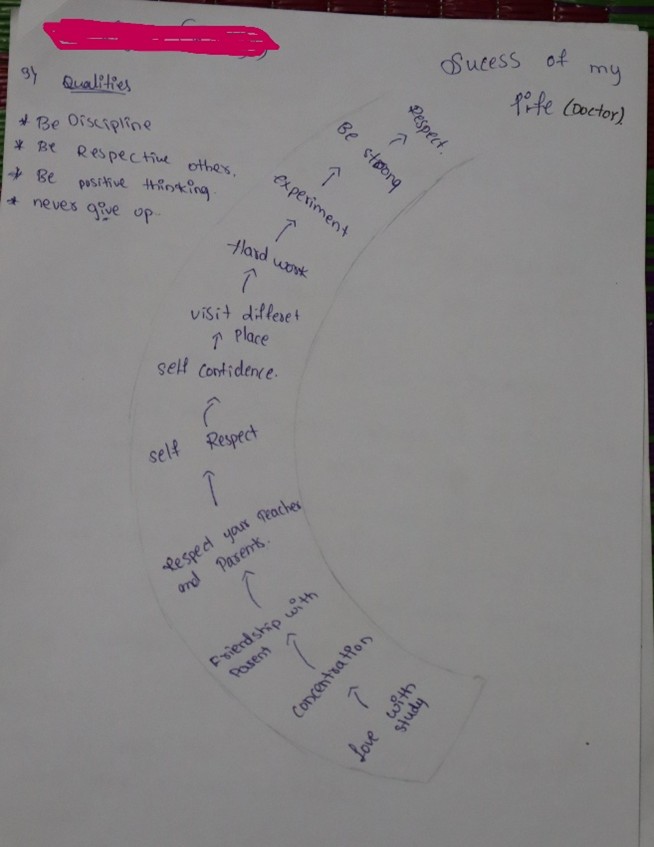
Another student, Rajitha (pseudonym), a Dalit girl in the 11th grade from the Social Welfare School, is preparing for the NEET (medical) exam at TGSWREIS’s Center of Excellence (COE), where students receive intensive coaching for both NEET and IIT-JEE Aspirants. She comes from a low-income family and aspires to become a doctor. Rajitha believes that her “hard work,” “discipline,” “never give up” attitude, and “positive thinking” will lead her to success (Figure 9). For her, being a doctor is more than an occupation; it is a pathway to a “different life”: an urban, English-speaking life that promises mobility and respect. She explained that becoming a doctor would bring respect and status to her family and provide her with an opportunity to serve her community: “Doctors are next to God; they serve selflessly and save the people… I want to serve poor people free of cost.” At the same time, Rajitha acknowledged the uncertainty of her journey: “My goal is not fixed as such… my father will decide what I should become.” She added that if she could not pursue a career in medicine because of financial limitations or the competitiveness of the exam, she would still consider nursing, “at least to help my parents financially.”
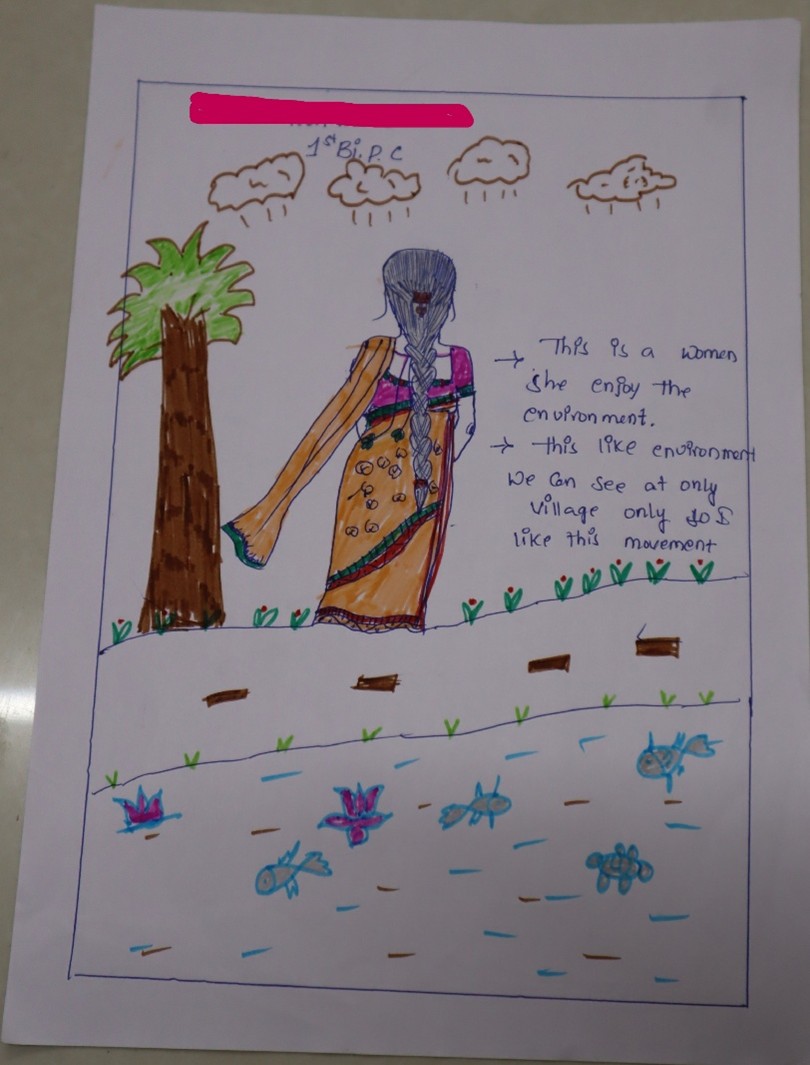
On the other hand, in the “Draw Your Future” workshop, Rajitha sketched a woman standing next to a tree in a village landscape, with her long braid flowing down her back. She describes it as a ‘movement’—a peaceful, calm moment in which she enjoys returning to her village and feels a sense of belonging there. (Figure 10). Rajitha writes in her notes that such environments exist “only in villages.” The sketch reflects Rajitha’s double horizon of aspiration, where future imaginings remain shaped by her gender, family, and rural belonging.
Performance of Fluid Selves
Like Ranjith and Rajitha, many students at TGSWREIS have multiple imagined futures. Their aspirational subjectivities are constantly in motion and fluid, oscillating between different possibilities of becoming. Rajitha aspires to become a doctor or, if not that, a nurse; her long-term life dream is to return to her village. Although Ranjith initially wished to become an engineer or, if not that, a police officer, he ultimately aspired to serve his community as an IAS officer. Students’ futures are not entirely scripted by the institution; they are also shaped by what Henrietta Moore calls “ethical imagination” and reimagined within their socio-economic realities, grounded in family obligations, gender identity, and ethical responsibility towards their community.
In the current neoliberal regime, students live what I call a pendulum life, oscillating between “hopeful futures” and “doubtful futures.” Their hopeful futures are scripted through schooling, where students cultivate a “capacity to aspire” through “technologies of the self,” such as hard work, discipline, self-control, and time management. Yet these hopes are limited by the structural inequalities of caste, class, and gender identities, which turn hopeful futures into doubtful ones. This oscillation, however, does not immobilize them. Instead, it reorients their imagination toward multiple, coexisting possibilities within the limits of their social realities. Students’ movement between hope and doubt produces fluid selves that navigate the tensions of hope, constraint, and everyday reality.
The fluid selves are the aspirational subjects who not only aspire for the “big dreams” but also navigate the uncertain futures with strategies, ethical responsibility, and collective orientations. They enact their agency through being mobile, adaptive, and inhabiting the aspirational multiplicity. Fluidity, in this sense, is neither a deficit nor a failure. It is a generative practice of becoming, a way of navigating structural inequality, precarity, and contradiction. As Ranjith put it: “If I struggle today, tomorrow will be brighter for me, so I am not thinking about anything; I am just focusing on today to become successful tomorrow.” Like Ranjith and Rajitha, many students invest their hopes for a better future in education. But they do more than internalize institutional “technologies of the self.” They reinterpret them as “technologies of helping others,” framed by kinship obligations, ethical responsibility, and commitments to community care.
Tricia Niesz is the section contributing editor for the Council on Anthropology and Education.