

Article begins
The following is an edited interview between the founding President of the Council on Heritage and the Anthropology of Tourism (CHAT), Michael A. Di Giovine, and CHAT secretary Hannah Wadle. The discussion delves into why heritage is always a double-edged sword, the nuances of teaching heritage through eating in Italy, and how CHAT as the newest AAA section is responding to the complicated connection between heritage and tourism during the politically fraught 250th anniversary of the United States.
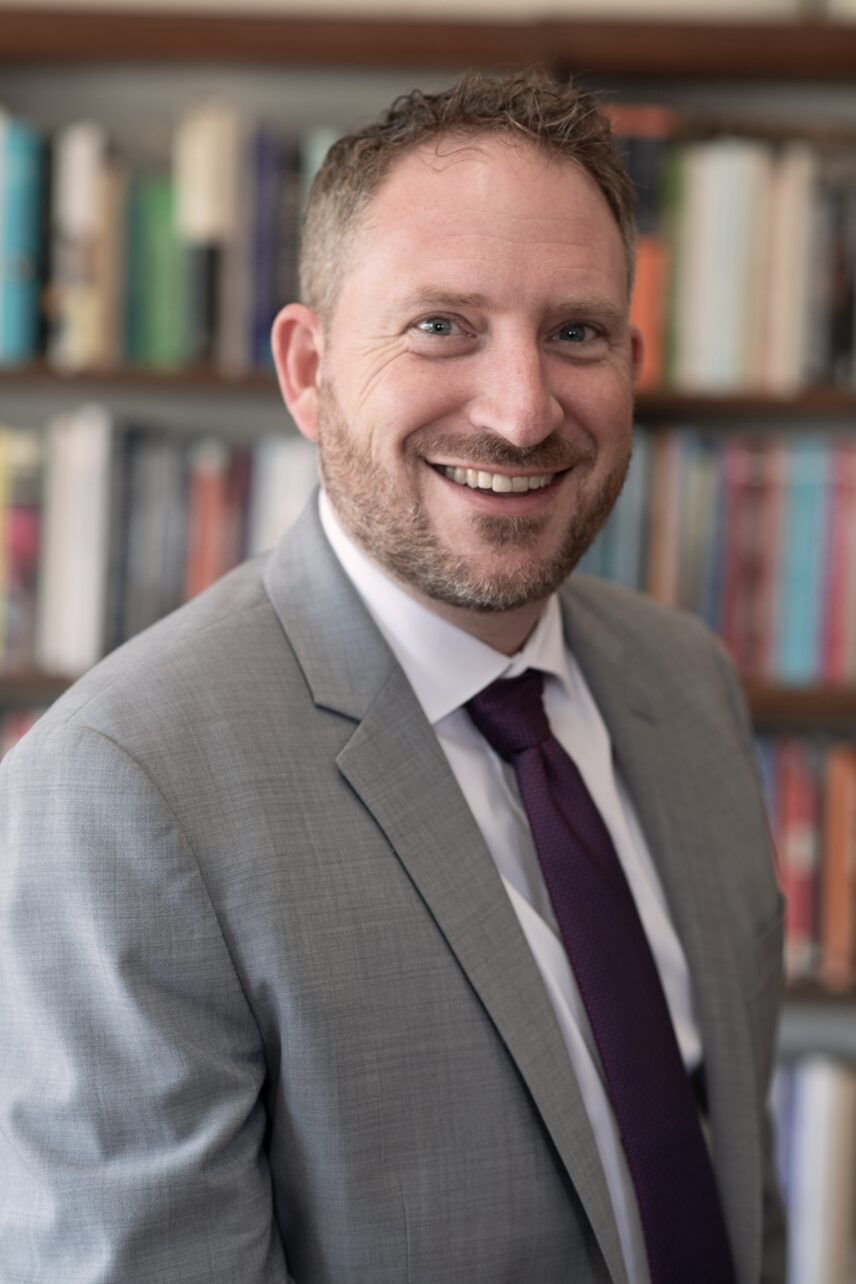
Michael Di Giovine is Professor of Anthropology at West Chester University Pennsylvania, directs the Museum Studies Program, and is the Director of the Museum of Anthropology and Archaeology of West Chester University. He has pioneered debates on tourism, heritage, pilgrimage and food research in anthropology and beyond, as a prolific author and editor. The author of The Heritage-scape: UNESCO, World Heritage, and Tourism (2009), his most recent publication is The Routledge Handbook of Food and Cultural Heritage (2025), co-edited with Rául Matta.
HW: Heritage research is in a challenging moment, as heritage itself appears as a major point of polarization between opposing political forces across the globe. In your early writings you reflected upon the utopian vision of World Heritage as created by UNESCO. What happened to the heritage-scape and its utopian ideal?
MDG: The idea of heritage is that it connects people through time and space, that it brings people together who identify with a particular practice, site or narrative. But it does so necessarily by excluding other people. So, heritage always is a double-edged sword. It always involves inclusion and exclusion, and so I don’t really see an enormous difference about the contestations that are happening right now across the world and those that happened in the past, certainly since the World Heritage Convention was ratified in 1972.
Only that now there’s a lot more contestation in Europe and America, which we thought had been reserved for other countries like Cambodia and Thailand, and we’re seeing that more in the popular public discourse here. I’m right outside of Philadelphia, in many ways the historical epicenter of the 250th anniversary of the United States. In a period that is supposed to be unifying for the country, there’s currently a lot of contestation surrounding slavery at George Washington’s White House, located within the World Heritage site of Independence National Park: what’s the appropriate narrative that should be discussed, whose voices should be included and excluded, and how the site—and our national anniversary—should be celebrated. But again, certainly it’s not unique to America.
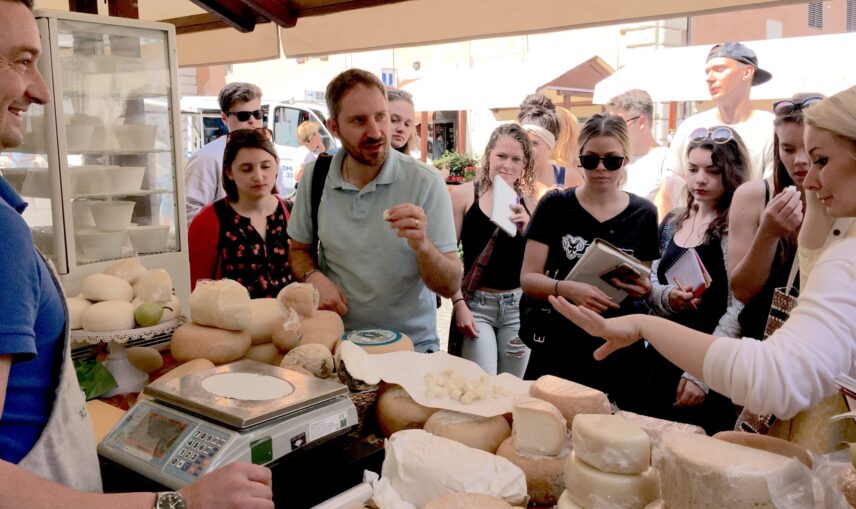
HW: You are a critical food and heritage scholar—with Italian family history. Are you proud that Italian Cooking was declared Intangible Cultural Heritage in December 2025?
MDG: Sure; the intent is to make you proud. It was in many ways seen as a long time coming. Actually, Italian American social media were also making a big deal of it even though our Italian American cuisine is totally different.
HW: Did this recognition make sense to you despite the right-wing, nationalist trend in Italy?
MDG: The Intangible Cultural Heritage list is different than the World Heritage List—that has to be said. The Intangible Heritage Convention grew out of dissatisfaction by non-Western countries who felt that the criteria of the tangible World Heritage Convention were structurally keeping them out through its focus on monumentality. What about all those other kinds of ways that show how wonderful and varied and creative humanity is? So, in the end UNESCO created more of a registry in which countries, after intensive documentation, can list an intangible cultural practice that is meaningful to them, rather than universal heritage.
There were three early, food-based intangible heritage designations and they’re all so different and funny in their own way. You had the transnational Mediterranean Diet—which, to be honest, was popularized in California. Then you had Croatian gingerbread, which created a lot of fuss, because other surrounding countries said, “We create the same gingerbread. Why does Croatia get it and we don’t?” And then the third one was my favorite, the French Gastronomic Meal. I know I’m going to get in trouble for saying it’s hilarious, but watch their promotional video: they take you through this supposedly uniquely French way of shopping for food in the markets, cooking with people, eating food together, and laughing and enjoying yourself. It’s a marketing masterpiece, because doesn’t almost every gastronomic meal involve these steps in some way? You could make the same case for American meals, Nigerian meals, anything.
And that’s really the difference from the World Heritage List: They are not making the claim that Italian food culture is better than anybody else’s. However, they are making the claim that for Italians this heritage food culture is very important. And this really transcends [Italian Prime Minister] Georgia Meloni and the more right-wing movements.
HW: Also, it’s worth thinking about which kind of community is included in a specific intangible heritage narrative. Just imagine if it were Italian American cuisine rather than the Italian national cuisine.
MDG: That would be completely different, and Italians probably wouldn’t support it, either. They’d be like, “There’s no such thing as chicken parmesan!”
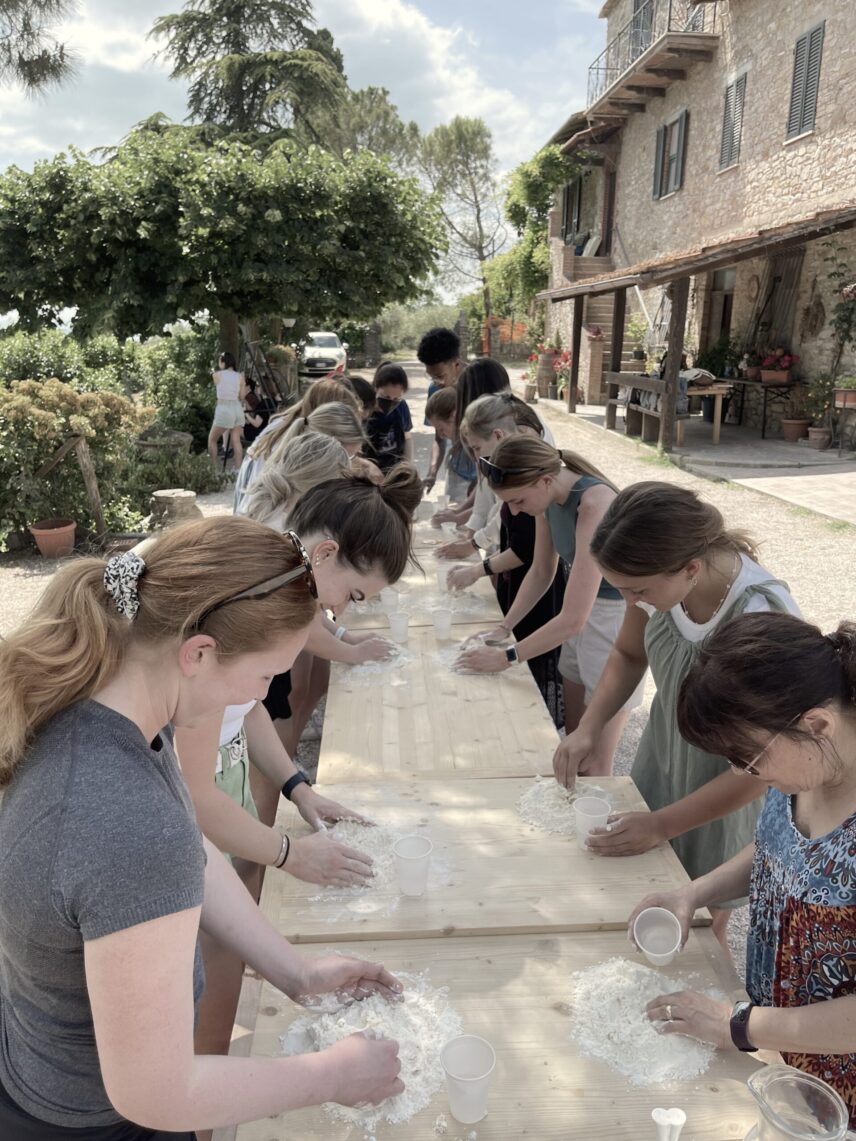
HW: Speaking of that, you have been taking students to Italy on a study abroad program for a decade. What do you enjoy about this?
MDG: Yes, I’m the Director of West Chester University’s ethnographic field school on sustainable food and cultural heritage in Perugia, in partnership with the Umbra Institute.
Students from various disciplines participate, and there are always some Italian Americans who want to go to discover their roots, even though their roots have nothing to do with Perugia or Umbria. As an Italian American myself, there’s nothing better than to be the one who accompanies them on this self-discovery and to critically discuss what they’re feeling. And I like to dispel some of the stereotypes, including culinary ones. Many come back with a real pride in better understanding the nuances of their own heritage and their own identity, and that’s just so rewarding to me.
HW: As we are already talking about study abroad travel, let’s discuss tourism.
MDG: Absolutely, study abroad is a type of tourism that doesn’t want to be considered tourism. John Bodinger and I talk about this in our book, Study Abroad and the Anti-Tourism Experience (2021).
HW: Exactly. For some time, the anthropology of tourism was taken less seriously than other areas of anthropology. How did that change and where do we stand today?
MDG: The 1970s, when the World Heritage Convention was ratified, was also the beginning of concerted studies of tourism, because both had to do with concerns about development in post-colonial states. But at that time, tourism scholars were not taken as seriously as heritage; tourism was seen as a frivolous sort of thing. Yet, the point was the same for both: this is serious stuff. Economics, race, culture, gender—everything is implicated in them.
Together, slowly and through persistence, early researchers like Nelson Graburn, Valene Smith, and Dennison Nash pushed the envelope to the point that today it’s not an issue anymore. Later, scholars like Ed Bruner solidified it. My generation that came after is lucky; it was mostly understood why we take tourism seriously: that it’s omnipresent, it’s meaningful, and it’s implicated in so many things.
COVID—which spread through international travel, hit tourism economies, and created travel desires—was a real wake-up point for both heritage and tourism. It brought to the fore all these other dependencies on social interactions that occur through travel. Important World Heritage sites in Tehran and Isfahan are being damaged in the current Iranian war; I talked about how this harms all of us back when the President threatened to destroy them in early 2020. Iran’s recent response was to threaten attacks on Western tourism sites in return—once again showing how tourism and heritage are implicated in the most serious of diplomatic and military crises. And for America’s 250th anniversary, it is kind of interesting to see another crisis, we could say. Although tourism is up everywhere in the world, because of domestic and international politics, America’s tourism arrivals are down. So, you can see how politics, policies, fear, economics, and culture mix between tourism and heritage.
Anthropologists are doing really important work in these crises and there is still a lot to be done.
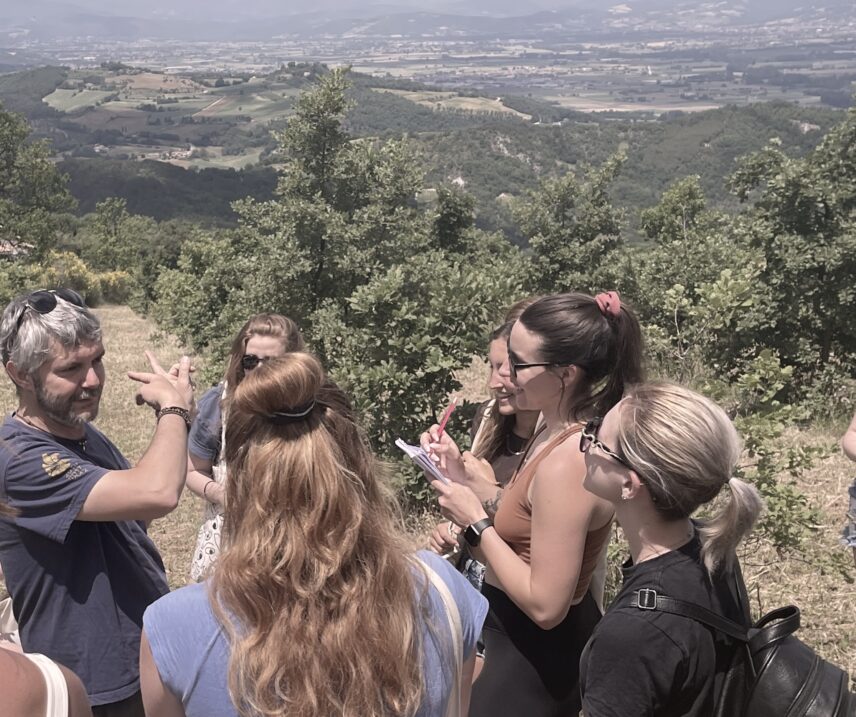
HW: As President of CHAT, how can the academic community in the field of tourism and heritage act meaningfully, given the political climate, lines of social division, and the threats to the discipline of anthropology?
MDG: CHAT grew out of a need, back in 2015, for the AAA to intervene in support of heritage preservation issues and offer expertise on tourism specific concerns—and to do that together, as a community, in one place. To foster a sense of community among our members, CHAT has several initiatives like book prizes, student prizes, networking opportunities and heritage tourism-related experiences during the AAA meetings.
However, we also envision CHAT as a much more public-facing organization.
One thing CHAT does is to help position members of all ages and statuses towards public anthropology, to help them translate their scholarship to the wider community. As President of CHAT, I aim to make us known as a community of experts ready and willing to lend our expertise to the public. We are creating a database of experts to make it easier for members to connect with journalists, advocate on behalf of tourism and heritage related issues, or to place blogs and op-eds. I think that this initiative not only supports our own members and their careers, but it also helps support anthropology in general.
CHAT conducts advocacy as well. We have a seat in a newly formed Cultural Heritage Committee, in the AAA’s Anthropology Advocacy Council, and are dealing with some of these difficult heritage and preservation issues that are happening in America right now.
It’s no longer enough to simply publish our monographs. We want to make sure that we can get real experts out there and position them in the best way possible for the public. This is how we can demonstrate the value of the anthropological perspective when dealing with the complicated tourism- and heritage-related issues of our time. And I think that’s an important role that CHAT is playing at the AAA right now.
Hannah Wadle is the section contributing editor for the Council on Heritage and the Anthropology of Tourism.