

Article begins
Standing before Congress on March 4, 2025, President Donald Trump listed some examples of the “appalling waste” of United States government funds identified by the Department of Government Efficiency (DOGE), the new initiative aimed at “empower[ing] American families” and “eliminating waste, bloat, and insularity.” Among this “waste,” Trump infamously referenced “eight million dollars to promote LGBTQI+ [sic] in the African nation of Lesotho, which nobody has ever heard of.” The Speaker of the House and the Vice President joined in a resounding chorus of laughter that filled the House Chamber of the Capitol Building.
International development programs aimed at strengthening LGBTQI+ rights on the African continent have thus found themselves at the crosshairs of palpable animus directed at the “wokeism” of LGBTQI+ identity politics and the “America first” mentality which has demonized international aid. Activists and public health experts, including those who work for LGBTQI+ organizations such as Réseau Madagascar Solidarité LGBT (Madagascar Network of LGBT Solidarity) and QueerPlace, face extreme uncertainty and anxiety. Their perspectives make visible the stakes of waning American diplomatic support for LGBTQI+ movements and HIV-prevention funding in Africa from the perspective of Madagascar.
As the most prominent LGBTQI+ organization in Madagascar, Réseau Madagascar Solidarité LGBT previously received two grants of $24,000 from the United States Embassy. These grants allowed the organization to convene awareness workshops, peer education activities, and roundtable discussions on sex/gender-based human rights issues with state representatives, religious authorities, and medical experts. Between 2012 and 2015, I attended these events in both urban and rural locales where community members learned about stigma against non-conforming genders/sexualities and people living with HIV by listening to activists’ personal experiences of discrimination. In the intervening years, HIV/AIDS claimed several of my friends and interlocutors, trans women and gay men, none of whom dared speak openly about their status. They were often said to be suffering from “yellow fever” before they passed away.
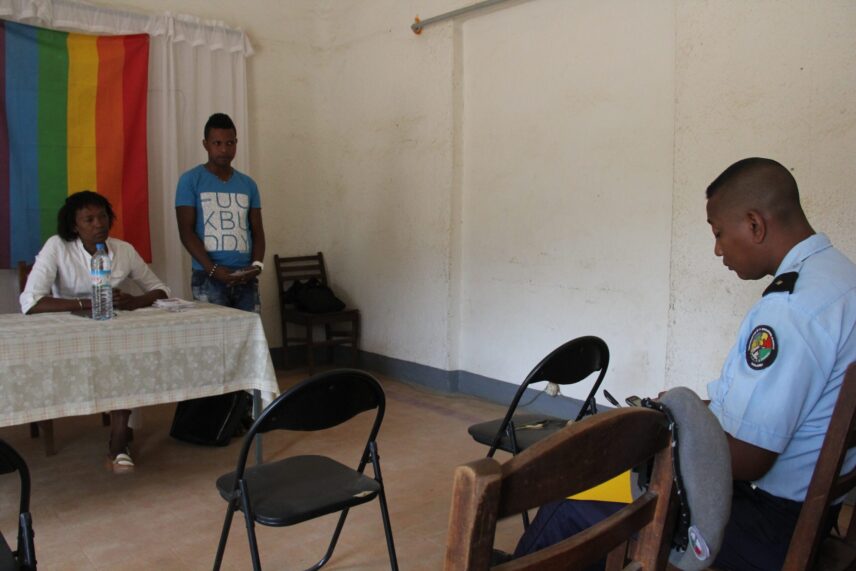
In addition to these grants, by the mid 2010s, the United States Embassy in Madagascar’s capital, Antananarivo, began flying a rainbow flag during the month of June and holding an annual Pride event for ambassadors, public health leaders, and activists, including members of Solidarité des MSM (later Réseau Madagascar Solidarité LGBT). Public, highly visible displays of the rainbow flag in front of embassies were discontinued during the first Trump administration. While reinstated by former President Joe Biden, President Trump has once again prevented American Embassies from flying flags for Pride or the Black Lives Matter movement.
Explicit American support for the LGBTQI+ movement in Madagascar has always come at a cost. Official United States Embassy-sponsored Pride events in Antananarivo have, at times, been problematically framed by American diplomats as reflecting values that are supposedly uniquely American—freedom, tolerance, and self-expression. Such framings also unintentionally fed into an assumption widely held in Madagascar that same-sex desire and gender-variance is promoted by and originated in the West. Given these events were hosted by the US Embassy in Madagascar, the gathering seemed to imply that the American Embassy was importing gender-variance and same-sex sexuality to the Malagasy people, despite a long history of sex/gender diversity on the island. Furthermore, Malagasy activists have described pressure to cater to Western understandings of sex/gender liberation in order to attract international funding. This has led to an NGOization of LGBTQI+ activism in which organizations compete for limited resources. Lastly, media coverage of American Embassy-sponsored Pride events in Antananarivo have also resulted in homophobic and transphobic comments circulating on Malagasy social media.
Fueling Hate Speech
Malagasy activists have likewise reported an increase in online hate speech since Trump’s comments on USAID-funded LGBTQI+ programming in Lesotho. In the words of one activist, “Populist and ultra-conservative discourses are gaining ground.” A Facebook post in Malagasy circulated on February 2nd, 2025, within a public group of over 28,000 members, falsely asserting that “LGBT people are no longer able to enter or leave America.” Reactions to the post included a deluge of homophobic statements, including one commentor who supported the travel ban and wrote: “It is necessary, even if some consider it a dictatorship. Bravooooo Mr. President.” Conservative Malagasy pundits also celebrated Trump’s position. An article in Midi Madagasikara, a national newspaper, claimed that USAID had engaged in “infiltration operations for the promotion of LGBTQIA+ in countries like Serbia. Engaging in LGBTQIA+ struggles could be a source of funding for very poor countries like Madagascar,” implying that the social justice movement is but a neocolonial ploy and a potential, if humiliating, funding opportunity for Malagasy actors willing to perform queer impoverishment. If only LGBTQI+ funding opportunities in the region were as lucrative as the conspiracy theorists believed.
These reactionary waves of hate speech have been demoralizing for some young activists in Antananarivo who are also alumni of the prestigious Young African Leaders Initiative (YALI), headed by the United States Department of State. After meeting with Embassy staff to discuss their work, a planned January follow-up meeting was cancelled by the Embassy via email. “It is unfortunate to lose a potential ally for the LGBTQIA+ cause,” one leader told me. No longer out of sight, activists described feeling that their community was now on everyone’s mind—and not for the better.
Drastic Cuts Amid an Invisible Epidemic
The United States government’s attacks on public health funding and waning support for LGBTQI+ movements in Madagascar have local activists on edge. The death of USAID has led to severe cuts to the Global Fund, the primary sponsor of HIV-prevention programs in Madagascar. It has also greatly impacted HIV-prevention efforts in Madagascar undertaken by Population Services International, a global nonprofit which recently closed two regional offices. The UNAIDS office in Madagascar, which also serves several neighboring island nations, will also shut down later this year due to funding issues.
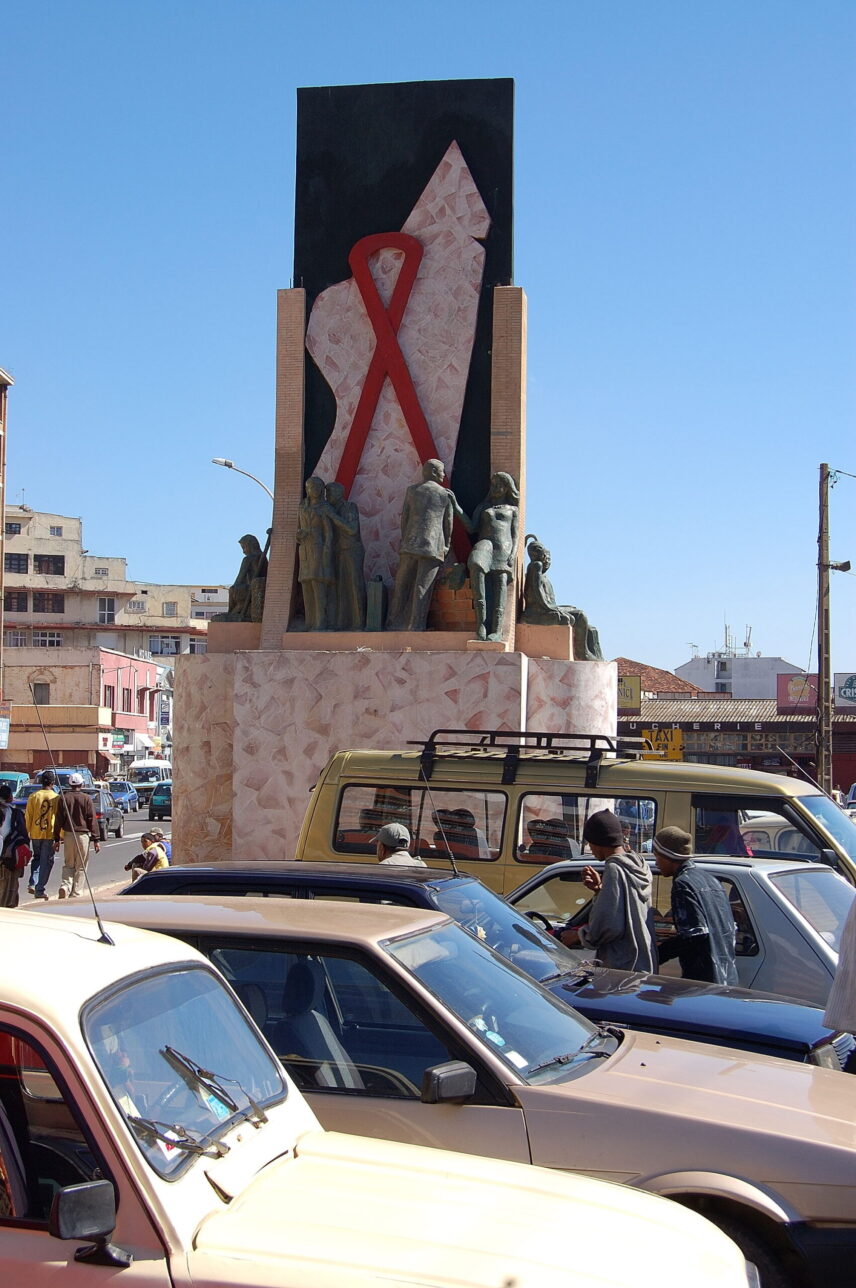
Alarmingly, the largest HIV study of the general Malagasy population to date, published in 2024, found an overall HIV prevalence of 2.94%, much higher than the previously reported 0.4%. The study further found that between 2000 and 2022, the percentage of Malagasy living with HIV increased 3,400%, and that annual deaths due to AIDS rose by approximately 3,100%. Men who have sex with other men (MSM) have the highest rates of HIV of all the at-risk segments of the population. Other public health scholars have raised the alarm over these recent findings and called for a nation-wide, systematic study of HIV prevalence among the general population. Prior to the cuts, USAID had planned to provide substantial financial support towards an extensive, nation-wide seroprevalence study which has since been abandoned.
One Antananarivo-based activist engaged in the fight against HIV and the promotion of LGBTQI+ rights expressed their thanks: “It is important for the American people to know that this financial support has had a direct and tangible impact on the life of many marginalized people. Thanks to them, we have been able to guarantee better access to care, to promote human rights, and to create secure spaces for vulnerable populations.” Undoubtedly, USAID-funded programs in Madagascar have been effective sources of support, too. A representative from MAD’AIDS, an organization that oversees a network of HIV-prevention organizations in Madagascar, pointed out that they have facilitated important data collection at the local level. Without this data, the representative warned me, it will become increasingly challenging for HIV-prevention organizations to advocate for the populations they serve and apply for external funding. Activists stressed that in some regions such as the Southwest, Malagasy HIV peer educators already have less access to condoms and HIV testing supplies. This will have dire consequences for the health of the Malagasy population, including people living with HIV—and those who have yet to contract it.
Paradox of (In)visibility
President Trump’s reduction of Lesotho and its people to a punchline aligns with his reference to African nations as “shithole countries”; both reveal the rhetorical role that Africa has played in Trump’s efforts to muster support within his conservative base at home and abroad. The LGBTQI+ community also plays a highly visible role in Trumpian discourse and policy, particularly in regards to transgender rights. From framing school-district-wide bans on books dealing frankly with transgender experiences as mere “hoax,” to demonizing transgender youth participants in sports, to falsely stating there are only two biological sexes, the Trump administration has mobilized sex/gender moral panic to effectively boost political support.
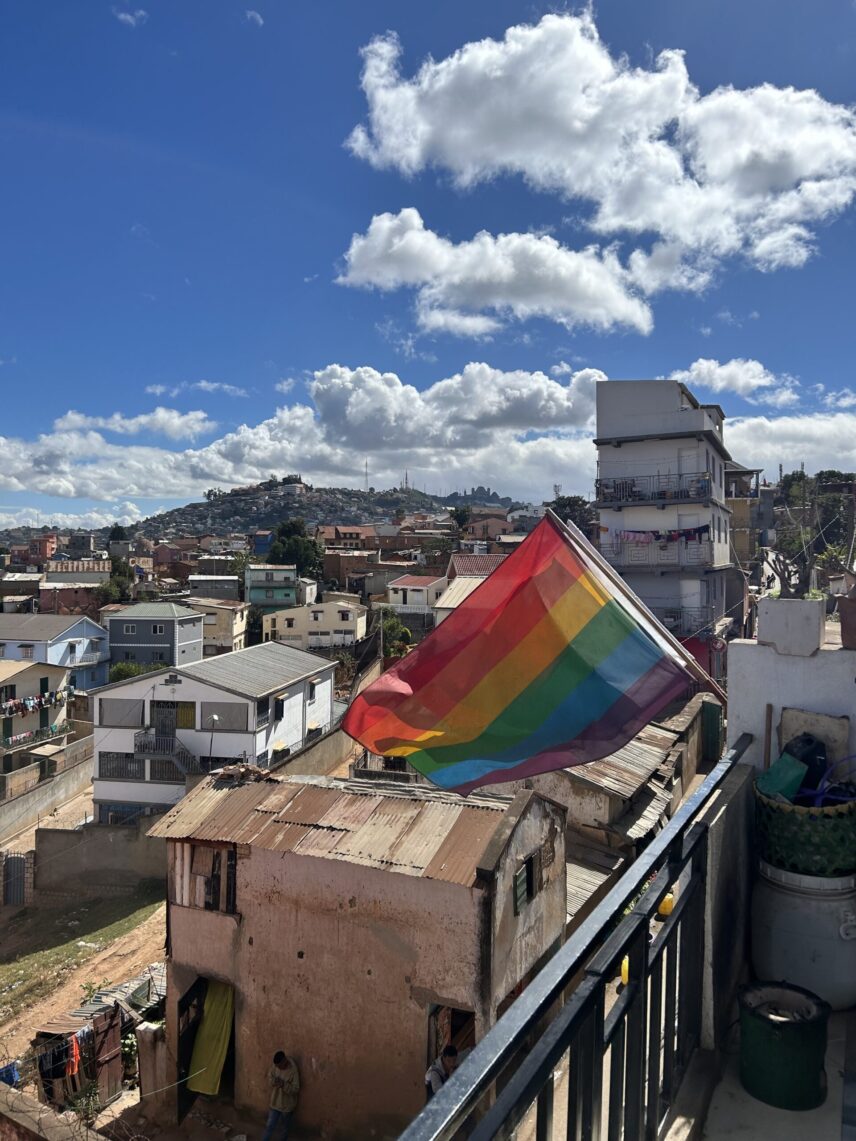
Amid the queerphobic populist discourse in the United States and Madagascar, Malagasy activists, organizers, and NGO workers face a paradox of invisibility. While talk about LGBTQI+ people increases across media platforms, their voices and challenges remain just as invisible to the broader Malagasy public as the cause of Madagascar’s recent spike in HIV seropositivity rates. In supporting Malagasy LGBTQI+ activists, international sponsors have simultaneously increased their visibility and their exposure to a queerphobic public. However, the United States, via USAID, has also historically funded critical HIV scoping research which has made this at-risk population increasingly visible to public health funding agencies. The policy consequences of circulating anti-LGBTQI+, anti-Africa(ns), and anti-global public health rhetorics are lethal and devastating. The latest UNAIDS Global AIDS report estimates an additional four million AIDS-related deaths will occur globally over the next four years without this funding.
Movement leaders are resisting expectations to disappear in the face of societal backlash. A July 10th, 2025 press release by QueerPlace, Réseau Madagascar Solidarité LGBT and others stated: “The protection of LGBTQIA+ people is not a privilege, but an imperative. … Refusing to act is to endorse impunity and condone violence.” Amidst the funding cuts, Réseau Madagascar advertised a Project Coordinator position for their HIV prevention project financed by the (now less robust) Global Fund. For its part, QueerPlace recently held their own celebration of Pride Month, Mystic Koira (Mystic Queer), and will soon release the second season of Feon’Queer (Queer Voices), a podcast featuring the self-narrated life histories of Malagasy sex/gender minorities. The podcast series and similar projects carve out a space for LGBTQI+ visibility on participants’ own terms, permitting activists to combat the even more insidious epidemic of willful ignorance and cruel indifference.
Sanghamitra Das and Taylor Bell are the section contributing editors for the Society for Medical Anthropology.