

Article begins
To care for olive oil in Puglia is to live and work within a dense ecology of relations between plants and people, atmospheres and rhythms. It is to be attuned to cycles that are not linear but layered, not fixed but flowing. This photo essay explores how traditions of olive oil are cultivated through flow—not merely as movement, but as a lived and situated condition in which people, plants, and practices are entangled across generations.
Flow was the central concept in my doctoral thesis, developed through long-term fieldwork with olive culturalists in southern Puglia, Italy. I used it to understand how olive oil is not only made but occurs, as the emergent outcome of multigenerational practices of living landscape. Flow, as I use it, refers to conditions that structure possibility: an ecology of movement shaped by material, temporal, and affective dynamics. In Pugliese olive culture, flow describes how plants grow and oils become made, but also how bodies move and landscapes shift, as traditions of olivicoltura are lived through everyday practice and deep time ecologies of care.
Flow is not automatic but cultivated through sensory work, embodied knowledge, and seasonal attentiveness. In early spring, for instance, la potatura (pruning) begins. This is not merely maintenance; it is making trees and growing oil, a concept adapted from Stephanie Bunn, who explores blurred boundaries between growing and making, and how humans and nonhumans co-shape form and meaning. In Puglia, pruning is a form of co-creation. Practitioners understand the ordine—the growth zones of the trees—and cut to enhance future fruiting. As Giorgio, an agronomist and first-level taster, told me while sketching pruning principles in my notebook: “Non ce ne sono olive buone senza di cura e coltivazione dell’umano” (There are no good olives without human care and cultivation). Yet care is not control, but a practiced sensitivity to how olive plants behave over time.
Olive oil flows from these plant–human collaborations. In autumn, harvest begins. Olives are collected using various techniques—combing, shaking, hitting—each chosen according to oil makers’ preferences and desired quality. The resulting oil is a condensation of atmospheres, intentions, and rhythms. Whether made through the tecnica tradizionale with stone wheels or through the streamlined metodo moderno, the process is deeply crafted, situated in a landscape of cultivated flows.
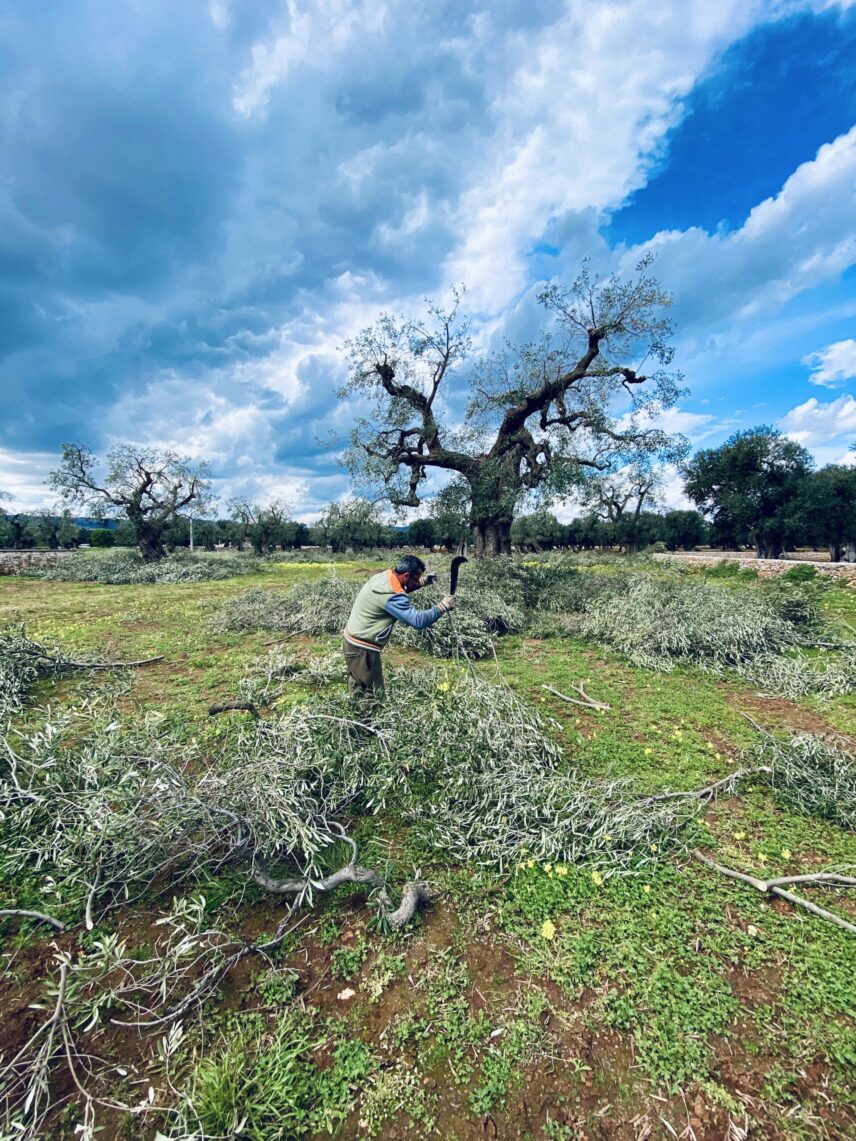
Flow, however, is not always smooth or life-giving. The outbreak of Xylella fastidiosa, a vector-transmitted bacterium that disrupts the vascular systems of olive trees, set off a destructive flow that stall or reroute many others. Transmitted from tree to tree, it spreads like a slow bleed across Puglia, causing millions of groves to desiccate.
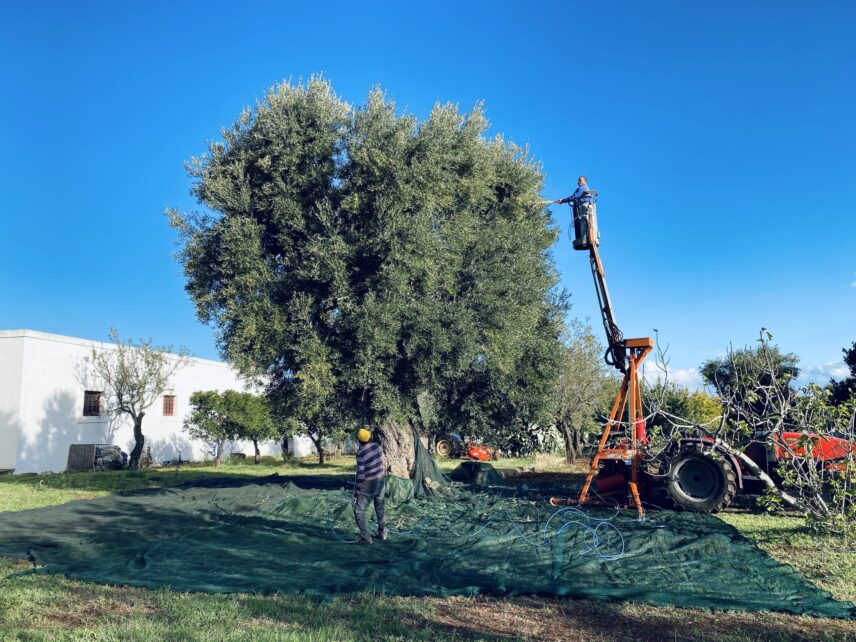
Yet even in these withered terrains, new movements take shape. Farmers graft resistant cultivars onto old rootstock, experiment with planting densities, and forge connections across agricultural and scientific networks. This too is flow—disrupted, rechanneled, but ongoing. As Tim Ingold reminds us, making is never solely human but unfolds through lines of correspondence between beings, materials, and environments.
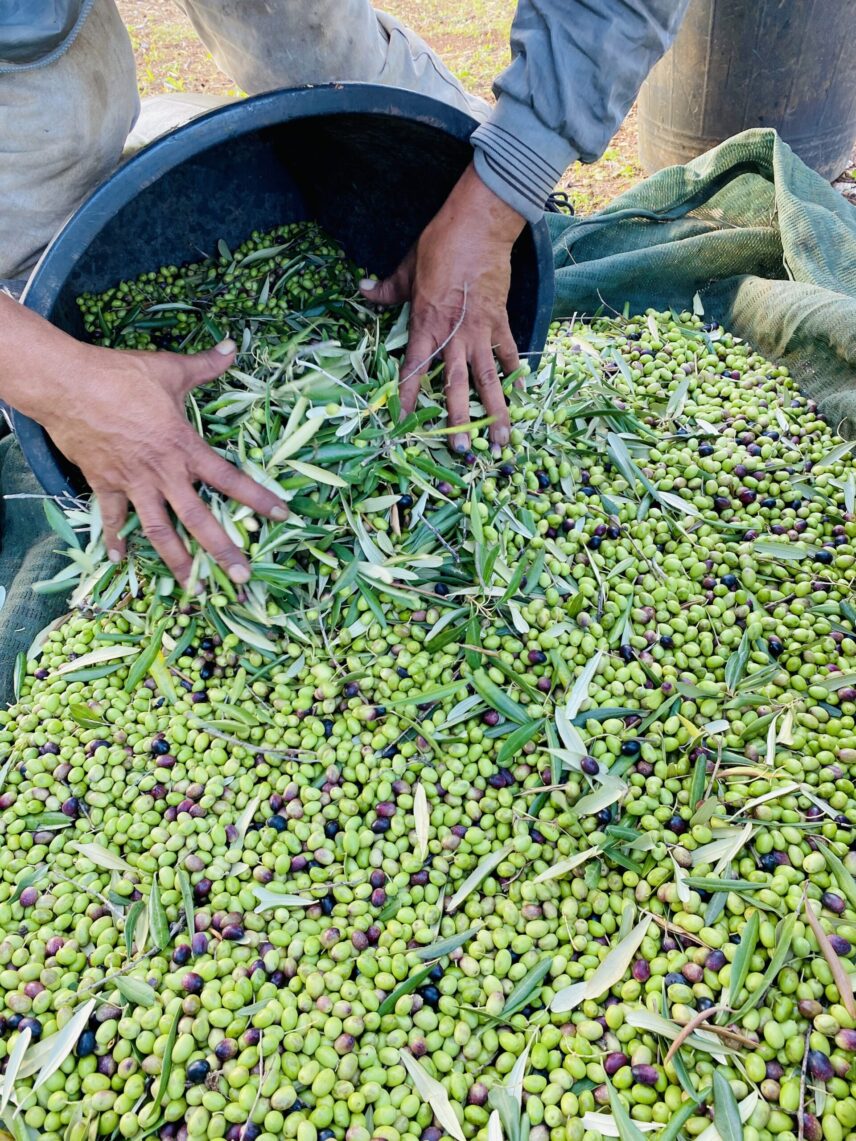
Here, flow meets friction, in Anna Tsing’s sense: the awkward, unequal, and generative encounters across difference that make movement possible, but never smooth. The spread of Xylella, and the human and nonhuman responses it elicits, are shaped in frictions between old and new cultivars, between science and situated knowledge, between grieving loss and experimenting with continuity. These are spaces where destruction and care converge—where flow is not only ecological, but ethical, political, and always partial.
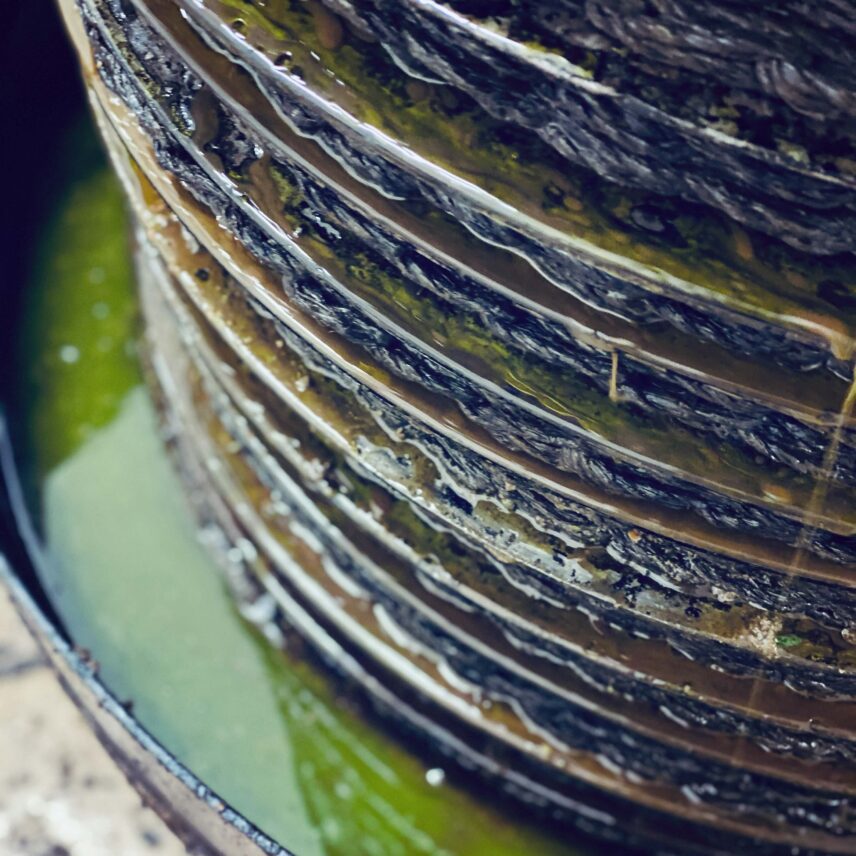
Throughout my fieldwork, I came to understand this care as not only directed at plants but practiced with them. Drawing on Enrique Salmón, I use the notion of kincentric ecology to describe how growers in Puglia live among olive trees not as resources but as relatives. These relationships are rhythmic, atmospheric, and attuned to weather, soil, light, and memory. One such rhythm is tranquilla, a local sensibility I learned especially through harvesting and pruning, but also by being together while undertaking this work. Tranquilla is not just a tempo but a value—a practice of moving with the landscape.
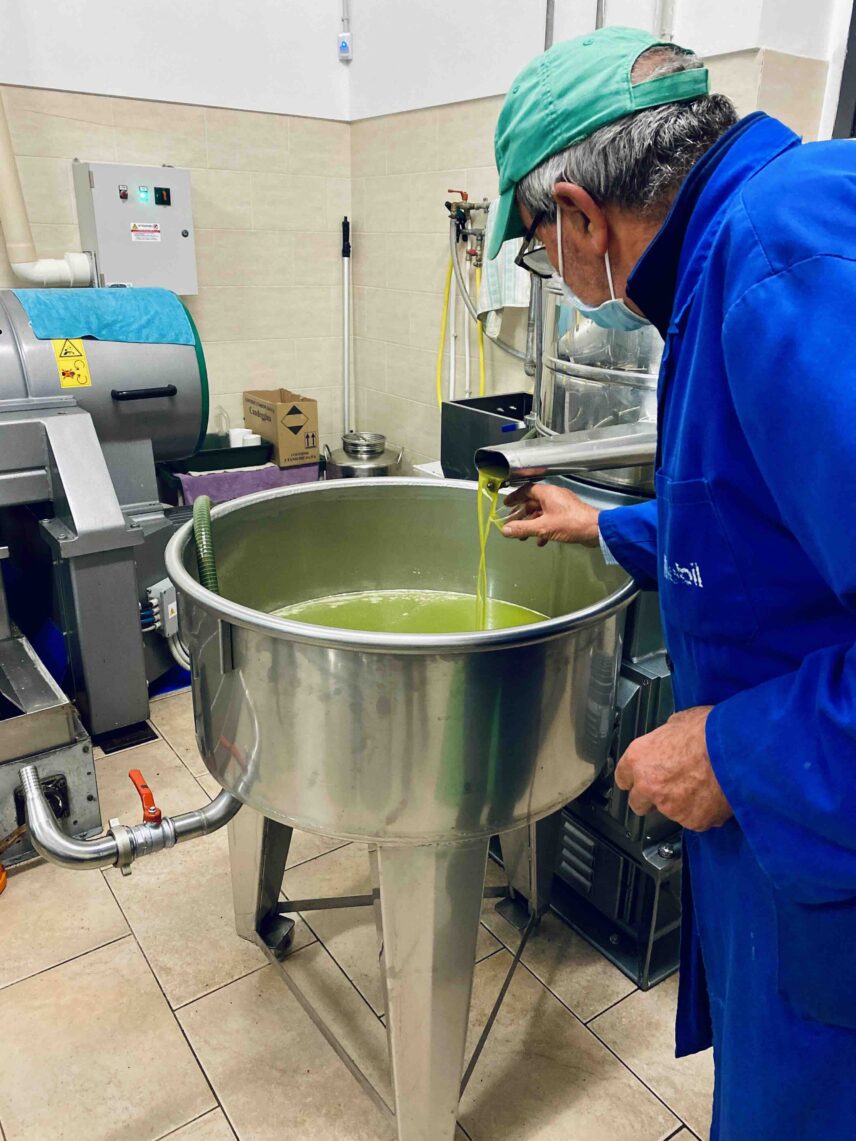
Traditions in Puglia are not held in place; they flow. Shaped by markets, climate, and generational change, they endure not by resisting change but by carrying it. As this photo essay shows, olive oil is a living tradition.
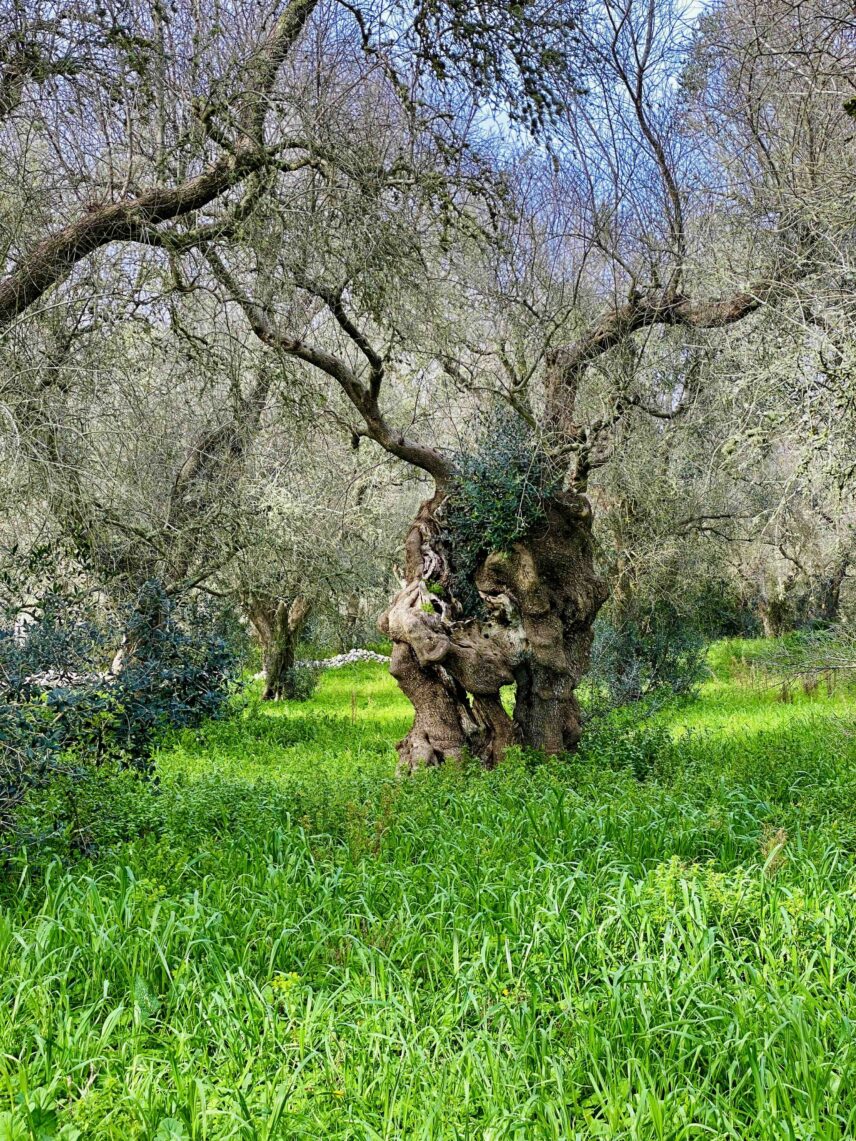
Each photograph traces a moment in this wider process: pruning canopies, sorting olives, pressing paste, mourning Xylella, grafting branches. These are not isolated events but expressions of a multigenerational ecology of flow—of craft, care, and continuities cultivated anew each year.
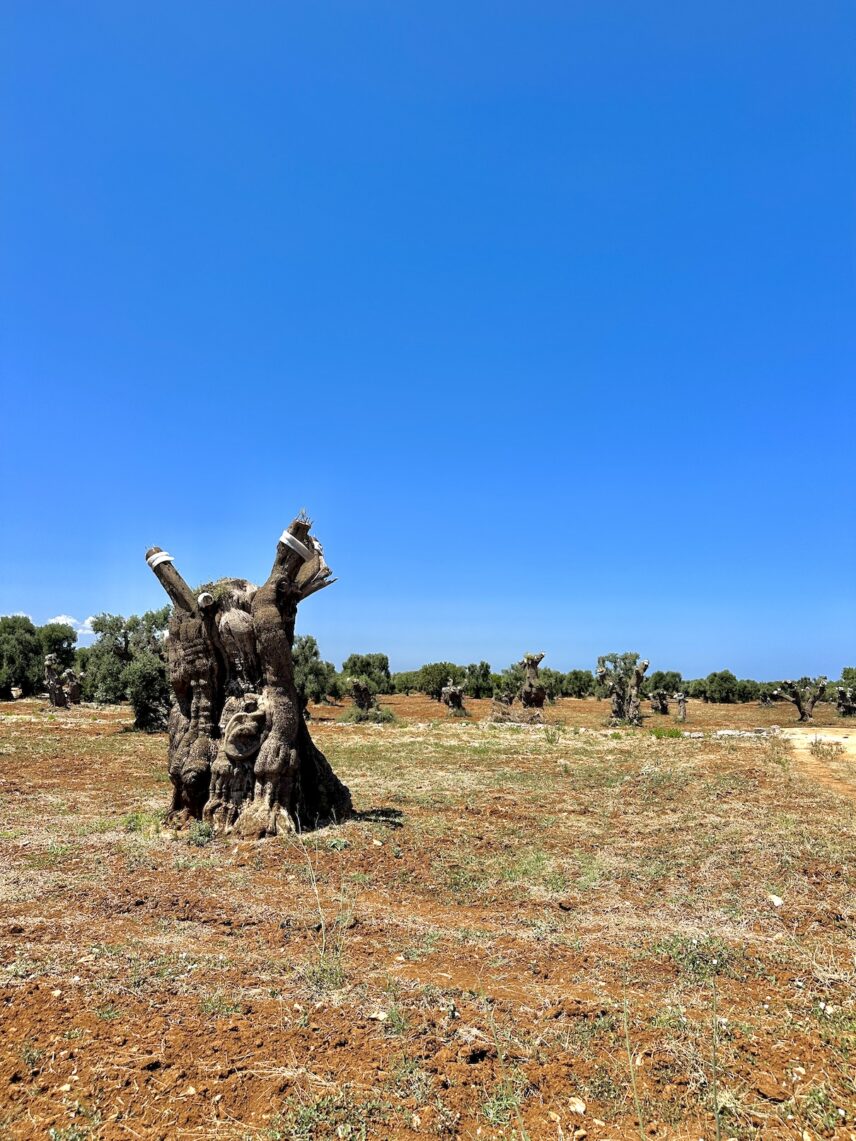
Flow, then, is not just a matter of the liquid oil. It is a way of understanding life in olivicoltura: as lived history, sensuous material, and relationship in motion. Through such flows, oils grow, trees are made, and traditions move on.
Ariana Gunderson is the section contributing editor for the Society for the Anthropology of Food and Nutrition.