

Article begins
A school for newcomer youth struggles to survive the haunting forces of neoliberalism
“…the past might haunt us, but it would not entrap us. It demanded a future”
-Toni Morrison
Prologue—A Ghost Story
Somewhere in New York City, there is a school. It is like any other public school in the city. The weighty doors, bubbled linoleum floors, and harsh fluorescent lights do not distinguish it aesthetically. On any given day, students learn about things like states of matter and study World War I. This school is also special. It emphasizes the arts. Unlike many other New York City high schools it is unscreened, meaning students do not need to meet particular academic criteria to enroll. And it is a newcomer school. Its students have recently immigrated to the United States. Being a public school in a neoliberal environment and serving immigrant youth in an anti-immigrant city and nation, the school has also had to fight for its life since its inception.
This is a story of that school, WISH Academy (Welcome Immigrants, Succeed Here, a pseudonym). The school featured prominently in my book Reconceptualizing Education for Newcomer Students, which explores the everyday educational life of immigrant youth in New York City. Recently, I noticed WISH appearing in some troubling news stories. WISH teachers and students described their school as a complex and wonderful community. Yet these news stories depicted a “failing” school taking resources away from other, more deserving charter schools. Such attacks were nothing new. Neoliberal education reform, reflecting the idea that schools function not as a public commons but as part of a competitive marketplace, had long melded forces with standardization and anti-immigrant biases to torment WISH. In short, these news stories simply revealed, albeit in a more overt way, the things haunting the school. So, while there are many stories to share about WISH, this one is a ghost story.
To craft this spectral tale, I conjure the work of Julio Cortázar. In his story, Casa Tomada, two siblings live mundane routines in their ancestral home. Suddenly, entities known only as “they” take over parts of the home. One day, “they” have taken the kitchen and there is simply nothing the siblings can do about it. “They” eventually take over the entire house and the siblings flee. In a similar way, privatization and charter school expansion have crept into WISH. It has become a quotidian reality that the WISH community is expected to accept. Unlike Cortázar’s characters, WISH has fought incursion, takeover, and erasure. Ultimately, this is not a story of quiet retreat but one of public survival and the collective struggle of building an educational home.
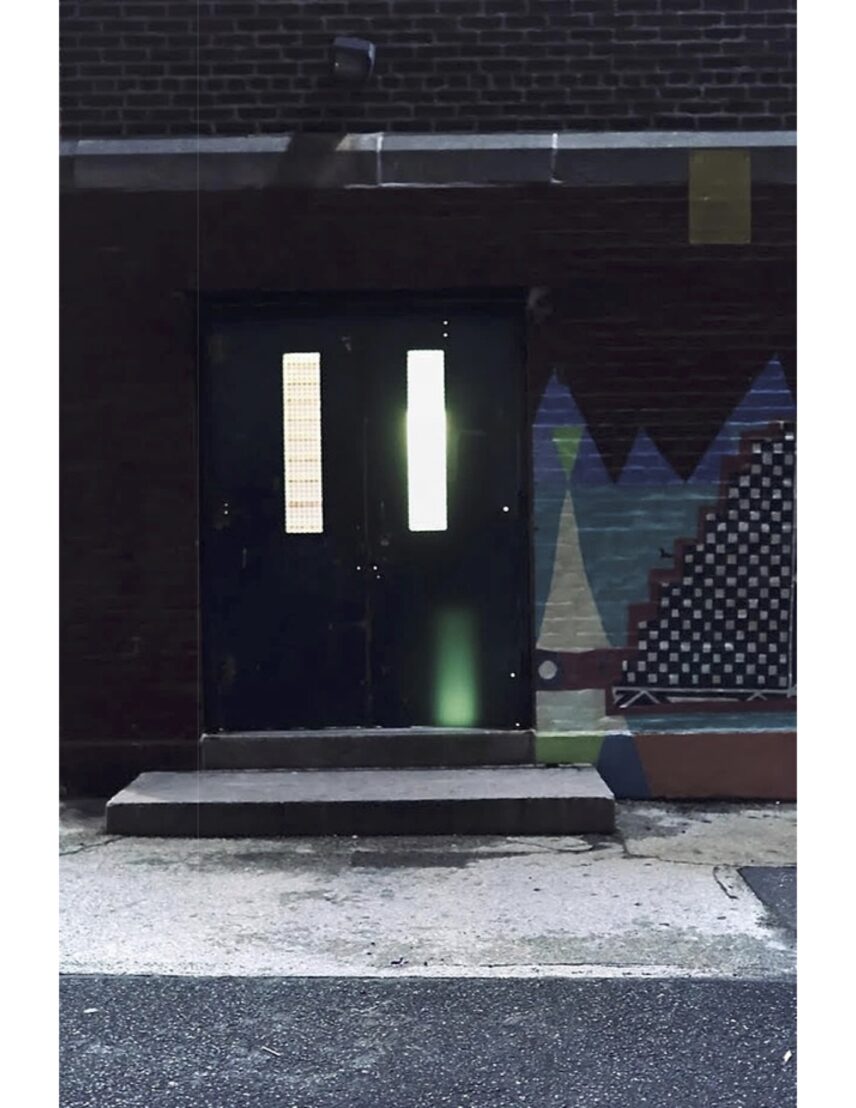
Chapter 1—Dreaming Community
Around 2010, a small group of educators working in bilingual education dreamed up a community school, one of and in the predominantly Dominican neighborhood of Washington Heights. The school they imagined would center the arts and translanguaging. It would spill into the surrounding neighborhood. Teachers and administrators explained that, from the beginning, the machinery of New York City schools was not welcoming of these dreams. Bureaucratic preference for standardized outcomes contrasted with WISH’s arts-based focus and holistic language practices. Eventually, WISH opened for a few dozen students in some rooms in the teachers union offices. Compromising with the New York City Department of Education (DOE), the school offered ESL rather than a bilingual education program. Teachers held onto some of their most hopeful ideas. From that first year, they created a culturally and linguistically affirmative school for those recently immigrated students who arrived at the school doors.
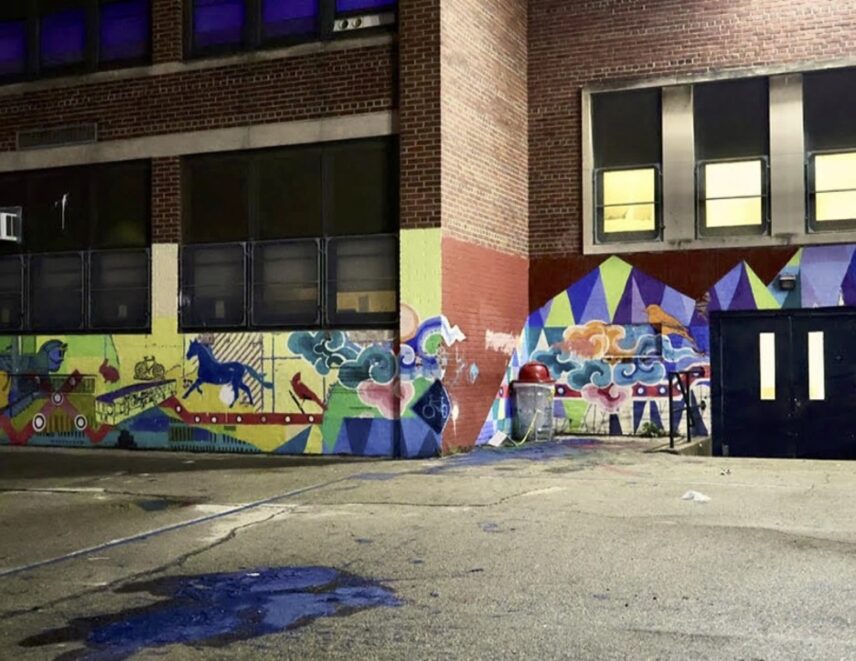
The following year, the school moved to a large educational complex that housed several schools. Most WISH students commuted over an hour to this place. Nonetheless, the community did its best to create a nurturing space with students in this new environment. They partnered with nearby arts organizations to create dance and music programs. Students and teachers decorated the school with student-made signs reminding that no one is illegal. On the walls they hung flags from students’ home countries, student work, and eventually college acceptance letters. Among countless examples, they made of the school a space for themselves.
This dream did not emerge from nothingness. The WISH community carried ghosts. These were not ghosts already haunting the school. Instead, they were ghosts of families who sacraficed or stayed behind. They were the ghosts of countless lives lived against borders. They were ghosts of imagined expectations. They were ghosts of educational experiences denied and stolen. They were ghosts of memory. Of unsettled past. Another kind of future.
In Ghostly Matters, sociologist Avery Gordon describes ghosts as “not simply a dead or a missing person, but a social figure.” For Gordon, this figure is “one form by which something lost, or barely visible…makes itself known.” Ghosts invite, sometimes force, a reckoning with traumatic histories. Phantoms haunted WISH, pushing the school to collectively think against incorporation into dominant ways of being and challenge racist and xenophobic modes of education that permeate every layer of schooling in the U.S. Rather than stay the course, ghosts disturbed the curriculum, guided WISH to build a different education. Ghosts were present as teachers designed anticolonial Puerto Rican history lessons or as students worked toward applying to college to honor their family. These hauntings guided toward scary but wonderous educational possibilities. Soon, though, the WISH community would encounter new and menacing ghosts.
Chapter 2—A Ghoulish Arrival
After a few years, ghosts still made their way through the school but so did routine. And then, a school appeared. A prominent charter network planned to open a new school to be co-located with WISH. In the early 2010s, policymakers and politicians fawned over the opportunity to accommodate “high performing” charter schools. The DOE gave this new school most of WISH’s floor within the educational complex. WISH could stay in the same building but would, for a third time in their short existence, need to move.
And so a new school year started. As WISH students and teachers walked up the escalators, their old floor had been completely transformed. Student artwork and immigrant rights posters were now signs identifying the charter teachers’ names and alma maters. Throughout the year, this phenomenon continued. What had been utility closet or a room for all schools to hold IEP meetings the weekend before suddenly bore the colors that adorned the charter school’s walls and student uniforms.
According to teachers, WISH had already been marked as an “underperforming” school. In the 2010s New York City landscape, such comments hinted at dreadful notions of school closure. Sociologist Eve Ewing explores Chicago school closings in her book, Ghosts in the Schoolyard. For Ewing, “a school closure can thus be a devastating event that leaves an indelible emotional aftermath…losing [the school] can mean losing their very world.” The incursion of this charter school coupled with institutional entities critiquing WISH threatened to make the community itself into a ghost. And spectral forces were about to amplify their attacks.
Chapter 3—Feeling Haunted
Another year, another move. WISH had gone from one and a half floors with plenty of unoccupied space to holding only the remote fifth floor. And then, in a quiet and simple way, it began. Perhaps it was eighth period AP Spanish Literature or ninth period US history. Whenever it was, the air shifted. The linoleum floors quivered under the heating system dragging to life. The air coming through the ducts tasted foul. It was hotter than hot. The WISH community did not understand it at first, but they began talking about it.
Then the escalator never worked for WISH students. New York City school buildings commonly have infrastructure issues. Yet the more they talked about it the more the students and teachers of WISH understood something else at work. They felt new spectral forms leaking into the school. The rank air and insurmountable climb to school revealed what Gordon calls the “cajoling … nature of the ghost” (p. 6). Students and teachers sensed forces around them making unlivable conditions within the school, trying to push them out. Where Gordon and Ewing wrestle with internal and past ghosts, these new forms gesture toward a different kind of haunting. A haunting arriving from somewhere else; the ghosts of neoliberalism’s future. Rancid air and broken escalators were wraiths composed of dominant ideology traveling back in time from a world where neoliberalism had won. They reached back to tell WISH “you have no place here.” These figures sought to snatch away a world in which the dreams of a public school for immigrant youth might still exist. This was not a haunting of the past but a mourning for the devastation of futures.
Chapter 4—Corporeal Threats
Ghost stories begin with hints. Something seen out of the corner of an eye. A disturbing sensation while standing in front of a mirror. Strangeness suddenly boils into dread as the previously invisible reveals itself. At WISH, neoliberal forces have moved from airy hints to directly making themselves known. Earlier this year, the charter school and certain New York City media alleged that WISH was underenrolled and took up too much space. At a time of heightened deportations and relentless fear among immigrant communities, these attacks thrust WISH into a dangerous kind of visibility.
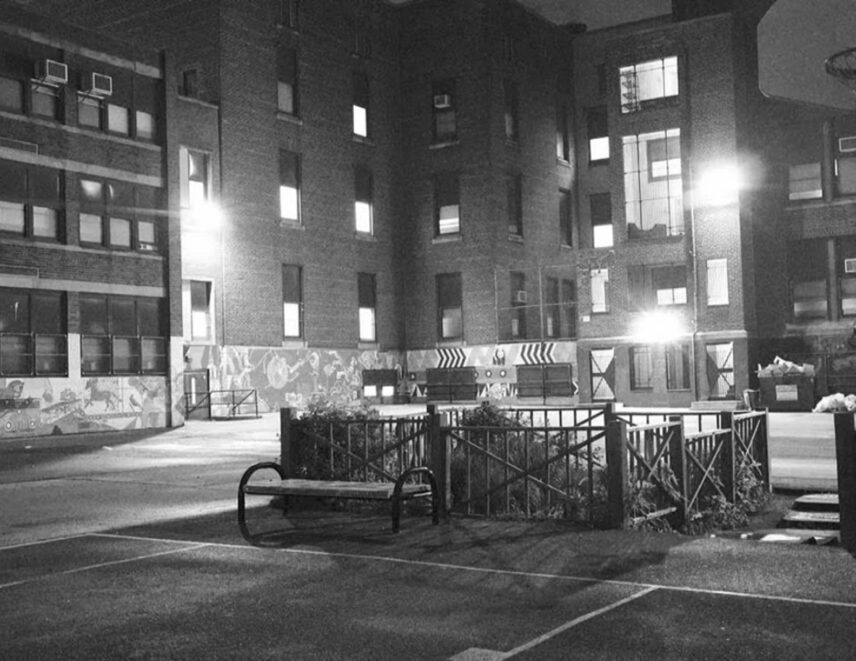
DOE officials visited and determined that WISH was taking valuable space from the charter school. This fall, WISH would need to give up a number of classrooms and share their remaining space with the charter school. Their school was being taken. The neoliberal future that had long haunted WISH was taking shape.
Chapter 5—Sobrevivencia
As always, the WISH community refused to be idly entrapped or to play into this scarcity narrative. In a similar vein, the goal was never simply to get by. Throughout the years, they deployed tactics to simultaneously keep the school open and pursue a vision of an arts-based school for newcomer youth. As one small example, when the DOE pushed them to remove arts classes in favor of “academic rigor,” teachers and administrators scoured the city and found ways to partner with major cultural institutions and bring teaching artists into everyday classroom life.
Engaging Vizenor’s notion of indigenous survivance, Edwin Mayorga presents sobrevivencia as a way of being for Latinx communities, “of individual and collective work that is neither about survival nor transformative justice alone, but is in fact both.” Sobrevivencia is a practice that, similar to how Cortázar describes the siblings’ home in Casa Tomada, “keeps memories alive.” Sobrevivencia at WISH keeps alive the dreams of all those in the community. This has taken the shape of refusal. Refusal to acquiesce, to exist quietly until these terrorizing forces kill the school and its students’ educational lives. This year, teachers, students, families, and the union collectively pushed back. Thanks to strategic and collective work from these groups, after a difficult struggle and including behind the scenes pressure, WISH will keep the entire floor.
It is not simply about keeping neoliberal forces outside the school doors. During the “migrant crisis” that began in 2022, WISH welcomed hundreds of new students. This school that had always struggled with enrollment abruptly found itself overenrolled. Students arrived with many languages, complex forms of trauma, precarious housing, and mountains of stories. Struggles, attacks, and ghosts continued. But just last month, the first cohort of students who arrived during this time graduated. The beautiful routines of a school year serve as another example of sobrevivencia. Mundane traditions of school life, while conjuring personal and collective ghosts, help exorcise a neoliberal future that would erase WISH.
Tricia Niesz is the section contributing editor for the Council on Anthropology and Education.