

Article begins
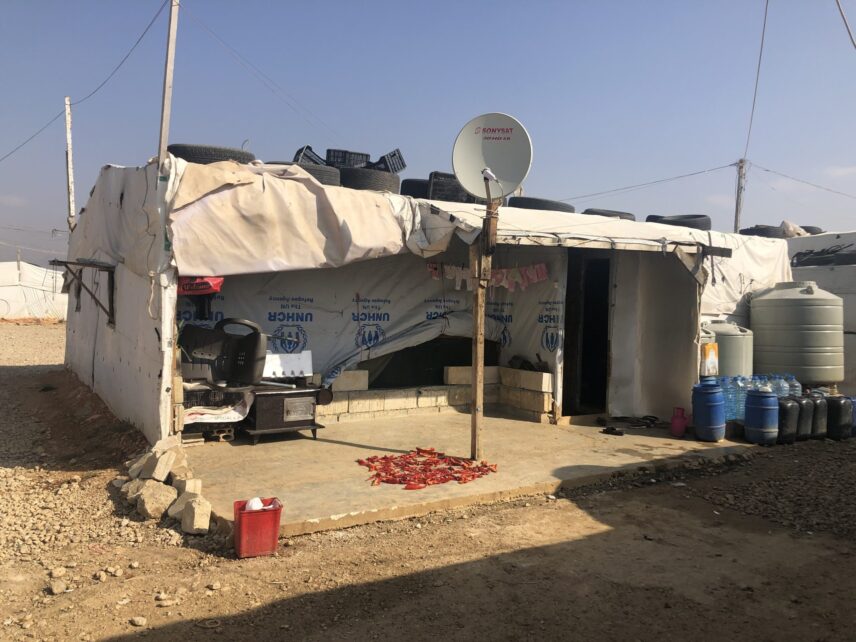
For an average Western spectator whose encounters with the Middle East are often refracted through images of war and displacement, this may appear at first glance as a typical picture of a refugee camp: white tarpaulin bearing the iconic blue UNHCR logo, a humble temporary dwelling held in place by tires and cinder blocks. Taken during my fieldwork in Lebanon’s Bekaa Valley, what still catches my eye is not the tent itself, but the traces of women’s labor that made it a durable space of familial life among the Syrian refugee farmworkers who lived there: the freshly cleaned pink baby clothes, the bottles of cooking gas, the red bell peppers laid out to dry in the sun.
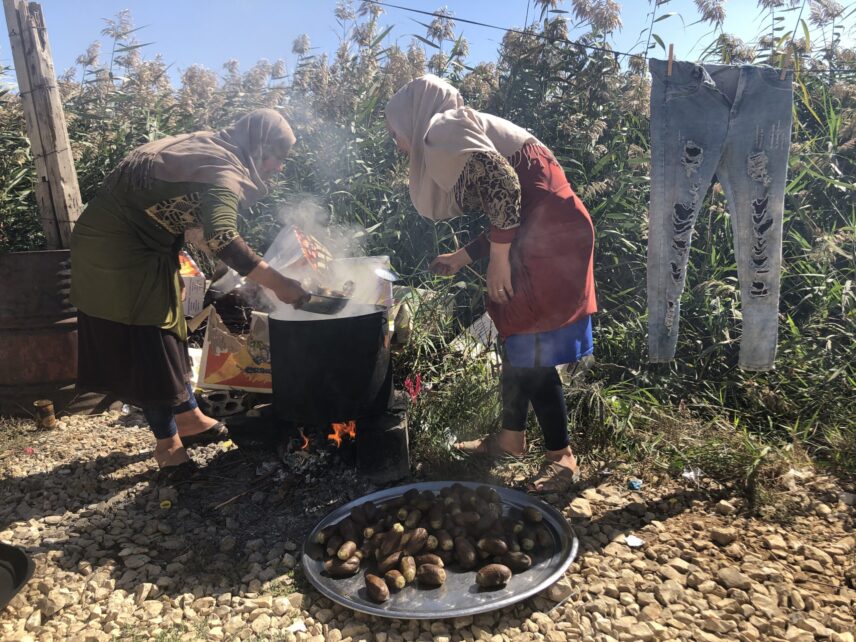
This was the home of Umm Nader’s family, one of several displaced Syrian families in this camp who hosted me on countless days and nights from 2018 to 2019, as we rose together each day before sunrise for agricultural work shifts throughout the year. The autumn ritual of drying peppers was part of a months-long process of preparing food preserves like dibis fleifleh and muhammara after work shifts. Below is an image of Umm Nader and her daughter Marwa boiling eggplants for makdous, which they stuffed with red peppers and walnuts and packed in oil to last through the winter.
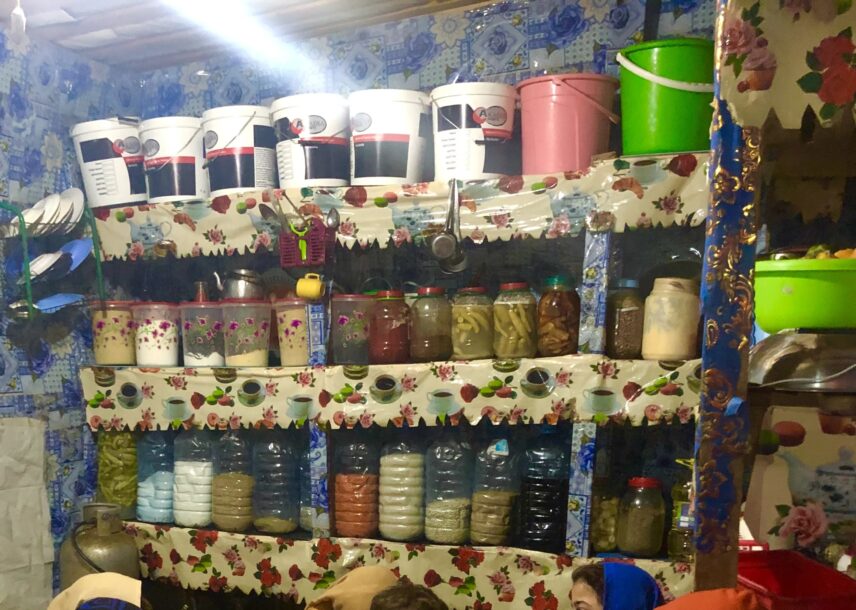
These were essential tasks within the broader constellation of homemade food preparations and products that nourished camp families year-round, collectively known as mouneh. Encompassing methods of pickling, curing, sweetening, jarring, and storing, this laborious process of conserving seasonal food items includes dried herbs, olives, fruit jams, vegetable pastes, jarred savory preserves and dairy products, and the blanching and freezing of seasonal vegetables. Every camp household had a mouneh pantry, often decorated with golden doilies and boldly patterned plastic tablecloths to remind them of their homes back in Syria.
Despite the culinary pleasures associated with mouneh and its symbolic significance as a pillar of rural homemaking, camp women were far from sentimental about the extensive labor it entailed. ʾAm ntḍayyaq was how Umm Nader and other camp mothers described it, a pithily evocative Arabic expression that literally means “we’re tightening” but implies cutting back expenses in conditions of duress or externally imposed constraints. In their own way, such sentiments drew attention to the structural relationship between paid and unpaid work that was otherwise difficult to see across the fragmented terrain of food production in the region: that mouneh was a vital supplement to their low-waged jobs in commercial agriculture.
Syrian women’s strategies of cost-cutting reflected the larger economy of agricultural production in which this camp was embedded, particularly how the 2011 uprising-turned-war in Syria transformed the lives of farmworkers who had long depended on seasonal migration to Lebanon before the war began. Immersed in the daily rhythms of Syrians’ daily lives, I came to see mouneh work not simply as a time-honored culinary tradition but as a vivid expression of how foodways are fragmented through processes of displacement. Fragmentation, then, refers at once to the physical uprooting of rural Syrians from their land and traditional sources of subsistence in the face of war and economic crisis, the strategies by which they squeezed their paid and unpaid labor to meet the challenges of provisioning their households in exile, and the ways that this labor was often naturalized, taken for granted, and rendered invisible despite their centrality to Lebanon’s food system as its largest and lowest-paid labor force.
As one among hundreds of other camps of varying sizes scattered across Lebanon, this particular camp hosted 300 people and was run by a shawīsh (headman) named Abu Sharif, who had recruited workers for day jobs in weeding, harvesting, and planting on a variety of family farms and large estates across the Bekaa since the late 1990s. Though registered as refugee camps with the UNHCR, camps like his were routinely referred to by their pre-war name, warash banāt (girl workshops).
The camp functioned through an elaborate credit-debt system, in which residents went into debt to Abu Sharif for the cost of their tent and everyday consumption needs in exchange for seasonal work commitments. Flows of credit and debt accrued to each tent-household as a “family wage” under the name of the eldest male family member residing in each tent. Within this wage pooling system, male elders wielded primary decision-making power about requests for credit, while women, teenage boys and girls, and children performed the majority of agricultural work.
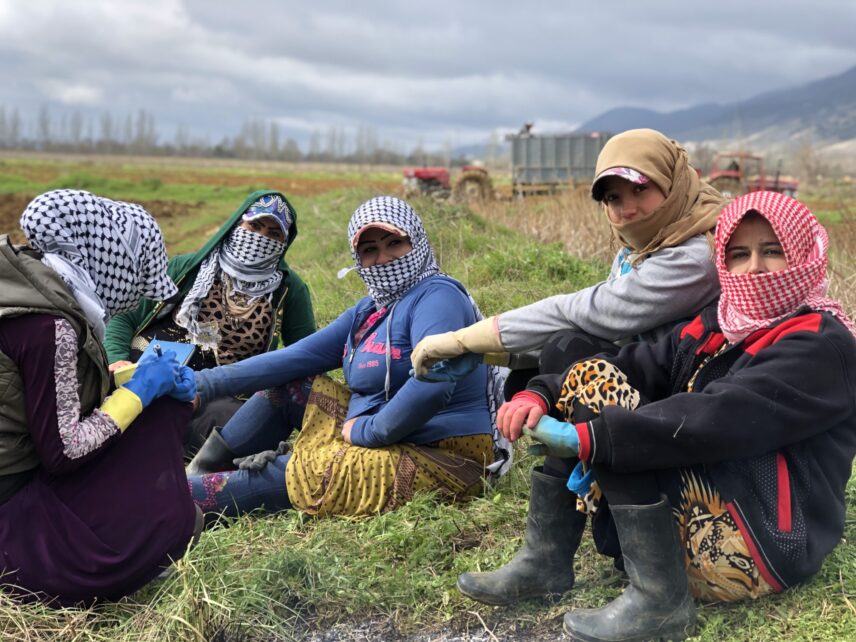
From the agricultural fields to the intimate spaces of farmworkers’ tents, my year-round participation in Abu Sharif’s camp exposed me to the unremitting work that women endured to support themselves and their families in the face of multiple uncertainties. Treated as an on-call labor reserve who were paid wages well below the subsistence level for Lebanese citizens, shawīsh camp residents were expected to be highly compliant, flexible, and adaptable to the varying duration and intensity of their work assignments, which included weeding vineyards, planting and harvesting seasonal vegetable crops, and spraying herbicide.
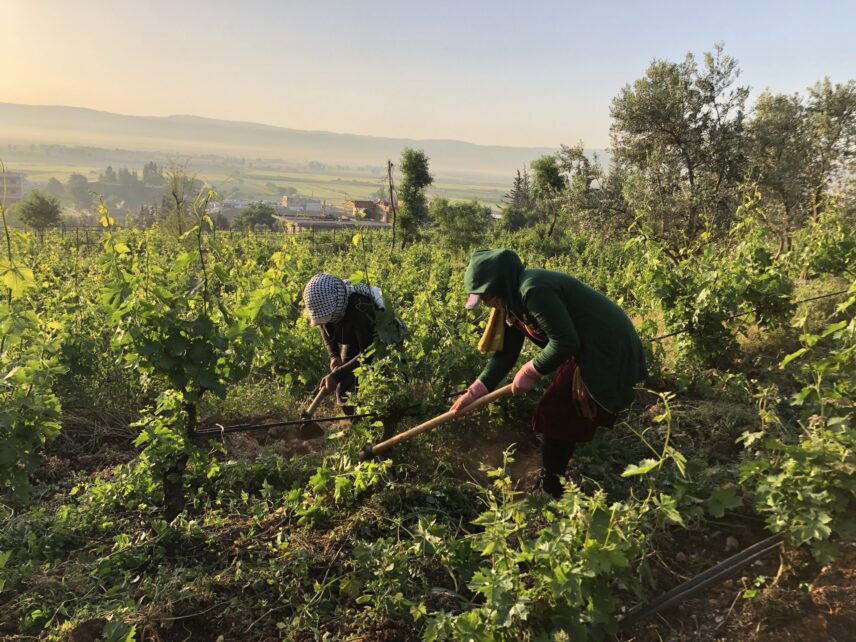
When I asked Lebanese employers why women and children were relegated to the lowest paid and most tedious tasks, their responses were remarkably consistent. As many saw it, eastern Syrian women farmworkers were culturally, socially, and economically predisposed to accept lower pay and worse labor conditions, given that many of them hailed from poor villages, were considered ‘unskilled’ compared to their male kin and urban counterparts, and could not expect to find work elsewhere.
But when viewed in terms of the larger historical dynamics shaping the region’s food system—including the liberalization of labor regulations, trade, and production throughout the 1990s and 2000s—it became clear to me that these gendered divisions signified a much more systemic problem facing farmworkers across the world, wherein the designation of certain tasks according to gender, age, and regional origin bolsters justifications for paying them less, while a lack of citizenship rights curtails workers’ abilities to move freely, change jobs, strike, unionize, or otherwise advocate to improve their labor conditions.
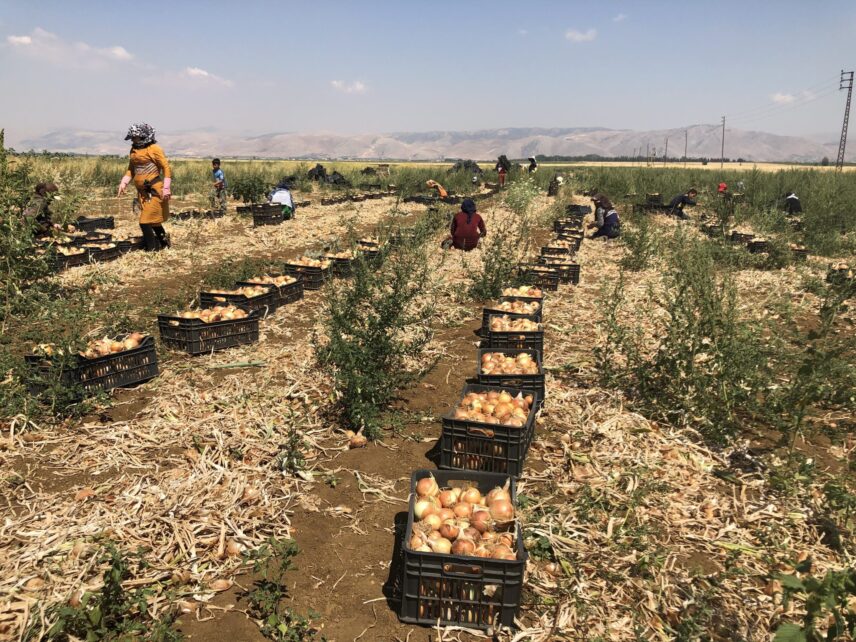
Doubly displaced by economic inequalities and the reverberating effects of war, it was women’s unremunerated household provisioning labor, especially mouneh preparation, that kept their families afloat and helped offset their otherwise unlivable wages. During spring work shifts, I noticed how women stuffed their chests with edible wild plants that grow among the weeds at that time of year, including mallow (khabāza) and wild chard (slaq akhḍar) for making stew for their families. Throughout the spring and summer, mothers in the camp also cultivated subsistence plots next to their tents, growing whatever they could to ensure that they did not have to purchase the ingredients for their mouneh reserves using their hard-earned cash income.
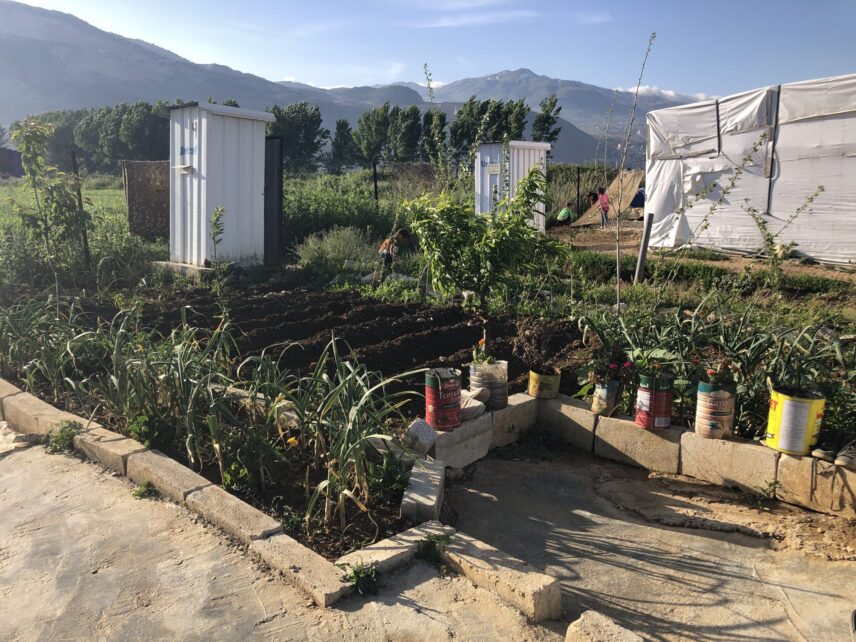
The idea of “fragmented foodways,” as I have laid it out here, carries a dual meaning. It refers both to the challenges of visualizing the labor associated with food provisioning and to the concrete conditions that separate rural people from their land and sources of livelihood, as non-citizen workers toil to produce food in the face of wage precarity, displacement, debt, and structural discrimination.
The undervaluation of agricultural labor, often justified according to gendered divisions of waged and unwaged work, is certainly not specific to Syrians in Lebanon, but symptomatic of how the conditions of this labor’s invisibility are reproduced at multiple scales, often hidden within the privatized spheres of domestic life. To the extent that transnational solidarities with those struggles are caught up in our stubbornly embodied capacities to see or not see them, the juxtaposition of images and the stories they tell in motion—of paid and unpaid work, the field and the home, of seasonality and displacement—perhaps can help us encounter their political possibilities, their interrelations, and our fragmented connections to them anew.
Ariana Gunderson is the section contributing editor for the Society for the Anthropology of Food and Nutrition.